
Books
Love and literature
Love across the Salt Desert. Selected Short Stories by Keki N. Daruwalla. Published in 2011 by Penguin Books India and Ravi Dayal Publisher, Penguin Books India Private Limited, 11 Community Centre, Panchsheel Park, New Delhi 110017. Pp: xi + 230. Price: Rs 299.
The publication of collection of short stories written by Keki Daruwalla is an event to celebrate. Even though all the short stories have been anthologized in earlier collections, these are, today, difficult to acquire. They have been written over an extended period of time and are set in diverse locations and are all fashioned in a prose which is finely chiseled and sensitive. In a book reading to celebrate the publication of Love across the Salt Desert, he confesses that he felt he was repeating himself in his poetical works not just in theme and subject matter but even in the very cadences. Daruwalla quotes Carlos Fuentes who said that novels required an Olympian theme and required the author to get in the psyche and under the skin of all his diverse characters be they priests, beggars or kings. Though Daruwalla was brought up on the short stories of Somerset Maugham and O. Henry and strongly believes that stories should have a definite form, he is by no means conventional and Mulk Raj Anand has rightly praised him for being "one of the few genuine experimentalists in the Indian short story.”
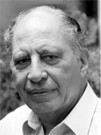
Keki Daruwalla: chiseled prose
As mentioned earlier, the stories are set in varied locations which come alive with Daruwalla’s stunning descriptions. In a few sentences he effectively evokes the locales with an economy of words which is nothing short of poetic. The Rann of Kutch is described as a "paralysed monster, its back covered with scab and scar tissue and dried blister skin.” The view at Rainkhet is that of an "arc of snow peaks struggling to keep their heads above the ascending clouds.” Early morning in the streets of Gorakhpur, we witness "a bullock cart trundling unerringly towards the grain market, though the cart-owner, wrapped in his blanket had fallen asleep; the snarling dialectic of two growling dogs confronting each other near a garbage bin.”
Often the stories begin in a seemingly abrupt manner. In "Trojan Horse” we are only conscious half way through the story that the narrator of the first section is the Trojan horse and Daruwalla skillfully alternates the point of view from the perspective of the unfortunate horse and his master to present his theme. "Of Abul Qasim” starts with the doorkeeper asking permission of his master to allow entry to a poet. It is only much later in the story that one realises that the poet is none other than Firdausi and the master is Sultan Mahmud of Ghazni. Daruwalla retells the story of the Sultan who agrees to pay Firdausi a "miskal per distich.” Firdausi recites his poetry and transports the Sultan to another world. When the time comes to pay him his dues the Sultan sends silver instead of gold which Firdausi, in a fit of rage, divides between the keeper of the bath, a sweet seller on the street and a slave. This enrages the Sultan who orders that Firdausi should be trampled by elephants. After this edict, which, in fact, is never enforced, Mahmud Ghazni is so haunted by nightmares that he eventually decides to pay the poet his rightful due but it is too late.
Delayed and futile second thoughts often plague Daruwalla’s characters. In "The Jogger,” Tony Bamforth suffers a similar fate. This story begins with an elegant Toyota drawing up and an inordinate span of time before the occupant of the car emerges. Suspense builds up as someone disentangles himself and hobbles onto the payment leaning on an aluminum crutch under his arm. This is the same Dr Kumpawat whom Tony had earlier barred from running on the athletic track on account of his "slow pace and flailing elbows.” Soon the tables are turned and Dr Kumpawat attends on Tony’s son who is suffering from dehydration. Kumpawat saves the boy’s life by putting him on a drip and giving him an anti-emetic. Bamforth is ashamed and wants to make amends. However, his plans for retribution are summarily aborted by the hand of fate.

The feelings of a broad-minded father, Ardeshir, are poignantly brought to the test when his daughter, Arnavaz, plans to marry Anwar. The Story "Daughter” begins with Ardeshir fervently saying his prayers and once this is over he, with the help of his domestic, Shyam Singh, laboriously fastens all the doors and windows of their house in Sunder Nagar. Everything is locked, checked and rechecked in an effort to keep danger out. The family follows the traditional Parsi rituals very carefully: when Arnavaz has her periods, she is made to wear a different set of clothes, sit on an aluminum chair, eat from a plate made of steel and sleep on a bed made of iron springs. At the end of the story, Ardeshir realises that the symbolic act of fastening the windows shutting out evil also prevent the breath of fresh air from entering the house. There is a gentle suggestion that may be the community needs to relook at some of their iron cast beliefs in the face of changing times and situations.
Not all the stories are serious. Daruwalla has a delightful sense of humour which we encounter in "When Gandhi Came to Gorahkpur” where Shadilal hesitates burning his lawyer’s black coat and his degrees and joining Gandhiji. He even avoids Gandhiji by leaving the city but, fate makes up his mind for him forcing him to don a dhoti and a shawl when his wife gets rid of his lawyer’s coat and the termites destroy his degree certificates. In "A House in Ranikhet” Cynthia Craig buys a house from Tripathi, a homeopathic doctor with a degree in law. When Freny Batlibhoy, the rightful owner of the house, arrives they seek retribution only to discover that Tripathi has now become the deputy minister of Justice for the State!
However, it is the title story "Love across the Salt Desert” which makes a lasting impression. Set in the Rann of Kutch the story deals with the Indian traders who cross the salt desert between India and Pakistan to exchange biri leaf for cinnamon and cloves. Najab Hussain is a timid and shy young man who falls in love with a beautiful Pakistani girl, Fatima. He ventures across the desert not for spices or terylene garments but to bring back the love of his life. His journey alone across the border is described in a thrilling manner and he convinces Faitma to return to India with him. For love, Fatima is willing to quit her country and make her home in India and courageously makes her way along with Najab across the desert which "divided both physically and symbolically the two countries. For her it meant just a shift in dialect, a smear of Kutchi and a little of Sindhi sandpapered away.” Her arrival in the village ends the drought which had persisted for three years. It is a simple story like this which, to my mind, does more for improving the relationship between the two countries than all the meetings and the treaties of politicians.
In his Preface, Daruwalla quotes from Dante’s Inferno where Virgil soundly berates Nirod who is excellent at the horn for suddenly deciding to sing with disastrous effects and advises him to stick to what he knows best. The same certainly does not apply to Daruwalla who has written poems, short stories, a novel and some plays as well and excels in whatever genre he chooses to work in.
FIRDAUS GANDAVIA
◆ ◆ ◆
From the archive