
Books
The many faces of love
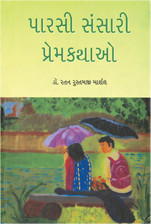
Parsi sansari prem kathao by Dr Ratan R. Marshall. Published in 2008 by Harsh Prakashan, 403 Omdarshan Flats, 7 Mahavir Society, Paladi, Ahmedabad, India. Pp: 192. Price: Rs 100.
Parsi sansari prem kathao (Parsi domestic love stories) is a collection of 19 beautiful short stories by Dr Ratan R. Marshall. One should not be misled by the word prem kathao (love stories) in the title. It is not just romance that the author beautifully portrays, but also the delicate relationships between friends, brothers and sisters, fathers and sons, parents and children, between estranged lovers after the passage of decades, and the warm and mature love among grandparents that is brought alive. Truly, when the author asks in his preface, "Has love ever been limited by age or time?” the reader will surely retort, "No it never was and never will be.” And this book by a nonagenarian will remain a living testimony to that fact.
Marshall’s name is synonymous with Gujarati scholarship. One gets a glimpse of this in these narratives. However the beauty of this volume is that the author has used the Gujarati language at several levels. We have academic Gujarati which is used for most of the narratives. Then there is pure Gujarati which only the Parsis of Gujarat can speak and perhaps even understand. There is also the Gujarati of the Bombay Parsis with a liberal sprinkling of English words and phrases like, "Marriages are made in heaven,” "Married life is a life of give and take,” etc. The Bombay Parsi-Gujarati dialect is made even more authentic with the use of English words in conversation like dressing gown, lounge, easy chair, orthodox, reformist, conservative and a liberal use of several typically Parsi Gujarati words like savarnu por (early morning), tapéli (vessel), chaai (tea), chaarvélu eendu (scrambled eggs), etc. The author has been careful to use pure Gujarati for Gujarat’s Parsis, but does not use that for Bombay’s Parsis.
The stories are short enough to make one long for more, and yet long enough to convey the message. The author has brought alive the characters in each of the stories — whether it is the temperamental Khushru Khushrokhan in "Bakhtawar” or the much missed Homai Hansotia in "Diamond Jubilee.” The use of typical Parsi names like Peshotan, Tehmton, Khorshed, Tehmina, Godrej, Gev, Gustadji and Gulcheher and surnames like Fatakia, Kelawala and Masalawala make the characters more endearing.
It is a warm book which one would like to sit with on a typical rainy day, especially since some of the stories too are set against the backdrop of the monsoon. While it may or may not drizzle outside, there is every possibility that there may be droplets in the eyes on account of the sensitivity with which the stories are penned. Human struggles and emotions, sacrificing love for the sake of duty and heartbreaks in the course of love are well portrayed. There is perhaps not a single story which will not cause the eyes to mist with tears.
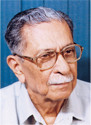
Dr Ratan Marshall: sensitive stories
The ultimate winner in all the stories is the supreme emotion of love, and Marshall has proved adept at portraying its various shades. He depicts unusual loving relationships, but always with dignity and purity, whether it is between college friends who marry others but still maintain a warm respect for each other, or where the beloved marries somebody else who dies and her son is accepted as one’s own.
The setting of each of the stories is unique. Though the author prefers to use Gujarat landscapes like Baroda, Surat and Bharuch, and beautifully describes them too, he has also effectively used foreign locales, including Iran.
The book serves the important purpose of being a repository of Parsi customs, traditions, practices, ethos, lifestyle, concerns and issues which are woven into the fabric of most of the stories. Some are customs which Parsis take for granted, like preparing ravo on birthdays, placing sugar in the plate that is returned, doing chalk-toran and garlanding the picture of Zarathushtra on auspicious days, praying Yatha-Ashem while going out, brides going to their father’s house for the delivery of the first child, and taking financial assistance for securing education and coming up in life.
The book serves another more serious purpose of raising community issues like the Parsi tradition of not inter-marrying, and a typical Parsi family being of two to three persons. The issue of declining Parsi population is also touched on. The author suggests that the Bombay Parsi Punchayet should start offering financial help beginning with the first child instead of waiting for the third child.
The book will also serve as a veritable record of several Parsi institutions and practices which are household names and a part of life — like the Parsi nataks (plays) of Adi Marzban and Yazdi Karanjia, religious guidance of Dastur Khurshed Dabu, and the ubiquitous presence of Jam-e-Jamshed on Sunday mornings in Parsi households.
Ervad (Dr) Ramiyar P. Karanjia
◆ ◆ ◆
From the archive