
Youth
Creating connections
The 20th All India Zoroastrian Youth Meet in Bombay set a new benchmark in both organization and participation
When Mabrin Nanavati, president of the Federation of Zoroastrian Youth Associations of India (FOZYA), realized that 2011 would mark the 20th All India Zoroastrian Youth Meet, he knew one thing: it had to be big.
"I wanted it to be on a grander scale,” he said, and for him that could only mean two things: Bombay and ZYNG (Zoroastrian Youth for the Next Generation). After all what better backdrop than India’s largest metropolis and what better organization to organize the event than ZYNG, the largest Parsi youth group, boasting 3,000 members? In their first two years ZYNG has managed to consistently host at least one event each month, ranging from social service activities to speed dating events. Once the two biggest pieces of the puzzle had been put into place, they just had to attract the community youth.
Previous youth meets managed an attendance rate ranging from 150 to 250. This year’s event from October 27-30, 2011 officially hosted 441 delegates from cities such as Bombay, Surat, Ahme- dabad, Nagpur, Hyderabad, Navsari, Delhi, Bangalore and countries like Canada, USA and the UK. Within one month of advertising, the event was sold out with early-registration delegates and the waiting list soon began to fill up. Close relatives of ZYNG organizers, who procrastinated in registering, were frantically trying to get on board. But the organizers were at capacity, in fact over capacity. What could possibly have created such a buzz and piqued such frenzy?
Simple really: Four days and three nights’ stay at the Taj Lands End, including registration and meals provided by Tanaz Godiwalla for only Rs 4,000 for the "early birds” after which the figure went up to Rs 5,000 and then Rs 6,000 for the late comers.
According to ZYNG social service committee member Dilkhush Reporter, 29, "The hardest piece of the puzzle was to find accommodation in Bombay for nearly 500 Parsi youth. All other youth meets had accommodation on site, but when it comes to Bombay this is very difficult.” The blessing came in the form of a sponsorship from Tata Sons, initiated by Leah Tata, Noel Tata’s daughter, who graciously accommodated the youth delegates during peak season. Once the Taj Hotel and other sponsors were in place, the 20th All India Youth Meet was destined to go down in history books.
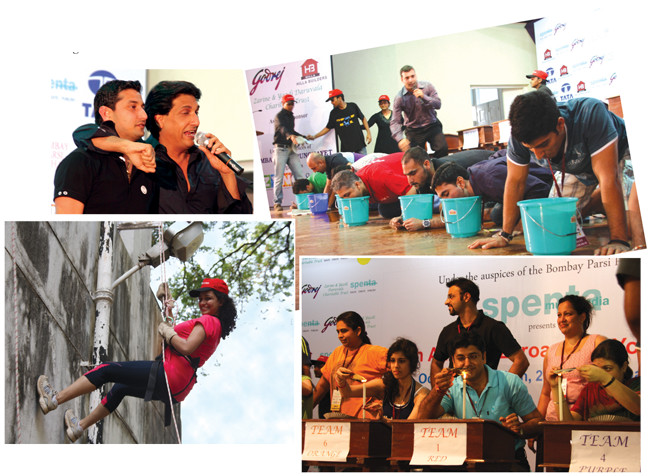
Clockwise from left: Marzi Pestonji and Shiamak Davar; Team Adventure conducting the physical activities and team events; a Poona delegate rappling down a building Photos: Viraf Hansotia
"I’ve never seen so many Parsis around,” said Daniel Dorabjee, 21, of Poona, with a broad grin. This was Dorabjee’s first youth meet and as he sat with his friends in anticipation for the opening ceremonies, he admitted he had no idea what to expect. "I’ve already made a lot of friends through the ice breakers and my expectations are to make more.”
Inside the all-purpose room of the Bai Avabai Framji Petit Girls’ High School, delegates eagerly awaited the official opening of the Meet. VIP guests, mostly event sponsors and Bombay Parsi Punchayet (BPP) board members, sat in the front rows. On the sidelines dancers from Bawa Breakers waited patiently to perform. As minutes rolled by, the crowd was eager to have the festivities begin, not realizing there was one chief guest who needed to still arrive. With a casual and confident stroll, Shiamak Davar, India’s legendary contemporary dance choreographer walked in from the side door. There was a smattering of ‘ooohhh’s and ‘aaahhh’s which was ZYNG managing committee member Viraf Mehta’s cue to officially kick-off the 20th All India Zoroastrian Youth Meet.
Key members of the community took to the podium to impart their blessings and wisdom to the youth delegates sitting before them. BPP chairman Dinshaw Mehta concluded his greeting with a simple message, "Please remember our numbers are diminishing, our goal is to multiply.” There was equal parts laughter and applause. Maneck Davar, president of Spenta Multimedia, had a similar message: "Our sponsorship of this event is to make you aware of and proud of your identity. Being born is an accident of faith and we are all blessed to be Zoroastrians.”
Adding a bit of star-power Shiamak Davar energetically took the stage and shared a more personal sentiment. "You have to have passion for what you want to do. When I was young, people would say, ‘What is this? Why are you dancing all the time? You are a boy!’” He recounted difficult days growing up in a colony and being different from the other boys. "I believed in my God when everyone made fun of me and humiliated me. It was very difficult to say in a land of bullies that I want to do jazz dance. But, I believed in myself. So keep your passion, don’t listen to people who say ‘no.’”
A fitting follow-up to Shiamak Davar’s message were the Bawa Breakers, first-place winners at the ZYNG Ultimate Dance Contest. With a mixture of hip-hop and popular music, the Bawa Breakers brought the house down with their synchronized street-dance steps and jaw-dropping break dance moves. No event can be official without a proper cake cutting and gratitude given to the list of sponsors and event volunteers. And with that, the 20th Youth Meet was in full swing.
Successful meets require a delicate balance between intellectual substance and outright fun. Have too much religious or political talk and the tone can quickly deviate from unity to division. Have too much majaa-masti (fun and frolic) and critics will comment on how the youth are not serious about the community’s past, present or future. "We took great care in making sure the agenda flows well together in order to keep the group going,” said Reporter.
Although some delegates may not have experienced anything beyond the enticing elegance of the Taj Hotel, the ones that made the effort to attend the intellectual and physical fitness sessions at the Avabai Petit School both listened and interacted with enthusiasm and earnest pride in being surrounded by so many Parsi youth.
Khushnaz Lala, 18, a communications student from Bangalore, said, "It is nice to be around so many people in the community. Bangalore only has about 500 Parsis and not nearly as many youth.” Lala noted that having accommodation at the Taj was indeed a big draw, although it may not have been favorable for youth to mingle outside their comfort zones. "I think the dorm scenario is more conducive to people meeting each other.”
ZYNG’s deftly choreographed agenda sandwiched religious, historic and relationship lectures between ice breakers, tele games and youth sporting events hosted by Sharukh and Bezad Shroff of Adventure Tours and Travels. To kick off the first full day of events, "Master” Marzi Pestonji, recently of Dance India Dance fame, loosened up a snoozing Parsi youth crew by yelling, "We are going to do the pelvic, pelvic, pelvic!” For over an hour the TV personality entertained the group and had them moving on the dance floor; their moves may not have been synchronous but their laughter was always in step.
After gaining physical confidence on the dance floor, Dinyar Patel, a PhD candidate from Harvard University, offered the audience reasons for seeking confidence in historical knowledge of the community. "Parsi history is important because we are studying ourselves, our families and our own community,” he said. In his presentation titled "Parsi History through Pictures,” Patel highlighted three main themes running through our past: our business prowess; our penchant for fighting and arguing; and our unique sense of humor.
Patel garnered the audience’s interest as he meandered through interesting facts about our ancestors. Few in the crowd knew that the first written evidence of Zoroastrians in India was not from Gujarat, but exists in the form of a property deed found in Kerala dated late 9th- early 10th century AD. Another interesting fact, Parsis were well-known ice traders, liquor traders and amassed huge amounts of wealth in the opium trade as well as the cotton industry. And, if you think the tenor of our political discourse is divisive today, Patel noted that the current tempo of debates is quite mild compared to other instances in our history. In fact, the first notable historic clash occurred between the Navsari and Udvada panthaks in the 1500s and 1600s; the battle became so strong that there was violence between the priestly orders. Another notable rift was the Kabisa controversy where Parsis fought passionately over which calendar to follow, that is why to this day community members differently follow the Shahenshahi, Kadmi or Fasli calendars. And finally, our most recent controversy — othodox vs reformists — did not begin in the 20th century but around the 1850s when, Patel noted, "Parsis were increasingly getting an English education and began questioning their religious rights and rituals.” Quickly changing the spotlight to our humor, Patel caused a few chuckles in the crowd when he dwelt on our often comical last names, our idiosyncratic use of the Gujarati language and our history with comedic nataks and publications.
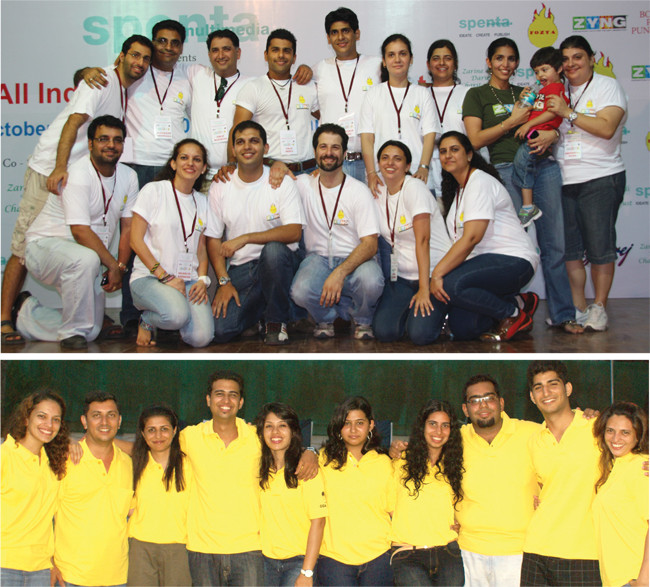
The organizing committees of ZYNG (top) and FOZYA (above)
Photos: Viraf Hansotia
He ended his talk on a rather serious note, stating, "It is our responsibility to question our greatness and also to preserve what we have.” During Patel’s research he has come across damaged manuscripts, abandoned dakhmas and former Parsi villages in ruins. "Our heritage is being left to rot… the future is entirely in your hands.”
Of all the questions Patel answered, it was the ones he did not have concrete answers for that were the most thought provoking. Noshir Maiji, a 21-year-old commercial pilot from Poona politely approached Patel after his presentation and peppered him with a litany of questions: Why do we have such big egos? Why are we choosing to fight over irrelevant issues? Where is the tolerance? Education is supposed to promote tolerance. What is the point of being a doctor when you don’t listen to others? Why is there such a lack of community unity? Why are we fighting in public? In the Press?
Patel nodded his head and could only offer a few rational reasons for Maiji’s concerns, citing a serious lack of good leadership, which is not serving the greater good. "It really makes me happy to talk to youth because usually I’m speaking in a roomful of 80-year-olds,” said Patel. The pair departed after speaking for nearly an hour agreeing that, after highlighting the problems, the youth need to think ahead. "I’m an eternal optimist. I know the worst but I am hoping for the best. We (the youth) need to step it up,” said Maiji.
To complement Patel’s presentation on historical consciousness, BPP trustee Khojeste Mistree offered the youth insight into the value of having a strong religious awareness as a Zoroastrian. He implored the audience to stop saying Zoroastrianism is only about good thoughts, good words and good deeds. "Zoroastrianism’s message is to learn, gain knowledge and to be happy within so you can spread harmony throughout the environment…We are a nature conscious religion that gives us choice, not to go off and commit crimes, but choices restricted to doing what is good.” Mistree commanded the room’s full attention and focused his message on understanding our faith’s role in creating a good value system intended to empower the individual for the greater good of our community and society. "You are the makers of your own destiny, so maximize your happiness and meaning. Happiness is judged by whether or not you are making others happy.”
In trying to explain the value of worship beyond the obligatory reasons, Mistree noted that consumption of oil and sandalwood skyrockets during exams time and muktads. "Sometimes go to the fire temple and watch the flames dancing. Don’t just go to ask for something, sometimes just go and sit and say thank you.”
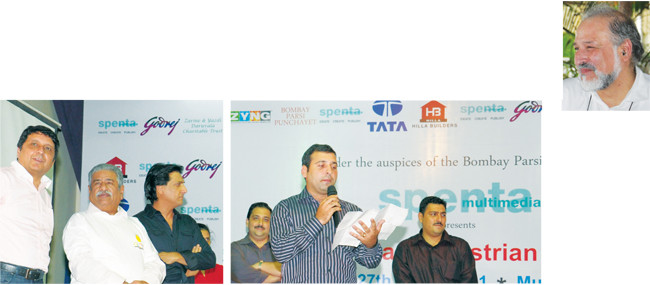
Above: Khojeste Mistree. Far left to right: Maneck Davar, Dinshaw Mehta, Shiamak Davar; Sharukh Shroff, Astad Majra and Bezad Shroff of Team Adventure
(Photo: Kaizad Chinoy)
With understanding of the values of the faith comes great responsibility and personal sacrifice. When a young woman in the audience asked Mistree why there is a lack of gender equality in our religious culture, Mistree responded by stating that from a religious point of view there is no gender equality. He cited other faiths where this too is the case. "We have over-westernized our community which has caused us to forget our traditions, language and culture.”
Ironically, Mistree and the Zoroastrian youth were sitting on the very site where one woman’s personal sacrifice for the greater good has left an endearing legacy. According to Yasmin Charna, head of boarding at the Avabai Petit School, building a school for Parsi girls was Avabai Petit’s lifelong dream. Sadly, she passed away at the age of 45, before her dream was realized. Her daughter Hamabai was, according to Charna, "a tomboy and very bold. She used to ride horses and wasn’t the least bit interested in marriage.” However, in order to keep her mother’s inheritance, the family insisted she marry. So to fulfil her mother’s dream, Hamabai married and soon after her wedding, sold her mother’s jewelry and purchased 12 acres of land in Bandra, the site of the present school. The doors opened on March 13, 1913 with 40 girls studying up to the 7th standard. This year the Avabai Petit School will have their first batch of girls sitting for the ICSE board exams and currently boards 101 Parsi girls. "I feel the School is blessed,” said Charna who herself was a boarder from 1967-74. "Every donation goes to the boarders and it is a blessing for the Parsis who live in the interiors of Gujarat with few resources.”
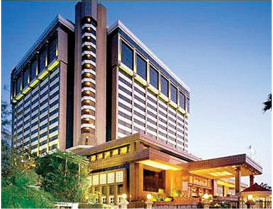
Taj Lands End: venue for Bawa bonding
It takes wild dreams and a bit of sacrifice in order to create enduring legacies such as the Petit family’s commitment to education. Dinsha Mistree, 28, a PhD student from Princeton and youth meet veteran has a similar wild dream. Mistree grew up in the United States and earlier this year, while praying alongside his mother and father during muktad, had a $ 60 million idea. He wants to construct a Zoroastrian Center in North America where there are two agiaries, one traditional and one liberal, a wedding hall, a navjote hall and an area to have annual summer camps. A sort of religious center where knowledge, ideas and values can be passed from one generation to the next. Perhaps a slightly more feasible idea is Online Agiary Connect, where Zoroastrians from abroad can purchase tandarostis or muktad prayers for their loved ones. "This would help local agiaries and make it easier for Zoroastrians abroad to have their prayers done,” said Dinsha Mistree. One grand wild dream and one more achievable; but both built on the desire to create connections between Zoroastrians from different countries and different generations.
It is safe to say that ZYNG members achieved their dreams for this youth meet. It created lasting memories between Zoroastrian youths from all over the world. The final evening’s entertainment was cancelled at the last minute but that did not stop the youth from having a good time. According to Reporter, "The last night there were so many groups saying ‘Come to my party,’ ‘Come to my party.’ On the 12th floor of the Taj, the corridor was filled with Parsi bawas having a great time. Corridor parties were on until 5 a.m.!”
ZYNG organizers breathed a huge sigh of relief after hearing confirmation there were no major damages or complaints from the Taj Hotel management. Reporter was one of the last people to check out of the luxury hotel and shared her relief afterwards, "Bawas by temperament are crazy, so it just freaks you out when there are expensive things around. You really don’t know what a Bawa would do. That was a big fear.” Another surprise was how many Bombay youth came out for the event, as they are notorious for remaining amongst their own circle of friends. If Reporter could have one wish, it would be for "the Zoroastrian youth to increase their participation. This is my request for all future events. It is a beautiful feeling to be a part of something, to share being Zoroastrian.” Her participation in ZYNG has been revelatory. "Professionally I’m a model and actor but after being in charge of organizing such large events I see a different side of me, a hidden talent.”
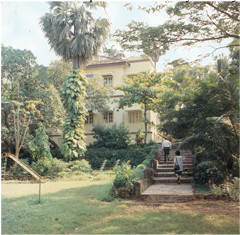
The sylvan surroundings at the Bai Avabai Framji Petit Girls’ High School
Delegates may not have realized that along with ZYNG, it took a host of others to pull off the four-day, three-night event. Viraf Mehta said that beyond their title sponsor Spenta Multimedia and their co-sponsors Godrej, Zarine & Yazdi Daruvala Charitable Trust and Hilla Builders with associate sponsor Tata Sons, community members from all over helped with various donations. Adventure Tours donated the ice breakers, tele sports and transportation from the Hotel to the Petit School, Cafe Mondegar donated prizes for the team challenges and there was a personal financial donation from Rohinton Mehta. "All Parsis stepped up to do a little something for this,” said Viraf, some donated cheese, others biscuits, others their expertise.
A few days after the event, Pearl Tirandaz, 32, a dance teacher and member of ZYNG’s event planning committee, had a chance to reflect on the whirlwind weekend. "I hope the Parsi youth in the future stay united. I don’t want my son growing up seeing this fighting in the community. That is why we are making all this effort. The way Parsis have fun, nobody does. The way we joke, nobody does. The way we live, nobody does. I’ve never seen a Bombayite party with a Surat person, but I saw it this weekend at the Taj!”
◆ ◆ ◆
From the archive