
Books
Mistry's mastery
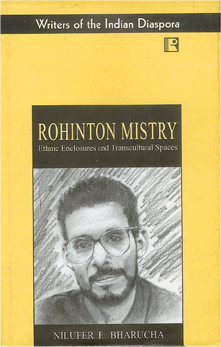
Rohinton Mistry, Ethnic Enclosures and Transcultural Spaces by Nilufer E. Bharucha. Published in 2003 by Rawat Publications, Satyam Apts, Sector 3, Jawahar Nagar, Jaipur 302004. Pp: 229. Price: Rs 475.
It is fashionable to criticize Rohinton Mistry: he is caught in a time warp, his political analysis is fundamentally weak, his delineation of character is sentimental. However, one cannot deny that he holds a very important, possibly the most important, position amongst the Parsi novelists who are writing today. Nilufer Bharucha has undertaken not only a very detailed, perceptive and full-length study of his short stories and novels but also the background and the context in which he is writing.

Bharucha: critical study
Professor of English at the University of Bombay, Bharucha has published some short stories besides several academic articles. Her areas of specialization are postcolonial literature and theories, the literature of the Raj and contemporary British fiction and translation, as notes the jacket. She has also been a visiting professor at universities in Germany, Spain and France.
The first chapter gives us an overall perspective of the diaspora and the different strands of diaspora: the labor diaspora that took place when Indian labor was transported to Africa to construct roads and railway tracks; and later the more voluntary trade and business diaspora and the Petro dollar diaspora. She lists the different authors who contributed to each of these diasporic streams — the Naipauls and David Dabydeen from the Caribbean, M. G. Vissanji from Africa, representative writers from Fiji, Canada, USA and UK and even Vilas Sarang from the Petro dollar diaspora. Mistry comes in a special category because of his Parsiness. Bharucha narrates the oft-repeated story of the arrival of the Parsis in India with a specific purpose. She emphasizes how the various conditions imposed on the Parsis when they took asylum in Gujarat created ambivalent feelings of both "simultaneous identification with and alienation from India.”
Though the Parsis have been in India for the last 1,300 years the first major poet was the fiery Behram Malabari (1853-1912); Bharucha attributes this long silence to the possible loss of language the Parsis underwent when they left Persia as well as the wise decision to adopt silence and not make enemies of their new hosts. She also gives a lucid overview of the pre-Independence (Malabari, Cornelia Sorabji, Fredoon Kabarji) and post-Independence writers (Bapsi Sidhwa, Farrukh Dhondy, Firdaus Kanga, Dina Mehta and Boman Desai). She examines the political scenario of the 1970s, especially the Emergency, which is a vital background to much of Mistry’s writings. She shows how the loss of the privileged situation the Parsis suffered after the departure of the British and their subsequent second-class status affected the literature they created.
Referring to Mistry’s collection of short stories, in her chapter on "Tales from Firozsha Baag: A Return to the Beginning,” Bharucha comments that the stories represent a journey to the beginning, a return to the womb. Merely because Mistry looks backward, the reader often complains that his fiction is nostalgic. Bharucha supports Mistry’s view that he does not write out of a sense of nostalgia as this makes the fiction very sentimental. In her analysis of the short stories she clearly shows how "non-sentimental” the stories really are as they present a grim picture of the condition of the Parsis, "warts and all.” They have been left to contend with their being not only a religious minority in India but also reduced to the position of no longer being socially elite. This theme is examined in many of the stories especially in Auspicious Occasion in which the protagonist is reduced to playing the clown to escape being lynched by a mob. Many of the theoretical statements from the second chapter entitled "Ethnic Enclosures, Transna-tional Spaces and Multi-culturalisms” now become clearer with examples drawn from the stories. There is often too much narration in Bharucha’s analysis of the stories, but this is always accompanied by perceptive critical comment and apt quotations. Though Bharucha follows the stories in the volume in sequential order, she often draws attention to common themes and characters. She is particularly perceptive in her analysis of Condolence Visit where the newly widowed Daulat Mirza comes to terms with the loss of her husband.
However, it is Bharucha’s comments on the stories set in Canada that are particularly interesting. She places Mistry in the context of Rushdie and other diasporic writers and examines his treatment of the plight of the immigrant who often finds himself in an impasse, having reached a point of no return. Bharucha’s analysis of the Canadian stories makes the reader wonder why Mistry does not choose to shift his focus to the plight of the immigrants and their lives in Canada instead of constantly returning to the India of the 1970s in his fictional work.
Mistry’s first novel, Such a Long Journey, is examined as an attempt to "deconstruct and repossess the past.” The political scenario on which the novel is based is carefully outlined. On the one hand, there is the broader aspect of the "slow erosion of the idealism that had marked the beginning of the end of the Nehruvian dream of a secular India.” On the other hand, useful information is provided about Sohrab Nagarwala, who handed over Rs 60 lakhs on the strength of a phone call he was supposed to have received from the Prime Minister. Nagarwala died later under mysterious circumstances before he could be brought to trial. Our attention is drawn to Mistry’s use of English and the naturalness with which his characters speak. He does not use language merely for comic effect. Bharucha clearly elucidates how Mistry uses language "not to curse with but to subvert the privileging of colonial discourse and the hegemony of the master narratives of the West.”
Bharucha shows how Mistry expands his canvas in A Fine Balance to take in the corruption and the Emergency in his attempt "to articulate the silences of centuries of exploitation, domination and oppression of the poorest of the poor of India.” Once again the background is succinctly and convincingly delineated. Bharucha skillfully integrates views from different critics which she uses either to bolster her argument or to refute. She clearly points out why Rukmini Bhaya Nair’s view that the main protagonist is the victim of a senseless railway accident is untenable. Bharucha believes that the suicide is in fact a result of the main character losing his sense of ‘fine balance.’
Bharucha sees Mistry’s last book Family Matters as a rites of passage book in which the nine-year-old Jehangir comes of age. The various motifs Mistry uses — the jigsaw puzzle, Enid Blyton’s books, immigration — are examined in detail. Bharucha comments that Mistry’s writing skill has greatly advanced over the years and mentions that the beginning consists of "one finely crafted sentence after another.” She rightly complains that the sub-plot of Family Matters about the Shiv Sena tends to drag a bit and does get tedious. Politics has never been Mistry’s forte and in fact he is more skilled in dealing with character and ambience rather than political analysis. What Mistry fails to do is to convince us about Yezad’s sudden conversion to fanatic Zoroastrianism. It would have been interesting to have Bharucha’s views on this rather abrupt and inartistic change in character.
A little more detailed attention could have been given to the editing. The definition of "Ghatis” is repeated twice in quick succession in almost the same terms on pgs 76 and 80. In the chapter on "Such a Long Journey: When Old Tracks are Lost...” it is Dinshawji who is the dying man and not Gustadji as mentioned. In "Family Matters: About Happiness and Unhappiness” the word "prescribe” has been used instead of "subscribe.” These should be corrected in subsequent editions.
Bharucha’s book is probably the first full-length critical work on Mistry. The series — Writers of the Indian Diaspora — under which it is published fills in a great vacuum by providing the reader with detailed and critical work on individual writers. We hope that Bharucha will continue, as she mentions in her preface, "to etch her ideas upon a surface other than a blackboard.”
Firdaus J. Gandavia
◆ ◆ ◆
From the archive