
Books
Pervez, a progress
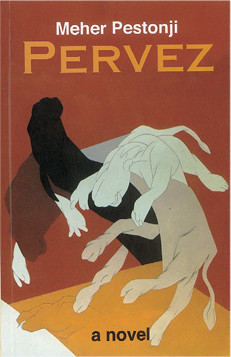
Pervez, a novel by Meher Pestonji. Published in 2003 by HarperCollins Publishers India Private Limited, B/315, Okhla Phase-I, New Delhi, 110020. Pp: xii+318. Price: Rs 295.
Meher Pestonji’s first novel Pervez is a quest novel in which the female hero (ambiguously called Pervez, which is normally a male name, instead of Perveez), finds her own identity — social, political and sexual — against the backdrop of the turbulent early 1990s. Pervez returns to Bombay, as it was then still called, from Goa and finds a city becoming increasingly polarised along communal lines. Her personal trauma, the result of a bad marriage, is mirrored in the public spaces of the city. The spatio-political divide between her brother’s posh Marine Drive flat and her friends’ modest Kalina residences tears Pervez apart and she begins to evolve from a shy, unhappy person into a socially aware woman who can hold her own in any context.
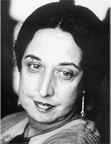
Pestonji: has evolved as a writer
Education in the form of a postgraduate degree in Psychology and her own home in Kalina, help in this process. As she moves closer to her activist friends she begins to realize how hypocritical her brother’s friends and professional acquaintances were. As her friend Naina’s political activist partner Siddharth says: "You’ve grown Pervez, six months ago you wouldn’t open your mouth. Now you’re debating ideology.”
The ideological education moves into a higher gear when Pervez starts accompanying Siddharth and his photographer friend Pawan into the Dharavi slums. Here she is confronted with the factional politics that was leading to a communal divide in the city. Pervez’s involvement in Dharavi though is at a human rather than an ideological level and brings her in contact with her estranged husband’s aunt and a young Muslim boy whom she befriends.
While Pervez is thus finding herself and experimenting with a sexual involvement with Pawan, India’s engagement with Hindu fundamentalism enters a new phase with the demolition of the Babri Masjid in Ayodhya. The fall-out of this act is experienced in Bombay especially in the deprived areas like the Dharavi slum where Pervez and her friends worked. Pervez is caught up in the riots as she was in Dharavi when the carnage, looting and arson began. Pestonji describes her fear and helplessness in powerfully evocative language — "Dead streets. A ghoul perched on an antenna... Her feet walked, her eyes blind to the locked doors...She was aware of eyeballs peering from cracks in doors. Palpably aware that the slightest wrong move might cost her life.”
Interwoven into the bloodshed and shredded lives in Dharavi are the shameful episodes of the indifference of the rich of the city — what Salman Rushdie in The Moor’s Last Sigh, an earlier novel on the Bombay riots and bomb blasts of 1992-93, called "the Malabar Hill types.” Pestonji is also critical of the attitude of the Parsis during the riots who invoked a millennium old wrong done to them by the followers of Islam, to justify the throwing out of Muslims who’d sought refuge in Parsi baugs and colonies from Hindu mobs.
The novel ends on a quiet note of reconciliation as the citizens of Bombay break across caste, class and religious boundaries to join hands through the city in a chain of harmony. As the last notes of the national anthem die away there is "pin-drop silence. As if the gods had descended in response...”
On the personal front too Pervez has found herself, and home was now the little flat in Kalina, across the road from the University campus where she taught. This personal and political peace is threatened in the epilogue when in a vicious manner history repeats itself and the monsters of communalism create havoc in Gujarat, recalling the trauma suffered by the city now called Mumbai, 10 years earlier. Pestonji makes a pointed reference to not just the new name but also the new ethos of the city — "Yeh dil maangé more (the heart craves for more),” "Shop till you drop.” Modern mantras plastered across Mumbai’s billboards. Bombay would have been embarrassed by them. The massacre at Ghodhra followed by the butchering of Muslims all around Gujarat assumed the stature of a personal tragedy for Pervez, when her friends Siddharth and Naina are caught up in the horrific events and Siddharth is seriously injured. Pervez is once again drawn into public protests and finds hope in her work with women from different communities whose voices at least momentarily pierce through the hatred that had once again gripped society as they sang — "Log ro rahé hain...Shanti do... Hé Bhagwan, O Allah, Shanti do (The people are crying for peace)...”
There were two things that struck me as I read Pervez. The first concerned the craft of writing and the second with the state of the construct called ‘The Parsi Novel.’ When I had reviewed Pestonji’s collection of short stories I had felt that she was yet to find her voice as a story-teller. Now I feel that she has found this voice and although the journalistic register does assert itself now and again in her novel, its interference level is very low as compared to the interference in the short story collection Mixed Marriage and Other Parsi Stories. As for the genre of the Parsi Novel it came into being in the 1990s with the texts of Bapsi Sidhwa, Firdaus Kanga, Boman Desai, Rohinton Mistry and others. It was focussed on ethno-religious details of the Parsis and their Zoroastrian religion. There was also a grand-standing and last-witness element in the Parsi Novel. Engagement with the reality of postcolonial India was minimum or if there, as in Mistry’s Such A Long Journey and A Fine Balance, filtered through the time-warp of the diasporic writer. Mistry is undoubtedly the superior craftsman and better writer, his innumerable awards stand testimony to that — but where Pestonji scores is in her hands-on experience of Mumbai and her political activism that gives her novel a sense of immediacy lacking in Mistry’s work. Also, although the Parsi element is present in Pervez, as the titular female hero is a Parsi, it is at no point foregrounded. There is also a severe critique of the distancing of Parsis from the reality of India, especially among the upper classes who are cocooned in their wealth and the privileges this can buy them.
In the final analysis I feel that Pervez is a good first novel, written with much passion. It is also a novel in which Pestonji’s social commitment shines through clearly and in which the human element more often than not triumphs over the machinations of power-politics.
Dr Nilufer E. Bharucha
◆ ◆ ◆
From the archive