
Books
A profusion of stories
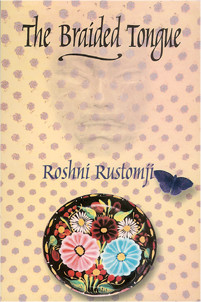
The Braided Tongue by Roshni Rustomji. Published in 2003 by Tsar Publications, P. O. Box 6996, Station A, Toronto, Ontario, M5W 1X7 Canada. Pp: 176. Price: $ 18.95.
Roshni Rustomji was born in Bombay and has lived, studied and worked in India, Pakistan, Lebanon, the United States of America and Mexico. As a corollary, Katy Cooper, the heroine of her novel moves from Half Moon Bay in California, to Devinagar in India, to Mexico in search of herself and to discover the truth about her parents and to find the missing jigsaw pieces to complete the puzzle of her life. She is accompanied on her travels by an elderly ghost, a barefoot woman with a scar on her neck and black butterfly fluttering above her.
In fact it is the ghost who sets things in motion by pushing Katy as she is about to hang up a print of the ‘Vegetarian Vampires’ and causes her to knock down a framed photograph of a family of three people on the reverse of which is written ‘Freddy Cooper and Margaret Shriver Cooper with baby Katy Cooper born in Devinagar, India, October 1958.’ This shatters the middle-aged Katy’s composure as she has always believed that she was born in England; one wonders why she thinks so as she is rather ‘brown’ skinned as her friend Carmelita Gutierrez points out. After the death of Katy’s father when she was a very young girl, she is adopted by the Sanders who have since passed away and left her their home in Half Moon Bay. The incident of the broken frame forces Katy to undertake a journey to Devinagar, to find out who she really is and who her mother was. It is here that she is introduced to her family. Aunt Agnes, her cousin Roxanne Japanwallah, an advocate from Devinagar, who together initiate her in her family history and try to fill in the gaps.
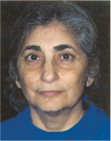
Rustomji: braiding various experiences
At the center of the novel is the myth of the braided tongue, a story which Carmelita tells Katy. Carmelita’s grandfather Ignacio had run into la llorona. Contrary to the general belief that la llorona was supposed to have killed her children because her lover had abandoned her to marry a rich woman, Ignacio believes that she killed them because she could not feed them. She makes Ignacio promise that whenever he sees an abandoned child, he will take it home to his wife so that she could care for the child. Ignacio does so and as he has to feed and clothe his ever-increasing family, he travels to far away places to earn his livelihood. He visits so many different places that he suffers from an identity crisis which is evident from the state of his tongue which is torn, shredded and split. Carmelita’s grandmother Luz decides to braid each strand of his tongue. The underlying implication of the myth applies not merely to Katy herself but to the novelist as well as other diasporic writers who have to speak with a braided tongue; they have to integrate and make a unified whole from separate disparate experiences which they undergo in the country of their birth as well as in the one they have adopted.
This theme is reiterated in the frantic search for a gara which is a family heirloom. It has been brought to India by the son of a Parsi gentleman and his Chinese wife who are ancestors of the Cooper-Japanwallah-Mehta family. The gara was to be passed on from generation to generation through the eldest daughter or daughter-in-law. It was given to Dinaz Mehta who subsequently migrated to America; the gara was now urgently needed in India as there was a marriage in the family and the mother of the bride had to wear the gara on the wedding day if the marriage of the daughter was to be a happy one.
A crowd consisting of Katy and Carmelita, her American cousin Kamal Mehta as well as her Indian cousins, Roxanne and Sarosh, travel from the Unites States to Oaxaca and Monte Alban in Mexico in search of this gara. But like Ignacio’s tongue, the gara has been cut into pieces to provide for a jabloo (loose blouse for children) for one person and a scarf for the other and needs to be painfully pieced together.
Though the novel is a mere 176 pages, it is populated by a host of characters. Name follows name in bewildering succession and the reader is often quite lost as to which name he should remember and which he should forget as most of these characters are named once and then quite forgotten.
There is a similar profusion of stories. The novel is episodic in nature and often seems to read like a number of short stories loosely strung together. Many of these reflect the theme but some seem rather pointless like the episode of the visit of Eleanor Roosevelt to Karachi and a menstruating camel or the search for doughnuts in Mexico. Even the story of Putlibai who acts like a foster mother to Katy and who also is an immigrant with various strands of experiences to be braided seems a bit overstretched and long.
The trip which Katy makes to find her parents and her association with Roxanne and her clan and the elaborate history of the entire Cooper-Japanwallah-Mehta family eventually seems a bit pointless when it transpires that she is not the daughter of Freddy Cooper at all but the illegitimate child of Maala and the nephew of Ms Lalacji who is merely rescued and taken care of by Freddy Cooper. But the point which Rustomji is making here is expressed in Katy’s Aunt Agnesmai’s letter that there could be sustaining relations between people without the ‘blood-flood thing.’ As her entire claim to being a Parsi is very suspect and she is no blood-relation of the Cooper family, the story of Katy and the search for the gara seem to be two parallel plots which reflect the same theme but never really coalesce into a unified artistic whole.
It is no coincidence that most of the characters in the novel are women. A common thread running through them whether it is Katy, Carmelita, Ratna, Kamal or Putlibai is that they are all displaced from the land of their birth and are trying to adjust to a new way of life in an alien country. It is these women who bond together and provide Katy with the family she needs and help her to eventually discover who she is.
There are several typographical errors: the very first sentence ‘...an old woman wondering around barefoot in New Hampshire...,’ several commas are positioned in the wrong place and a landlady becomes landlad.
The various strands of the novel: the truth about Katy’s past and the cause for the excruciating pain in her knees, the history of the Cooper-Japanwallah-Mehta families, the search for the gara, the presence of the supernatural, makes the reader wonder where the novel is eventually heading. As a result, the novel loses focus and seems to be a sort of curate’s egg. One often feels that Rustomji sets out to accomplish too much and one wonders at the end of the novel if she has managed to braid the various strands of her novel into a well-fashioned and unified whole.
Firdaus J. Gandavia
◆ ◆ ◆
From the archive