
Vision for our future
We will need to work together and take several concurrent steps to overcome our fear of extinction
"It is not strongest of the species that survives, nor the most intelligent; it is the one that is most adaptable to change.”
Charles Darwin
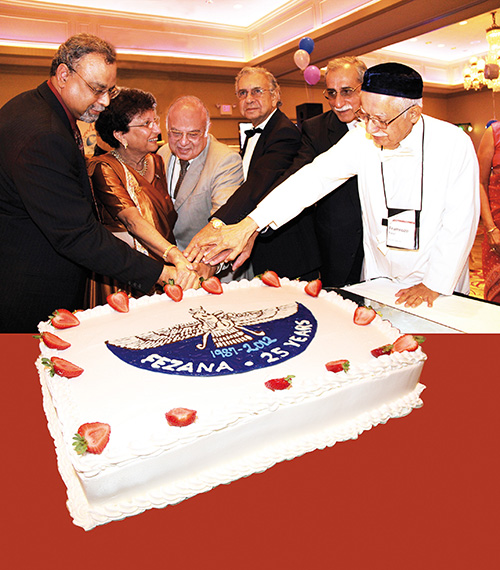
The Federation of Zoroastrian Associations of North America (FEZANA) was founded 26 years ago with the purpose of giving the young and growing Zarathushti community a united platform to plan and control its future on the North American continent. FEZANA’s mission has remained the same over the years: "To develop a Zarathushti community in North America that is well-connected, well-educated, well-grounded in Zarathushti religious thought, values, and ethics, respectful of diversity, strong in collective giving, economically prosperous, a community which will be recognized for its contribution in all aspects of religious and communal life.”
Today, second and third generation Zarathushtis are taking on leadership positions in our local associations and in FEZANA. They are not encumbered by the thinking of the first generation that came from India in the 1960s and 70s; but at the same time they are carrying the genes of our ancient culture that is admired for its history and ethical religion, and they are passing these genes on to their children. The Zoroastrian diaspora has fared well everywhere due to its adaptability. As the world becomes smaller, the secular, materialistic culture of the West is juxtaposed against the introspective, meditational and spiritual thinking of the East. Zoroastrians are in the sweet spot as they understand and respect both ends of the spectrum.
I believe that the evolving mission of FEZANA is to preserve our religion (re-ligagre to bind together) on the North American continent. All the local associations conduct religious education classes. The core values are being recognized and enhanced through a strong emphasis on education, economic stability and volunteerism. Encouragement of higher education in the arts, sciences and religion provides strong professional and business skills. This serves as a foundation for an enlightened, harmonious and prosperous life. Our youth and adults participate in local and national fundraising drives for cancer, feeding and building homes for the poor; and even collecting eyeglasses and shoes for distribution to the disadvantaged countries of the world. Several individuals enthusiastically participate in global activities associated with the United Nations, the Parliament of Religions and Religions for Peace. As we nurture a love for humanity and promote our Zarathushti way of life, we increase awareness of our religion and culture in North America and globally.
The crossroads
In my opinion, the North American model initiated by FEZANA holds the best promise for the future. But FEZANA cannot assume that this model will work for everyone, everywhere. Many go in different directions. Zarathushtis must participate in congresses, working groups, print media and on the Internet to express their views on what makes our religion great. What is the importance of our ethnicity, our history, our institutions? Should we develop rituals and liturgy in modern languages that can be understood and internalized by us and especially by our future generations? These decisions should not be left in the hands of a few elected and self-appointed leaders. We must include mobeds in the deliberations to ensure that the spiritual dimension is not overlooked. The role of the priests should be reexamined for relevancy. I am optimistic that we are converging on this common ground already. What is remaining is to articulate our vision and get a concurrence from all regions.
Pride in our culture and religion gives us the courage and optimism to embrace sound ideas and not remain imprisoned prisoners to the past or the present. If we look beyond the past and the present, we become aware of the reality of demographics. All our pride and effort will be in vain if the decline in our global population continues at the present rate. The recent 10th World Zoroastrian Congress (10WZC) in Bombay clearly illustrated the fear of eventual extinction that is haunting the Parsi community in India. Interestingly, this fear is not present to the same degree in the youth (a very wide age-span which includes teens, young adults and mature adults, but mostly implies singles!), the working adult or the seniors. The youth seem to have no worries about the future. They are happily adjusted to their surroundings.
Boys and girls have different expectations for their marriage partners. Their parents want them to marry early and within the community, but cannot pressure them to do so. The adults are focused on their careers and may remain single or have only one or two children, especially if they are supporting their parents or other infirm family members. Seniors need support from the other groups as well as various charities. This trend began when Parsi families started migrating to Bombay. This demographic trend is present in all developed countries, each seeking its own solutions to reverse the "birth dearth” through immigration and incentives. Whether we live in India, Iran, Pakistan, North America, UK, Europe, UAE, Singapore, Hong Kong, Australia or New Zealand, we have a common obligation to reverse this trend and grow.
We are at the junction of pride and fear
We know what we need to do to reverse this adverse demographic trend, but are not able to come to terms with it. Many ideas have been presented already. They fall into three categories:
Increase fertility rate by encouraging early marriages and where required medical intervention to conceive;
Prevent loss due to inter-marriages, assimilation and conversion;
Accept spouses and children of inter-marriages, adopted children and enlightened non-Zarathushtis.
The largest benefit accrues from increasing fertility. This is the most acceptable step to Zarathushtis of all persuasions: orthodox, conservative or liberal. But perceptible benefits of increasing fertility rates will accrue only after two or three generations. The current fertility rate is so low that increasing it to replacement level (fertility rate of 2.1) will take several generations. The Government of India has offered to provide funds for fertility treatment for Indian Zarathushtis. In addition, young families with more children will require assured support for child care, medical care, housing and income guarantees during pregnancy and delivery. We all know that raising large families at a later age has its own difficulties, so encouraging older couples to accept fertility treatment will be an uphill task. And, of course, the whole burden of raising happy children should not fall on women alone. Men must do their part too.
On the other hand, preventing loss to other religions and acceptance in all its forms can provide almost immediate benefits. Carefully planned religious education and well-conceived programs to instil pride in our community and culture are necessary for the bigger worry is apathy, which can lead to assimilation into the majority culture and conversion to other religions.
Acceptance faces many challenges. The major difficulty is the religious taboo against acceptance. Even if we surmount this problem as is happening in North America, experience indicates that the numbers of new entrants will remain small. The very fact that we want to maintain our unique Parsi or Iranian cultures works against increasing our numbers through acceptance. Our pride prevents us from addressing our fear.
The best way to predict the future is to visualize it in our hearts and souls; that is, in the collective spirit that defines us. When we start thinking of the vision, rather than the present or the past, or our pride and our fears, it unlocks the imagination and energizes us. Without vision there can be no progress, no future. To develop the vision for our future, our ideas must transcend political agendas and must be endorsed by a large number of people. This is what generates momentum for change.
The vision comes first, and determines the physical reality. We must know what we stand for, what we believe, what we are proud of. Working together, we will need to take several concurrent steps to overcome our fear of extinction. Once we have the collective vision, we will need the courage to change and adapt to the thinking of the different cultures, dogmas and worldviews of not just our co-religionists but also of the world in which we are living.
This is the true meaning of "trial by fire,” the march through molten metal that we will all have to undergo to achieve the final renovation of the Zarathushtrian age. We can emerge if we walk together towards frashokereti (making fresh, renovation).
We must all become our own saoshyants (saviors).
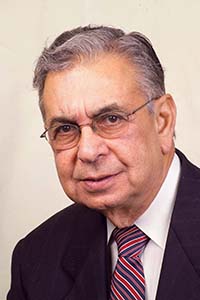 Dr Rustom Kevala is a past president of the Federation of Zoroastrian Associations of North America and the Zoroastrian Association of Metropolitan Washington. He went to the USA from Bombay in 1963 to pursue studies in aerospace engineering. Kevala continues to study the thoughts and aspirations of Zarathushtis from all corners of the world through travel and correspondence. He lives in Florida with his wife Yasmin.