
Law
No right to adopt
The recent Supreme Court of India ruling on an adoption case does not apply to Parsis
In the case of Shabnam Hashmi vs Union of India decided on February 19, 2014, the Supreme Court of India [speaking through a Bench of three justices, the Chief Justice of India (CJI) presiding] gave its judicial nod to a general right to adopt. It has raised hackles among sections of the Indian public!
The editors of Parsiana inquire whether as a consequence, Parsi Zoroastrian couples in India can now proceed to adopt children of biological parents professing different faiths and make such children their own. My answer is No — not just yet!
The judgment was the Court’s response to a writ petition that claimed that the right to adopt and to be adopted was a Fundamental Right under Part-III (Fundamental Rights Chapter) of the Constitution of India, personal laws notwithstanding. But the Court only said: "The present is not an appropriate time and stage where the right to adopt and the right to be adopted can be raised to the status of a Fundamental Right...” The writ petition also prayed that a direction be given to all States and Union Territories and authorities under the Juvenile Justice (JJ) Act, 2000 to implement the provisions of Section 41 (making a provision for adoption in Chapter-IV) and to follow the notified "Guidelines Governing the Adoption of Children 2011” ("CARA Guidelines”). But again, the Court did not oblige — presumably because the "Guidelines” govern the procedure of adoption not of all children but only of "orphaned,” "abandoned” and "surrendered” children, defined as (i) children without parents or guardian; (ii) children who have been deserted and declared abandoned by the Child Welfare Committee; and (iii) children who, in the opinion of the Child Welfare Committee, have been "relinquished on account of physical, emotional and social factors beyond the control of the parent or guardian” (whatever that may mean!). The Court stated that the JJ Act 2000 – as amended in 2006 with a definition of "adoption” — was only an enabling piece of legislation that gave a prospective parent the option of adopting an "eligible” child. The Act does not mandate any compulsive action (the Court said); it leaves a prospective parent "with the liberty of accessing the provisions of the Act if he so desires. Such a person is always free to adopt or choose not to do so and instead follow what he comprehends to be the dictates of the personal law applicable to him. "To us,” the Court finally added, "the Act is a small step in reaching a goal enshrined by Article 44 of the Constitution,” i.e. the goal of a Uniform Civil Code.
The editors of Parsiana inquire whether as a consequence, Parsi Zoroastrian couples in India can now proceed to adopt children of biological parents professing different faiths and make such children their own. My answer is No — not just yet!
The judgment was the Court’s response to a writ petition that claimed that the right to adopt and to be adopted was a Fundamental Right under Part-III (Fundamental Rights Chapter) of the Constitution of India, personal laws notwithstanding. But the Court only said: "The present is not an appropriate time and stage where the right to adopt and the right to be adopted can be raised to the status of a Fundamental Right...” The writ petition also prayed that a direction be given to all States and Union Territories and authorities under the Juvenile Justice (JJ) Act, 2000 to implement the provisions of Section 41 (making a provision for adoption in Chapter-IV) and to follow the notified "Guidelines Governing the Adoption of Children 2011” ("CARA Guidelines”). But again, the Court did not oblige — presumably because the "Guidelines” govern the procedure of adoption not of all children but only of "orphaned,” "abandoned” and "surrendered” children, defined as (i) children without parents or guardian; (ii) children who have been deserted and declared abandoned by the Child Welfare Committee; and (iii) children who, in the opinion of the Child Welfare Committee, have been "relinquished on account of physical, emotional and social factors beyond the control of the parent or guardian” (whatever that may mean!). The Court stated that the JJ Act 2000 – as amended in 2006 with a definition of "adoption” — was only an enabling piece of legislation that gave a prospective parent the option of adopting an "eligible” child. The Act does not mandate any compulsive action (the Court said); it leaves a prospective parent "with the liberty of accessing the provisions of the Act if he so desires. Such a person is always free to adopt or choose not to do so and instead follow what he comprehends to be the dictates of the personal law applicable to him. "To us,” the Court finally added, "the Act is a small step in reaching a goal enshrined by Article 44 of the Constitution,” i.e. the goal of a Uniform Civil Code.

What then does all this mean for Parsi Zoroastrians? Little, except by way of mental assuagement! Because, ever since the year 1867 — following the judgment of Chief Justice Westropp in the case of Naoroz Behramji vs Rogers — and again in the year 1925 — the Bombay High Court had consistently opined that Parsis are governed by English Common Law (except in matrimonial cases). And English Common Law does not recognize adoption. Under the Common Law of England rights, liabilities and duties of parents are inalienable and adoption, in the sense of a transfer of parental rights and duties in respect of a child to another person "is unknown” (authoritatively so stated in the latest edition — 4th Reissue — of Halsbury’s Laws of England, paragraph 1022). This is why in England a series of statutes have been enacted to regulate adoption.
India has not had a general adoption law principally because of resistance from Muslims, as also from a microscopic yet vocal section of Parsis! Muslims, by religion, have abhorred adoption since it is prohibited by the Koran. Mohammedan law simply does not recognize adoption as a mode of filiation. I recall when I was with Government, as one of its three Law Officers, in the early 1970s I was summoned to give evidence before a Parliamentary Committee on the provisions of the Adoption of Children Bill, 1972. I was closely questioned by its Muslim members; they listened attentively to my exposition of the law as proposed to be enacted, but a cross section of them strongly opposed the Bill. The venerable Rusi Gae, then Law Secretary, Government of India (GOI) highly regarded in Government circles, also gave evidence before the Parliamentary Committee in which he explained how at a meeting called by the Bombay Parsi Punchayet (BPP) in August 1981 it had been resolved (by representatives of the Parsi community) to accept the 1972 Adoption Bill but with an amendment, viz. that the adopted child would have the same rights as a natural-born legitimate child for all purposes including intestacy (as the Bill had provided) "except purposes which are wholly religious in nature.” Prime Minister Indira Gandhi was informed, but then some members of the Parsi community — individualistic as ever as we all are! — called on the PM requesting her not to proceed with the Bill at all! As a result of all this agitation, the Bill was dropped.
Lord Salisbury was Britain’s Prime Minister at the beginning of the 20th century. He was of the view that if a proposed legislation was opposed by a section of the populace, England was not ready for it. This became known, in later years, as the "Salisbury Rule.” Gandhi adhered to this rule, especially when a proposed piece of legislation affected the minorities.
But once the Court declares — as I expect it will in the not-so-distant future — that the right to adopt and the right to be adopted is a Fundamental Right, then it will take within its sweep members of the Parsi community as well, personal law or no personal law. Of course this will not necessarily affect the view prevalent in Bombay (the citadel of Parsi orthodoxy) that only children of Parsi fathers (with Parsi or non-Parsi mothers) are to be regarded as Parsi Zoroastrians for the purposes of entering the precincts of our agiaries and atash behrams.
Shabnam Hashmi’s case is therefore not Judgment Day for the Parsis. But it is a wake-up call: time for us to once again discuss and debate the merits of adoption in a proud, magnificent but fast-vanishing community!
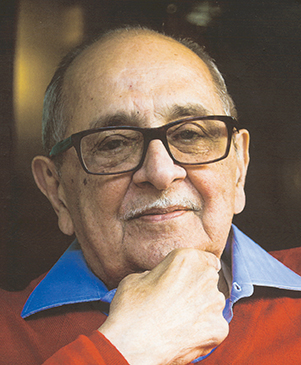 A senior advocate to the Supreme Court of India, Fali Nariman is the president of the Bar Association of India since 1991. He was additional solicitor general of India from 1972 to 1975 and served as nominated member of the Rajya Sabha from 1999 to 2005.
He was conferred the Gruber Prize for Justice and India’s second highest civilian award, the Padma Vibhushan and was selected by NDTV to be among the 25 living Indian legends.
◆ ◆ ◆
From the archive