
History
Parsi protesters
Among those who joined Mohandas Karamchand Gandhi in his satyagraha against racist laws in South Africa were several determined Parsis
There were less than 50 Parsi families in South Africa when the Indian community launched the passive resistance (satyagraha) of 1906-14, first in the Transvaal and later mainly in Natal. But they contributed some of the most determined and eminent satyagrahis. Mohandas Karamchand Gandhi chose one of them to act as his successor in South Africa.
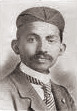
Mahatma Gandhi as a young man
The contribution of Parsis is particularly significant as they were relatively prosperous and enjoyed special privileges in South Africa. They were treated like Europeans in the Transvaal, until the Asiatic Registration Act came into force in 1907.
It is also a significant coincidence that two persons most helpful in Britain to the Indian community in South Africa were Parsis: Dadabhai Naoroji, a Liberal Party Member of Parliament for a term; and Sir Muncherjee Merwanjee Bhownaggree, from the Unionist Party, who was a Member of Parliament for over 10 years.
Gandhi developed a special feeling for the Parsis because of his association with them, especially during the satyagraha. Five of the Parsis who participated in the resistance deserve special recognition and their short biographies are given below, sourced largely from Indian Opinion, Navajivan, Bombay Chronicle, Collected Works of Mahatma Gandhi, Dictionary of South African Biography and other publications.
Nadirshah Ardeshir Cama
Nadirshah Ardeshir Cama was born in Bombay in 1870. After passing the intermediate examination of the University of Bombay, he worked in the Bombay Port Trust from 1891 to 1895. He went to Durban in 1895 and worked for a few months with Messrs Dada Abdulla and Company. He moved to Johannesburg early in 1896 and obtained a position in the post office. Unlike many other Indians, he remained in the Transvaal during the Anglo-Boer War of 1899-1902.
He joined the British Indian Association founded by Gandhi in 1903 and became a member of the executive in 1906.
Cama took a prominent part in the passive resistance struggle against the Asiatic Registration Act, denounced by the Indian community as the "Black Act.” That law, enacted in 1907, required Asians — there were also Chinese miners in the Transvaal — to obtain registration certificates by giving 10 thumb impressions. Any male over 16 who failed to produce the certificate on demand by the police or other officials was liable to arrest and deportation from the colony.
This was not only an imposition on Indians who had already twice obtained permits to reside in the Transvaal; it was similar to the pass laws hated by the Africans and the Criminal Tribes Act in India.
Cama, a fluent speaker, often denounced the actions of the government against the Indian community. He was dismissed from his job as postmaster at the end of 1907 as he refused to register under the Black Act and was arrested in January 1908. On January 27 he was ordered to leave the Transvaal within 14 days.
At the end of January, however, an agreement was reached between Gandhi and Gen Jan Christiaan Smuts, the minister of the interior. All satyagrahis were released from prison and pending cases dropped. Cama was reinstated in his old position.
Under the agreement the Indian community was to register voluntarily. Gandhi understood that, in return, the government would repeal the Black Act. Gen Smuts denied that he had promised the repeal of the Act and further negotiations failed to result in a satisfactory agreement.
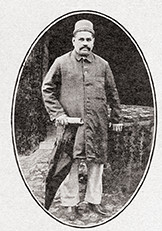
Rustomjee Ghorkhudu: popularly known as "Parsi Rustomjee"
The Indian community burnt the registration certificates and resumed the satyagraha in the second half of the year. Cama was active in organising resistance and was again dismissed from his job in September 1908.
He was arrested on February 17, 1909 for failing to produce a certificate of registration under the Black Act and sentenced to three months with hard labor. In June, soon after his release, the Indian community elected him as member of a delegation to India to make representations about the treatment of Indians in the Transvaal. The government arrested him and charged him again with the same offence, thereby preventing him from undertaking the mission. He served another term of imprisonment with hard labor.
Cama was married and had five children, the youngest of whom was born whilst he was serving his last sentence.
He continued his public activities after the satyagraha ended in 1914. He attended the Amritsar Congress of the Indian National Congress in 1919 as a delegate from South Africa. He was elected a member of the council of the South African Indian Congress at its inaugural session in 1923.
Cama’s brother, Ardeshir, of A. F. Cama and Company, was also arrested in February 1909 and served a term in prison.
Shapurji Sorabji
Born in Adajan, India, Shapurji Sorabji belonged to a well-known Parsi family in Bombay and was a cousin of Parsi Rustomjee (Rustomjee Jiwanji Ghorkhodu), a loyal friend of Gandhi. He was a bookkeeper and manager of the store of a Muslim merchant in Charlestown, Natal.
The Indian community wanted to test the Immigration Restriction Act by inviting an educated Indian to cross the border into the Transvaal to claim right to residence under that Act, while refusing to register under the Asiatic Registration Act. Several young Indians volunteered, and Sorabji was chosen by a committee. He entered the Transvaal on June 24, 1908, with testimonials from the chairman of the Charlestown Local Board and other prominent Europeans, and went to stay with Nadirshah Cama in Johannesburg. He had a British passport valid for all of Africa. He was brought to court on July 8 and was ordered on July 10 to leave the colony within seven days.
He told the court that he had received 14 years of education, seven of them through the medium of English. He had been in Durban for a year-and-a-half and in Charlestown for four-and-a-half years. He had made an application for voluntary registration in the Transvaal, but he had never applied for registration under the Asiatic Act, "an un-British and disgraceful Act.”
He defied the order to leave the Transvaal and was sentenced to a month’s imprisonment with hard labor. Released on August 19, he was deported to the Volksrust border after a day’s solitary confinement and pushed on to the Natal border.
Several educated persons followed him by crossing the border, and claiming the right of residence in the Transvaal, refusing to give thumb impressions under the Black Act, and going to prison.
Sorabji was deported and recrossed the border again and again, serving sentences of imprisonment with hard labor. He was sentenced to three months in September 1908, six months in February 1909, three months in June 1909, six months in October 1909, three months in June 1910, and three months in November 1910. He was imprisoned seven times and served the longest in Transvaal prisons when Gandhi and Smuts reached a provisional settlement in 1911 and the satyagraha in the Transvaal was suspended.
He then went to India and attended the session of the Indian National Congress in Calcutta in 1912. At a farewell meeting in Durban on June 16, Gandhi said: "As a satyagrahi Sorabji has displayed many fine qualities. He has rightly been described as the greatest of the satyagrahis… To be sure, Sorabji stands out from the rest because he volunteered for suffering. He came from Natal and was the first from that colony to join the campaign. Complaints were frequently made against the satyagrahis in jail, but never against Sorabji, He is, by nature, a mild and amiable person. That cannot be said even of Thambi Naidoo. No improper word was ever heard to escape his mouth. He has none of the Parsis’ faults but I have found in him all their finer qualities. Though so well endowed, he is without a trace of pride. Though a Parsi, he is an Indian first. Hindus, Muslims and Christians alike admire him. That he continues firm on his course, having once set it, and that he tries to understand every issue, is his fourth virtue. Sorabji is without compare.”
Gandhi had great hopes that Sorabji would be a worthy successor to him when he left South Africa, to serve the Indian community. He sent him to London to qualify as a barrister, choosing him for a scholarship offered by Dr Pranjivan Mehta. After being called to the bar in London, Sorabji returned to Johannesburg, practised law and performed public work. But he passed away on July 13, 1918.
Gandhi wrote in an obituary on July 27, 1918: "One of the best Indians has just passed away in Johannesburg in the person of Sorabji Shapurji of Adajan, near Surat, at the age of 35. And it is my mournful duty to pay a humble tribute to a fellow-worker. Sorabji, though known to a select company of friends, was unknown to the Indian public. His work lay in South Africa. He was a prince among passive resisters. He joined their ranks when the struggle in South Africa was at its highest and when it had travelled beyond the confines of the Transvaal. When he joined the struggle, I must confess, I had my doubts about his ability to go through it. But he soon made his mark as a front rank satyagrahi. Neither he nor I ever expected that he would have to undergo a series of imprisonments amounting in all to over 18 months with hard labor. But he went through it manfully and cheerfully. Sorabji was a small trader when he took to public life in South Africa. He had a high school education. But such as it was, he made the most effective use of it in the Transvaal. During the struggle, he showed a steadfastness of purpose, probity of character, coolness of temper, courage in the midst of adverse circumstances, such as the best of us do not often show. There were occasions when the stoutest hearts might have broken — Sorabji never wavered…
"The deceased took an active part in all the leading movements among Indians in London. He was for some time secretary of the London Indian Society. He was the first to join the Indian Ambulance Corps that was formed in London at the inauguration of the war and served at Netley, nursing the sick and the wounded. After being called to the Bar, he proceeded to South Africa, where he intended to practise the profession and return to India after he had given a number of years to South Africa and found a substitute. But alas! fate has willed it otherwise and a career full of promise had to come to an abrupt end.”
Gandhi devoted a whole chapter of Satyagraha in South Africa to Sorabji.
Shapurji Jivanji Randeria
Born at Rander in the Surat district in India in 1880, Shapurji Jivanji Randeria arrived in South Africa in 1900. He had passed the senior bookkeeping examinations of the London Chamber of Commerce in Bombay. After arriving in Durban he founded a customs clearing and shipping business. He had a passport issued to him by the British consul in Zanzibar entitling him to proceed to any British colony with all rights of British citizenship.
He crossed the Natal-Transvaal border in August 1908, along with Parsi Rustomjee and others, to claim his right as an educated person to enter the Transvaal. He was arrested on August 27 and the next day the court ordered his deportation to Natal. He re-entered the Transvaal and was arrested again. He told the court that, as a Parsi, he had been granted a permit such as was issued to Europeans under the Peace Preservation Ordinance. He could not submit to a degrading Act like the Asiatic Act. South Africa was the land of his adoption and he claimed the right to reside anywhere therein.
Randeria served three terms in prison, totaling 12 months, with hard labor. He was sentenced to three months with hard labor in September 1908 and to a similar term after release. Released on March 4, 1909, he was rearrested the next day and sentenced to six months with hard labor. He was arrested again on the day of release and deported to Charlestown. He had to proceed to Durban from there because of his brother’s serious illness.
He was a respected community leader in Natal in later years. Ismail Meer wrote in his memoirs: "I remember Shapurji Randeria as that imposing quiet man, who was the Gujarati examiner at the Pine Street Madressa and as the person of so many sterling qualities.”
He passed away in September 1945.
Rustomjee Jiwanji Ghorkhodu (Parsi Rustomjee)
Rustomjee Jiwanji Ghorkhodu was born in India in August 1861 and arrived in Durban at the age of 17. He worked in an aerated waters company and later became a prosperous businessman. He was commonly known as "Parsi Rustomjee” (or "Kakaji”). He was one of the founders of the Natal Indian Congress on August 22, 1894, and was elected its vice-president.
Gandhi came to know him soon after his arrival in South Africa and a close bond developed between them. He sheltered Gandhi and his family on January 13, 1897, when the latter was attacked by a European mob on his return from India. The whites threatened to burn down Ghorkhodu’s house and property, but he was not deterred.
In August 1908, together with Dawod Mahomed, N. C. Anglia, Shapurji Randeria and others, he crossed into the Transvaal by train to test his domiciliary rights there under the Immigration Restriction Act and assist the struggle of Indians against the Asiatic Registration Act. They were arrested in Pretoria on August 27 and the next day ordered to leave the colony. They recrossed the border and were sentenced to three months with hard labor.
Parsi Rustomjee said in his evidence before the court in Volksrust that he was a general merchant in Natal where he had large business interests and was an owner of considerable property. He had business interests all over South Africa through which he travelled again and again. He was a parliamentary voter in Natal. He first came to the Transvaal in 1893 and owned three properties there which were expropriated in 1904 by the Johannesburg municipality. He had then placed his financial affairs for the Transvaal in Gandhi’s hands. As a Parsi he had been exempted from the necessity of taking a registration certificate under the Dutch government. He considered he had vested rights as a pre-war resident of the Transvaal.
He was sentenced on February 11, 1909 to six months with hard labor for refusing to give thumb impressions, and sentenced again on August 11, 1909, to six months with hard labor.
Gandhi was allowed to see him in prison in December 1909. He reported that Ghorkhodu was very much shattered in health. He walked about with an eye-shade, his sight being affected. He complained of side ache and constitutional disease.
He had lost over 70 pounds in prison. When he visited Durban in February 1910 to recuperate, he was greeted by 500 people at the station and more on his way home. In an impassioned speech to people in his premises on Field Street, he said India’s honor was at stake. They should not be discouraged by the prolonging of the struggle, which was of so great importance to the community — to its present as well as the future generations. He was determined to fight to the end. Until victory was won, there was neither rest nor peace for him outside the prison. He would far rather die in prison than retreat from the struggle.
Despite his suffering in the Transvaal prisons, he insisted on joining the group of resisters from the Phoenix Settlement, including Kasturba Gandhi, who started the third phase of the satyagraha on September 15, 1913. The 15 satyagrahis crossed the Transvaal border and were sentenced on September 23 to three months with hard labor.
During his imprisonment in the Pietermaritzburg jail, he was deprived of his Zoroastrian sacred shirt and thread (sudreh-kusti). He refused all food until these were restored to him. After protests in South Africa and India, the shirt and the thread were restored and he was moved to Durban. He was assaulted there twice by native warders.
He served a total of 18 months in prison during the satyagraha, all with hard labor, at prisons in Volksrust, Heidelberg, Diepkloof, Johannesburg, Pietermaritzburg and Durban.
Ghorkhodu was a great philanthropist. He was the largest contributor in South Africa to the satyagraha fund. His charities include the Indian hospital in Durban, the M. K. Gandhi Library and Parsi Rustomjee Hall, Parsi Rustomjee Orphanage, M. K. Gandhi Tamil School; an orphanage connected with the mosque at Umgeni; an Indian orphanage of the Roman Catholic Church and part of the cost of a Methodist day school. He also supported several projects of Gandhi in India.
He passed away on November 14, 1924.
Gandhi wrote in an obituary: "With the passing away of Parsi Rustomjee... India has lost a true soldier. So far as I am concerned, I have lost a true friend. I have come across few men like Parsi Rustomjee. He had had hardly any education. He knew a little English and his knowledge of Gujarati was not much. He was not too fond of reading. Right from his youth he was in business. Through sheer hard work he had risen from the status of a common clerk to that of a big businessman. Despite this, he had a keen common sense and great generosity and he was so tolerant that, although he was an orthodox Parsi, he had the same affection for Hindus, Muslims and Christians. I have never seen anyone going around for funds return empty-handed from him. His loyalty to his friends was so staunch that many gave him their power of attorney. I have seen many prominent Muslim businessmen name Parsi Rustomjee their representative in preference to their own relations. No poor Parsi was sent away from Rustomjee’s shop. He was as sparing towards himself as he was generous towards others. Luxuries had no place in his life. He spent money after great hesitation on himself and his family. He continued to live in great simplicity till the end…
"By making a trust in the name of his dearly loved wife Jerbai after her death, he gave away the larger part of his wealth in charity. He has not pampered his children at all but has rather brought them up in simplicity and left them an inheritance sufficient only to prevent them from starving…
"At the time of satyagraha, Parsi Rustomjee was the first among the businessmen of Natal who were prepared to sacrifice their all… The struggle continued for eight years; many staunch warriors fell. Rustomjee, however, did not waver…
"He was to have come here in December at the time of the Congress session. God, however, willed otherwise…”
Sorabji Rustomjee
Parsi Rustomjee’s son Sorabji Rustomjee, was born in Durban on December 25, 1895. He went to India to study and soon after returning to South Africa, crossed the Natal-Transvaal border and was sentenced in January 1911 to six weeks in prison.
He asked to join his father in the first batch of satyagrahis from Phoenix in September 1913, but was not accepted. Then he went all over Natal distributing food to the workers who were on strike. He was arrested in November 1913, and charged with incitement and promoting the strike. The charges were withdrawn later.
Gandhi wrote in Satyagraha in South Africa about the bravery of Sorabji during the strike in Natal: "Many laborers came out (on strike) in Verulam and would not return in spite of all the efforts of the authorities. Gen Henry Lukin was present on the scene with his soldiers and was about to order his men to open fire. Brave Sorabji, son of the late Parsi Rustomji then hardly 18 years of age, had reached here from Durban. He seized the reins of the General’s horse and exclaimed, ‘You must not order firing. I undertake to induce my people peacefully to return to work.’ Gen Lukin was charmed with the young man’s courage and gave him time to try his method of love. Sorabji reasoned with the laborers who came round and returned to their work. Thus a number of murders were prevented by the presence of mind, valor and loving kindness of one young man.”
Rustomjee was prominent in Indian politics after the end of the satyagraha. He was elected a member of the council of the South African Indian Congress at its inaugural session in 1923, and President of Natal Indian Congress in 1928. He later moved to the Transvaal and was elected vice-president of the Transvaal Indian Congress in the 1940s. He served a term in prison during the Indian passive resistance in 1946 and was a member of a delegation which went to New York in November 1946 to lobby at the United Nations for action against South African racism and to advise the Indian delegation. After his return from New York, his wife Khurshed and their daughter Dhan went to prison.
Rustomjee and his other daughter Tehmi called on Gandhi on January 30, 1948, the day of his assassination.
Rustomjee passed away in Durban on February 22, 1960.

Hailing from Andhra Pradesh Enuga Reddy was a political officer in the United Nations Secretariat from 1949 to 1985. From 1963, he was in charge of action against apartheid in South Africa, as secretary of the Special Committee against Apartheid, later Director of the Centre against Apartheid and finally Assistant Secretary-General of the United Nations. Since retiring he has been researching and writing, especially on the history of the freedom movement in South Africa and on Mahatma Gandhi.
◆ ◆ ◆
From the archive