
Books
Historical nuggets
History of the Parsis of Navsari by Capt Hormazdiar Jamshedji Mancherji Desai. Published in 2008 by the World Zarathushti Cultural Foundation, Zoroastrian Association Industrial Institute Building, Chikalwadi, Tardeo, Bombay 400007. Pp: x + 185. Price: Rs 100.
"When the celebrated behdin Changa Asha managed to bring the holy Iranshah fire from Bansda to Navsari around the latter half of the 15th century, he made an agreement between the Sanjana mobeds and the Bhagaria mobeds of Navsari that the Sanjana mobeds would only tend to the ‘boe’ ceremonies and serve the holy fire, and retain all the proceeds of the offerings. The Bhagaria mobeds were to perform all religious ceremonies in connection with the living and dead, even of the families of Sanjana mobeds. The Sanjana mobeds were pleased with the arrangement and the agreement to this effect was signed by both parties. But after a couple of centuries disputes arose from the Sanjana mobeds and …caused tremendous dissension among the Parsis of Navsari for quite a long time…(Eventually) the Sanjana priests refused to remain at Navsari. At their own request they were given a ‘parvaneh’ (permission) to leave.” They left Navsari for Bulsar in 1740 AC.
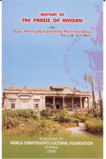
Such nuggets of information lie strewn in Capt Hormazdiar Desai’s book, bringing a measure of understanding to some established feuds and antipathies that sometimes surface in community conversations. Drawing largely — though not only or wholly — from the 1897 publication Tawarikh-e-Navsari, one of 126 books in Gujarati authored by Sorabji Mancherji Desai, the celebrated civil servant in Navsari who was his paternal uncle, Desai notes, "Sorabji relished the opportunity of publishing this small history of an ancient city, exactly corresponding to the city of Cordova in Spain, and states that it is the history of the first Parsi kingdom after their flight from Iran and arrival in India. He asserts that the Parsis were mainly responsible for changing the face of Navsari from that of a small village to the status of a thriving and prosperous city.”
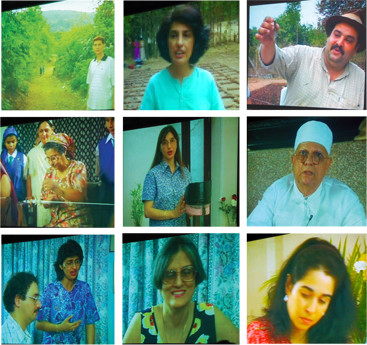
Stills from audio-visual presentation of individuals connected with the various WZCF projects
Situated 50 feet above sea level, the climate of Navsari in those days of limited population was considered salubrious. Among the characteristics of its people — fondly known as Naushakras — is their obstinacy or perseverance. On Sorabji’s authority Desai states, "If they undertake any important and/or difficult work, which looks impossible to achieve, they will not give it up till its very successful completion.” He also notes that while the European powers were establishing their factories in Surat, they were exporting saris, dhotis, Basta and Gaj made in Navsari and nearby Gandevi. So impressive was the quality that it is on record that a European traveler — Dr Hove — came specifically to Navsari and Gandevi to learn the art of weaving!
In 1714, one Tehmulji Rustomji Seervai, "a shrewd politician” accord-ing to P. P. Balsara’s Highlights of Parsi History, went to Delhi and got himself appointed Desai of Navsari. That was the beginning of the use of the title as a renowned Parsi surname. A few years later, when the people of Navsari groaned under the tyranny of the Nawab of Surat, Tehmulji was instrumental in inviting the rule of Pillajirao Gaikwar of Baroda. He was arrested as a traitor and jailed by the Nawab but released later by the Gaikwar’s orders. This act of courage in founding and consolidating Gaikwar’s dominion in Navsari established the Desais as friends of the ruling house for generations to come. Indeed, the author notes that "they were given the right to collect revenues, excise, registration fees, etc. The Desais also took from the residents of Navsari a small levy called ‘veth’ or ‘veth bigara,’ collected in cash, kind, labor, etc. In return the subjects were assured the fullest assistance and protection at all times. The Desais were virtually governors of Navsari, settling disputes, punishing offenders and even sentencing criminals to death…The system was greatly appreciated by the inhabitants. (Here was) one integrated machinery — a sort of one window approach.”
Commenting on the visit of the Bhagaria priest Ervad Meherji Rana to Akbar’s court and his remarkable impact on the Emperor, Desai writes, it was a momentous event in the history of the entire Parsi community in India. "To commemorate this occasion Ervad Meherji Rana was elevated to the post of a ‘Dastur (high priest)’ by the Bhagaria mobeds of Navsari. Thereafter he is known as Dastur Meherjirana…the first case in India of a priest being appointed a Dastur.”
Similarly Desai provides an insight into the construction of the Navsari Atash Bahram — the second one ever to be founded in India. The people of Navsari felt a spiritual void when the Iranshah was withdrawn by the Sanjana mobeds after 300 years in their midst. Some 25 years after the departure of the holy fire, on October 19, 1764 (mah Farvardin, roz Ardibehest) after the Rapithwin jashan, "the priests and laymen requested Desaiji to consecrate another atash vaarharam at Navsari in his lifetime. The religious sardar replied, ‘I also pray for the same work day and night. If you are in favor of such a work, I am ready.’” The Pahlavi Nask and other ancient manuscripts were consulted on the ceremonies required to be performed and Dastur Sohrab, a descendant of Dastur Meherjirana, was entrusted with the task and the Atash Bahram was enthroned on December 2, 1765.
Starting with the Vadi Dar-e-Meher and the Meherjirana Library a host of Parsi institutions in the city are delineated in a separate chapter. So too are the many great individuals that hail from this town considered the Parsis’ dharamni tekri (religious fortress). They include the nationally known pioneers like Dadabhai Naoroji, Jamsetji Jejeebhoy and Jamsetji Tata but Desai does not stop there. He writes of many a lesser known name whose diligence and commitment has generated community and local renown. Several pictures and illustrations give us a visual impression of the old habitats. For its price the book — with an index compiled by scholar Ervad (Dr) Rooyintan Peer — is a steal, though one wishes that the editing had been sharper. It would have eliminated some of the repetition that dogs parts of the book.
◆ ◆ ◆
From the archive