
Life-Style
Pages from the past - III
Celebrating marriages and navjotes, dealing with births, diseases and death, strengthened family and community bonds
In those early days of the last century when electricity was unheard of and a fanas (lantern) was the commonest source of light, the laid-back Parsis still maintained a lifestyle that differentiated them from other communities. These reminiscences, serialized over three installments, evoke the sights and flavors of that era. The first installment described the habitation and attire of the Parsis of yore. The second installment refered to their modes of livelihood and the communication facilities then available. This last installment concerns the rites and rituals observed, their values and beliefs.
Families and ceremonies
Large families were common, possibly due to high infant mortality and the bias towards males. Early marriages were the order of the day and anyone remaining unmarried was unheard of. Marriages among relatives, known persons or through recommendation of friends and well-wishers were common, the guiding philosophy being "janiti juvar saari, anjana gahu khhotta (the familiar jowar is better than alien wheat).” Due weightage would be given to the recommendation of a trusted goldsmith or astrologer or physician. Pointing to a young girl of 10-12 the goldsmith would say, "Kavasjibhai, aa chhokri ghani dai chhé (this girl is very good).” The young couple lived together till death did them apart 50-60 years later. Divorces were never registered and harassment or dowry deaths almost never occurred. There was no love marriage or interfaith marriage. Remarriage of young widows was encouraged and the unfortunate girl would at times get another matrimonial offer from the same family.
Navjotes and weddings meant grand functions — affairs to remember. Invitations were not in vogue and one could expect hordes of guests, invited and uninvited, as all village folks felt obliged to grace the occasion. The officiating priests would come on the day of the function from nearby towns and return the same night. The other guests would come three-four days in advance and stay back two-three days after the function. They would arrive in well decorated bullock carts or horse-drawn tongas or on horseback. Well polished copper lamps on both sides added to the beauty of the carriage. These lamps used to work on white powder — calcium carbide — which not only gave light but a mild offensive smell as well. The bullocks and horses were the focal point of heated discussions. To determine whether a horse is lucky or unlucky they would look at the position of the bhumra (circular formation of hair) on the body. If the legs near the hooves were white in color, it was considered a good sign. Not only the guests but also their animals were well looked after by the hosts.
Food for all the guests was jointly prepared by relatives and trusted individuals. Some families used to call babarchis (cooks) from Surat or Navsari, the favorite being Jehangirji of Surat who, along with his assistants, arrived a couple of days in advance, equipped with large sized chamcha (spoon) and chuliya (cutting instruments) , never forgetting the khima nu (mincing) machine and sali nu (potato grater) machine. The sumptuous, mouth-watering food would be served at dinner time with chaanto (hot drinks) in metal fuliyas (cups) large enough to carry a couple of pegs.
The family also got together during vacations when relatives and friends would descend on the village. It was almost like a funfair lasting the entire vacation: toddy sessions in the morning, afternoon swims in the river, fruits like watermelon, musk melon, mangoes, taad ni galeli (palm fruit) to your heart’s content in the evenings. Life sure seemed like one long vacation.
Religion and rituals
Zoroastrians residing in the interiors were never overtly religious unlike those living in small towns which had an agiary. On major festivals or auspicious occasions in the family they would visit an agiary. Rarely would they sit down to pray with Khordeh Avesta in hand. The dignity of atash was always observed and loban feravanu (burning incense) in the evening was a custom strongly adhered to. On Avan Yazad Parav they would go to the riverside, do their kusti and carry home some water which would be sprinkled all over the house. The priest in the town would teach kusti and general prayers to children every Sunday morning and would daily light a divo at the sagdi every evening.
Kusti weaving was the prerogative of the ladies of the house — some doing the kantvanu (spinning thread) and others doing the weaving with wool bought from Surat or Navsari. Before sitting down to work on the kusti they would first wash their hands and face, do their kusti prayers and then touch the jantar (frame) to undertake the sacred weaving exercise. Wearing of mathubanoo (head scarf) during this process was an unwritten law. The most difficult part of the process was kusti uthlavvani (inverting) wherein the outer rough surface is pushed inside and the inner smooth surface is brought out. A ready kusti would be washed, neatly folded and exposed to the sacred fumes of loban whilst reciting the Yatha and Ashem. It would be either used by some family member or sold at five or 10 rupees, depending on its finesse.
Muktads for 18 days were another religious feature, observed either in the house in the town or at the agiary. The bapai (paternal matriarch) of the house would look into the minutest details of all the ceremonies and everyone had to obey her commands. Coinciding with heavy rains, it proved rather inconvenient when one had to wade through stagnant water or ankle deep mud. The ladies were under greater strain at this time. Their day would start at around 2 a.m. and end at around 9 p.m. During this time they dare not touch the bed and could rest only on a shétranji (mat) on the floor. Starting with a bath and kusti they had to fetch chokkhu pani (pure water) from the family well. No parjaat (non-Parsi) would be allowed anywhere near the well till 25-30 buckets of water were drawn for cooking and cleaning all through the day. The women would prepare stacks of darun whilst reciting the Ashem Vohu. The velan (rolling pin) for pressing the darun was made of copper, the hollow inside containing metal pieces that created sweet music when in use. Before the priest arrived at 8 a.m. for the satum, the paapri-malido, food, fruits had all to be laid out. He would come again at 12 noon for the afargan and then later at 4 p.m. for the farokhshi. Some relatives from nearby places would drop by to pay their respects and stay over for the night.
The men folk would stay back at the village for 12 days and join the family during the Gatha days, Pateti and New Year. During the Gatha days, haircut or shaving was prohibited and on the New Year, boys and men would line up in the morning for the barber who would close crop their hair. There would be an air of festivity — new clothes, new cap, going to the agiary, meeting relatives and of course kebab and khurchan (mixed organ meats like liver, kidney, etc) in plentiful. Mornings would see flocks of people begging "Papeti aapo, bawaji, maiji.” Grand New Year celebrations were observed in areas of Navsari like Mota Falia where big mohallas would be covered with a shamiana (canopy) and the sweet sounds of shehnai with pomp and pageantry filled the air. Those Nosakras (original residents of Navsari) settled in the cities like Bombay would make a beeline for their ancestral homes during Gatha and New Year time. The youngsters in Navsari especially were known to play innocent pranks during those happy days — interchanging the signs of a barber and a doctor, leaving a donkey tied at your doorstep in the night… Such mischief was taken sportingly.
Rites and customs
A baby was invariably delivered at home under the guidance of an elderly, experienced lady member or sometimes the dai (midwife) would be summoned from a nearby town. In case of a difficult labor, a kind of root would be tucked in the hair, in the belief that it would ease the job. After delivery, the lady was meant to rest for 40 days when she had to strictly observe the rituals connected to the menstrual cycle. She would remain in isolation on her iron dholki (cot) with cotton patti (strips), not touching anybody and not doing any household duties. She would be served a rich diet full of ghee and raabri in her transparent glass plate and water/tea in a glass mug kept separately. The toilet was a separate 20 ft x 20 ft thatched, four-walled open air facility called chhindi. If nursing a baby, the infant was clothed in separate garments when with her, and derobed before being brought in contact with other members of the family. Following the nahan (purification bath) ceremony performed by the priest, 40 days after the delivery, the mother could mingle with the rest of the family.
Living in a close-knit joint family, the bonds among the family members were very strong. "Eruch has not come home as yet,” a brother would worry seeing it get quiet and dark outside. He would either mount a horse to go in search of his brother or send an errand boy with a fanus along the track Eruch would have taken. News of a snake biting Sorab or Fallu falling from the tree and breaking a leg would travel from village to village making the Parsis rush to the family’s assistance.
At times discontent within the family arose when one member had more mouths to feed than the other or one member choosing to settle in the town would keep his earnings to himself whilst demanding a share from the farm produce. To heal the cracks threatening to disrupt the families, solutions were devised: if you are not slogging in the field you have no right to the agricultural income although your share in the land holding would be maintained. While elders were always there to settle a dispute it was not uncommon to hear a party threaten another, "Mooa né court na pagathia ganavi kadhas (I’ll drag that nincompoop to court so that he will soon learn to count the number of steps that lead to its entrance).” People had a peculiar fear of the court and the police.
The villagers feared anybody wearing a sola hat. The relations with the locals was by and large cordial. Parsis would not try to deprive the laborers of their rightful wages or land and the farmhands reposed faith and trust in the Zoroastrians. In fact if a local mistakenly walked off with wheat instead of paddy as part of his wages, he would rush back to return the wrong parcel. Zoroastrians were held in high esteem by the Hindus and Muslims of nearby towns who would never smoke in the presence of Parsis. Being in close contact with members of all communities, the Zoroastrians adopted many customs. Seeing the Hindus they started the practice of dhan dhovanu (cleansing ornaments) on Dhanteras, celebrating Diwali, offering aarti, cococut, etc to the Holi fire after a day of fasting, the habit of chewing paan (betel leaf). From the Muslims they picked up jantar-mantar (black magic), dora-dhaagaa (threads) under the influence of Imam, Sufi, Olia, Ilam and tavij (a locket worn by Muslims). Whatever the new practice, they always wore the sudreh-kusti on their body and had the Yatha-Ashem on their lips.
Sickness was considered a grave and insurmountable problem for which they had to formulate their own medicine, devices, methods and procedures to alleviate the suffering. Daru (alcohol) was the sole remedy for many ills as was quinine, an extremely bitter white powder which found a permanent place in every Parsi village home. Malaria was a great menace every monsoon and winter. Typhoid was another problematic situation, as were meningitis, pneumonia, tuberculosis or paralysis. Violent deaths like murder or suicide or an attack by a wild animal were very rare. Infant and child mortality was high and every winter the outbreak of small pox would claim many lives. Severe diarrhoea, cholera, typhoid, chicken pox, measles, diphtheria, whooping cough would cause panic with the feeble being felled by the virulence of the disease. The chaalaa-paalaa (herbal) decoction, embrocation, wooden splints, sand bags, tree barks and other natural therapies were employed as healing agents. From the English medicine available, iodine was applied locally to reduce swellings, and potassium permanganate used to cleanse open wounds and disinfect well water. Only God, though, was considered the ultimate healer.
The demise of the near and dear, young and old, not only caused immense pain and distress but also a heavy financial drain for the living on account of the elaborate religious ceremonies that had to be performed year after year. The custom of bharnu on the day of the uthamna wherein those present would give big or small donations in memory of the deceased helped the bereaved family to tide over the monetary loss although the personal loss would be irreplaceable.
Fear of dhaad, thugs striking in the middle of the night and plunderers escaping with cash and ornaments, was always at the back of their mind. Dogs, weapons and cohesiveness amongst the villagers were the only deterrents for the criminals, hence every Zoroastrian family living in the deep woods would keep dogs.
Although Parsis were not fabulously rich there were instances of one family in the forest of Songadh taluka owning a car, a luxury unheard of even in the cities. Yet another gentleman from a village who was fond of racing would travel to Bombay every racing season!
Politics did not concern Parsis unduly as they nurtured the conviction that "the sun will never set on the British empire.” Within the portals of their own humble homes hung the bead torans with the words, "Paak Daadar Ahura Mazda ni madad hojoji (May Lord Ahura Mazda guide us).”
Concluded
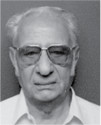
Dr Burjor Eruchshaw Patell is a senior practitioner of homeopathy and was former dean of the Homeopathic Medical College, Bombay. Born in village Kanza, Surat district, his education started in Mandvi, and later took him to Baroda, Bombay and Calcutta.
◆ ◆ ◆
From the archive