
Zoroastrians Abroad
"Emotion has a certain value"
Business consultant Bomy Boyce speaks of industrial and community management styles
When the majority of Parsis arrived in Canada "some fared very well (in corporate North America), some not at all. It’s not only a matter of having knowledge but the style and how it is presented. You have to be amiable. You can’t ever sit down and try to prove your point; can’t ever say ‘I told you so’… The Canadian corporate world wanted the ‘Canadian experience’ from newly arrived immigrants. Things have changed since then.”
Chartered accountant, MBA and international business consultant Bomy Boyce, based in Toronto, Canada, was comparing the management styles in India and North America. Having spent his earlier years as General Manager at Killicks in Bombay he says he encountered an attitudinal sea change when he joined IBM in Canada. "IBM is a fantastic company. I learnt a lot regarding people relations. It helped me later as a consultant.”
There have been many Indians in IBM who have had a lot to contribute, says Boyce, adding, "On average, our knowledge in general is more than those we work with but one has to understand the psychology of corporate North America.” Contrasting the attitude in Killicks where "people were working under us and we were the boss of the many,” Boyce says, "In IBM there were no bosses. It was always a joint effort, joint results, joint everything…You look after people and people look after the work. That is the concept of management in America that I learnt from IBM, observed in different companies.”
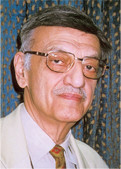
Boyce: "basic energy should be the same”
Though he went from India with experience in higher management, Boyce says he had to work up from the ranks in Canada. What he learnt along the way is that "companies don’t want a controversial environment between people.”
In international business, when Boyce was involved with projects with India, Austria and others in North America, Boyce found himself working with banks, and as he succinctly notes, "banks know very little of entrepreneurship.”
One of the founders and past president of the Zoroastrian Society of Ontario (ZSO) Boyce considers the birth of the Ontario Zoroastrian Community Foundation unpropitious as it has divided the community. "There can be two centers — or five, but there should not be two organizations in the same territory.” He has refrained from joining it lest it is perceived as accepting the split. "This can be construed as a Toronto internal matter but I can discuss it as Toronto holds an important place in terms of the Zoroastrian diaspora and can provide leadership and precedence to other centers,” Boyce told Parsiana in the course of an interview in December 2005. Nonetheless, "it is not easy to make them meet. Each side says they would like to come together but they are not aggressively seeking a solution to achieve this. The solution lies where neither group loses its gains, but neither believes such a solution is possible, while I believe it is,” he notes with a trace of asperity.
Concerned about the greater good of the community, Boyce would like to see each side, "if not propelled by ego,” to reach a solution that benefits the whole community, not a section of it. "When x number of people think something is OK and the rest can do what they like, it is a concept that is injurious to the community…What about the emotional need of people? Emotion has a certain value, a certain integrity…”
Referring to the stymied world body as in need of a "marketing job,” Boyce says, "I don’t believe in spending days and days on drafting memoranda and by-laws.” According to him what is required is to address the different "attitudinal segments” of the community. He suggests that the Bombay Parsi Punchayet (BPP)/Federation of Parsi Zoroastrian Anjumans of India give presentations at a global level in the western centers where the community is clustered. "The whole community should be addressed at the corporate level…The BPP should have an ambassador of goodwill. Some action of some kind is required.”
He also wonders why the Venture Capital program of the BPP is limited to India. "If you want to bring a successful entrepreneur back into the fold, he has to have a BPP connection on his way up.” That Boyce is not thinking only in terms of finance is evident when he cites the example of highly successful London restaurateur Cyrus Toddywalla. Though now decorated by the British Government which avails of his experience and expertise in rehabilitating dropouts in the country, there was a time when it had impounded Toddywalla’s passport and the gritty chef had to pull himself up by his bootstraps. "The BPP could have supported Toddywalla when he was fighting the British government for his passport,” Boyce points out.
On traditions and rituals, Boyce believes they were possibly based on scientific relevance. As one gets more affluent one tends to ignore this concept under the guise of being "modern” and the orthodoxy do not use to advantage the need to continue to observe the traditions and rituals based on the scientific affiliations, says Boyce. For example, he suggests the orthodox topi (cap) may be meant to protect the pineal gland from ultraviolet rays. Else, "why are the Jews wearing it? Why do cardinals wear it?”
Though not against intermarriage given the conditions we face in our world today, Boyce says he prefers marriage within the community: "Every atom has its own distinctive vibration and vibration is energy. Each individual, each group, each race has it distinctive energy environment. The whole concept is that basic energy should be the same. How do animals distinguish their own species? Through the vibrations and energy they emanate. How is a child born? It is a crystallization of energy.” Referring to "religions’ scientific affiliations, every agiary has an energy loop which meshes into the larger loop…When the energy around you dissolves, sickness comes…
"What is intuition but a connection with Universal Knowledge? Where did Einstein get his ideas? How did Mozart compose music at the age of five? They were tuned in to the Universal Knowledge…”
Believing that "every dollar of the community should be spent on the community,” Boyce has instituted the Dina Boyce Charity Trust in Bombay to provide educational and medical help to the community in memory of his late wife (née Bilimoria) who died in 1993. A lawyer by profession though she did not practice, Boyce says, "I miss her wisdom.” Their daughter Pheeroozah Vania is a trainer at IBM’s corporate division, handling an international team dealing with several countries. Their son Jamsheed is a forensic accountant. Each of them have a 15-year-old daughter. "My two granddaughters tell me ‘You are ancient, dada!’” he chuckles.
◆ ◆ ◆
From the archive