
Awards
“The system is a mess”
Winner of the First Nani A. Palkhivala Memorial Award for the Preservation of Civil Liberties in India Navaz Kotwal speaks of her work among the riot affected in Gujarat
"Even fast-track trials take a minimum of five years. People (in the relief camps) felt the whole system is against them…The inmates couldn’t believe we have a criminal justice system!” recalls activist Navaz Kotwal of the Commonwealth Human Rights Initiative (CHRI) who has been working among the poor and dispossessed in the riot afflicted communities of Gujarat.
Sent on a two to three-week assignment because of her familiarity with spoken Gujarati, Kotwal was so appalled by the condition of the camps and the misery of the people, she initially stayed on for seven weeks, then organized resources for a sustained program upto 2009. Currently on a three-month fellowship on Human Rights and the Law offered by the Commonwealth Office at the University of Nottingham, her Nani A. Palkhivala Award for the Preservation of Civil Liberties was received on her behalf by her father Tehmurasp. In an interview with Parsiana prior to her departure Kotwal said she hadn’t known she had been nominated by the CHRI. "I must have sounded dumb when Shirin Bharucha (secretary of the N. A. Palkhivala Trust) called to congratulate me!”
Kotwal says she was more curious and anxious than afraid when she was given the assignment but the sight that met her when she reached the Kothra camp left her in "shock and disbelief…There were 3,000 to 4,000 people in an area that can accommodate 300 or 400. There was sewage and dirty water everywhere and a number of pigs roaming around. People were sleeping (tightly packed). The first few months were really depressing.”
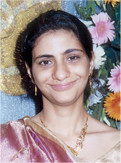
Kotwal: "justice means a lot”
The seven-page nomination filed by the CHRI speaks volumes of her grit in the face of human distress: When the Government of Gujarat (GoG) was seeking to present a false notion of normalcy by forcibly closing the camps but denying this use of force "Navaz collected documentary proof of official orders passed to the contrary and presented this along with highlights of the plight of these displaced thousands to major newspapers. Copies of these documents were distributed to members of Parliament and the Leader of the Opposition leading to questions being raised in Parliament that eventually prevented the GoG from closing down the camps for enough time to prevent these people from being victimized further.” The CHRI nomination also records Kotwal’s involvement at a variety of levels, providing the victims personal support at every stage of the legal battle for justice, medical aid, whatever financial assistance from the State they were entitled to and even the institution of a trust. She recorded the testimonies of witnesses in painstaking detail and filed them before the Nanavati-Shah Commission of Inquiry set up by the State government to look into the carnage. When she learnt of the case of 44-year-old Safiyaben Razzak Patel, raped, beaten with metal rods, stabbed and left for dead but who lived on for a month in a local hospital with a ripped abdomen and exposed intestines, without proper medical treatment, Kotwal organized her shifting to a better hospital in Baroda. "Safiyaben survived only a little longer but Navaz’s determination to make every effort to provide succor even in the most hopeless of situations is worth recording here,” notes the CHRI nomination. Elsewhere it notes, "For the (survivor) community Navaz has become the hub of the wheel of hope that must traverse the difficult path for securing justice. She being a highly educated woman has been able to persuade the women of the community to participate in the decision making process. By espousing modern values in a traditionally conservative community she has become the role model for them, making them distrust outsiders less.”
Kotwal says they began by filing 422 complaints with the district superintendent of police. Only 11 were heeded. "We didn’t want to follow cases where people would walk out after some time. Most public prosecutors (there) belonged to right wing groups. Though even senior lawyers (who CHRI engaged to ensure that public prosecutors took the correct legal stance) took small fees, the protection of victims and witnesses, transporting them again and again over a distance of 50 km or more to the trials at the sessions court and other ancillary expenses (for the 10 cases they pursued) added up to a huge amount of money. The CHRI had not done such work in the past. There was a threat to the organization as a whole,” Kotwal described the scene.
Simultaneously Kotwal and her colleague started holding legal literacy workshops within the refugee camps. When the Frederick Norman Foundation of Germany selected her for a week long scholarship on civil rights, she wrote articles in German magazines, gave interviews on German radio, asking for funding for a three-year project. The proceeds together with the British High Commission’s funding enabled her to hold legal literacy workshops. "The community could come together when it became more aware of the law. There was hope that the possibility of riots, of criminals getting away with impunity would be much less…
"We started paralegal workshops in three talukas based on need assessment. We asked them about their daily problems. There was complete ignorance. Money worth crores comes in for basic development but they have no electricity, no amenity of any kind.” In the effort to help the victims rebuild their lives Kotwal realized that they could not work only with the Muslims. The majority community in the same economic background faced the same problems. "We got them together, about 100 people from each village, organized two to three-day workshops (on legal literacy), accommodating 30 at a time, through the year.”
With role play, newspaper cuttings and films Kotwal said she and her team (one full-time member plus two part-timers) showed people how to access government schemes, to walk confidently into a police chowky to file a FIR (first information report), to acquire their ration card… A happy Kotwal reports that now the people say that they are no longer afraid that no one would talk to them properly, no longer live in fear of being arrested "because they are aware of their rights.” She is gearing up for the second round of training: "People see it as a way of improving their lives and challenging government failures.”
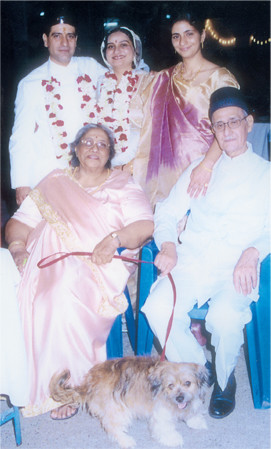
On Roshni and Rayomand Engineer’s wedding, Navaz with parents Aban and Tehmurasp
The most difficult part of her assignment was that all the work was law-based, requiring her to sit down with books to find her way through the convoluted legal system. She also needed to travel a lot, often up to 300-400 km a day. "The last three and a half years have been stressful,” she says. Living alone, not knowing what might happen at night…When they managed to get a couple of convictions for life imprisonment (appeals have been filed), there were death threats. As women are generally absent in these courts, Kotwal says she "sticks out like a sore thumb. I am seen in court in a number of cases. The defense lawyers know I’m behind most of this…There were inducements and threats… There are phone calls in the middle of the night — 16 to 18 missed calls.” She has to face revolting obscenity in the courts, total vulgarity. "There was an acid attack on my house. Luckily, I was not in that room at that time. They know my movements. But the threats just increase the will to struggle against them. What keeps me going is that the victims and witnesses of the riots have lost so much. Some have lost their entire families.”
She says she didn’t contact the Parsi community in Baroda where she was living as "(Chief minister of Gujarat Narendra) Mody’s system is all pervasive.” When she spoke to the Commissioner of Police she says he told her, "‘If you are kidnapped, don’t panic, don’t raise a hue and cry, because only the first couple of days will be tough.’ Would he have given the same advice to his daughter or wife?” she asks. The experience has taken its toll. Eating out for three years has impacted her health. "I have to be careful where I go. I don’t go alone. I enjoyed early morning jogs and cycling but I can’t do that any more. Some compromises one has to make,” she smiles.
"It has changed my outlook on life. I was more chatty, more bubbly three years ago. That has changed drastically and I do regret it,” she notes candidly. The experience has also led to "emotional burnout.” She says, "I am not shocked so much any more.” But it has also given her the courage to fight, to do what she can to change the situation. And the results are "very visible. There is great change in the community. It keeps us all going.” Acknowledging the support of her team, the organization and its director, Kotwal notes "there is tension for them too – if anything happens to me.”
An alumnus of Queen Mary School and Jai Hind College whence she did her BSc in microbiology, Kotwal completed her masters degree in environmental science from the Institute of Science and was planning to go in for a PhD degree in cancer biology when she says she "got tired of the microscope.” A volunteer with Akanksha, a program for the education of street children, she went for a brief holiday to her aunt Dhun Bagli to Delhi where she met Maja Daruwala, director of CHRI. Kotwal’s parents Aban and Tehmurasp are a retired couple, she from the Ratan Tata Institute’s accounts department, he from the Times of India’s advertising department. They both now function as secretaries of the H. B. Wadia Atas Bahram Trust. "My parents don’t know the whole truth, only a part of it,” admits Kotwal, noting that her sister Roshni, who works with the Hongkong and Shanghai Banking Corporation, is her confidante. The parents "know I want to do this and are reconciled to it. But the tension and worry is there. There are times when I come home often. At other times once in three or four months,” she notes.
"Not publicizing this work has helped it to succeed,” feels Kotwal, noting that it’s a CHRI policy. "Publicity would endanger our lives as well as enable outside forces to provide inducements and threats to witnesses…The system is a mess. There is no justice or law and order; but if you just keep complaining and don’t do anything about it, it will keep breeding. You have to raise your voice against it,” Kotwal is passionate in her belief. She says there are a lot of others working in the field without recognition. "Their work is seen as against the State. But they are working for justice which is actually the State’s responsibility.”
Her work is cut out for the next three years. She says she will concentrate on training a cadre of people so that by the time her team leaves in 2009 there is a strong resource base in the villages. She wants to make people aware enough to challenge anything that the government regime can throw at them. The paralegal group is already bringing out three Gujarati newsletters every month financed by CHRI – Nyaya Setu (bridge of justice), Nyaya Chetna (spirit of justice) and Nyaya Khoj (quest for justice). Therein they address various aspects of law and human rights: How to file an FIR, how to get a ration card without the aid of middle men who mulct them for Rs 500 to 1,000 and don’t always deliver, how to get the caste certificate through which they can access a lot of government benefits, how to register births and deaths and get the relevant certificates. The spread of knowledge is being resisted by vested interests like the mamlatdars, says Kotwal.
She is confident that "if more people get into this work and struggle hard enough, one day we will see the change we want to see.” The organization has been looking for more people. There are few takers. "They join, stay for two or three months and leave,” says Kotwal. The inhibiting factors according to her are that there are no fixed hours for this line of work, the risk perception is high, there is too much hard work and there is not much recognition. "If one can do better, sitting in offices in Bombay or Delhi, why would anyone want to put their lives on the line?” she recognizes the trend of thought though she does not subscribe to it.
CHRI’s main course of work is providing access to justice, prison and political reform programs. They hold judicial colloquia, says Kotwal, to interpret the pronouncements of the courts on various aspects of life, how the courts see instances of breach of economic and political rights, the way international law has been incorporated by judicial pronouncements. The organization provided several inputs in the drafting of the Access to Information Bill, in training government officials in how they can make the Act accessible to the citizen, Kotwal tells us.
She wants to make the grass roots community able and strong to keep going. "I am lucky to have a job where I’m so satisfied with my work, satisfied to be able to change things for some people at least. Justice means a lot to them. Their faith in the system is getting restored. They had felt that India had no justice for Muslims. Now that perception is changing…”
◆ ◆ ◆
From the archive