
Zoroastrians Abroad
"We are almost 80 percent there"
The president of the Zoroastrian Society of Ontario talks about the association's activities and fund-raising for the new Darbe Mehr
"There are 135 to 140 children attending religious classes. We have six classrooms here, two downstairs and four upstairs and some of them have no air-conditioning. So part of the group studies at classes organized at the Ramada Inn in the west of the city. Events like elocution contests and annual day functions are held jointly here at the Darbe Mehr,” says Sam Vesuna who has currently been in the saddle as president of the Zoroastrian Society of Ontario (ZSO) since 2000. At the annual general meeting (AGM) on July 31, 2004 the community extended his mandate for a further two years. Along with Dhun Bhaya, Vesuna also co-chairs the Building Project Subcommittee which office the two will continue to hold until the construction of the proposed new Darbe Mehr is completed.
Youth activities seem to be close to Vesuna’s heart. He is very proud of the First Hundredth Zoroastrian Scouts Group of Toronto. Opened to both boys and girls four years ago after all the parents agreed, it is headed by Noshir and Freddy Mirza, Vesuna tells us, adding, "the girls are doing better!” The ZSO tried twice over to start a summer school but except for two years under Armaity Homavazir the project did not succeed, says Vesuna. Religious students camps at the Darbe Mehr cater to small children who come for religious classes. Limited to about 40 students at a time, the events are partially subsidized, he notes. He is "keen that the youth get together.”
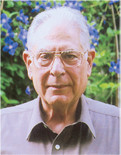
Vesuna: keeping the communities together
What must have pleased Vesuna greatly though he didn’t have the time to go into details, are the achievements of Zubin Surkari and Kurush Minocher as recorded in the ZSO newsletter (September 2005). Surkari, a member of the National Canadian Cricket team is said to have returned from a successful ICC World Cup qualifying tournament in Ireland where the team won the One Day International status. This qualifies Canada to participate in the 2007 ICC World Cup in group C which includes teams from England, Kenya and New Zealand. At 19, Minocher is a graduate of the Central Ontario Region Gliding School where he returned this summer as an instructor for a six-week gliding course and successfully trained some cadets. Minocher is aiming for a BSc in aviation management from the Embry-Riddle Aeronautical University in Florida.
Vesuna describes the ZSO’s seniors as a healthy, active lot who enjoy meeting together for lectures, exercises, cooking demonstrations and outings. Unfortunately, "there are not enough voluntary drivers to bring them to the Darbe Mehr. We wanted finance for two 15-seater vans to drive the seniors back and forth, but we didn’t get it.”
A Vesuna objective has been to keep the Parsi and Iranian Zoroastrian communities together, though the Iranians — about 1,000 constituting about 20-25 percent of the ZSO membership — have their own council called Kanoun and most Fasli events are organized by that body. "Partly it is a blessing,” says Vesuna, "because if the Fasli and Shahenshahi functions were held together we couldn’t accommodate all the people. The Iranians are very sensitive people. Sometimes diehards rock the boat, but there are enough sensible people. The Iranians, especially the older generation, recognize that Parsis had done a lot for them.” The Kanoun organizes its own Avesta classes in Persian and the Persian language programs are attended even by older Iranians who don’t speak English, he adds. The ZSO had applied for a work permit with the Canadian immigration authority for an Iranian priest. Ervad Kerman Katrak who officiates is a Parsi but he also performs Iranian ceremonies. "Generally the Iranians don’t stand for office. Now we have one young lady Anahita Daryushnejad on board.” She has taken on the mantle of assistant secretary of the ZSO. Vesuna says he has not seen any Iranian marriages taking place at the Darbe Mehr, and to his knowledge there are few marriages between Iranians and Parsis.
When we enquire if any converts have visited the ZSO Darbe Mehr Vesuna tells us, "There are so many Iranians coming, especially to the Mehergan function and all the proceeds are donated to our fundraising.” Indicating that the same imperatives to keep out converts do not operate in Toronto, Vesuna says, "You may have some (economic) reason in India but here we are supplied with schools, hospitals by the government. In fact, we are asking the government to accommodate our seniors in groups, have them in the north, south, east and west of the city. In return we offer donations and volunteer hours.”
The ZSO’s running expenses at the Darbe Mehr amount to about C$ 100,000 per annum including heating, lighting, maintenance, newsletter, custodian’s salary, etc. Their main income is donations amounting to about C$ 58,000. Fundraising for the new construction is altogether apart. "We’re almost 80 percent there,” says Vesuna, acknowledging that "it’s been a big strain on the community. Then there are our efforts to get accommodation for seniors, transport facilities for them, scholarship funds, though here FEZANA (Federation of Zoroastrian Associations of North America) also helps.”
A trustee of the Mehrban Guiv Darbe Mehr, Vesuna says Arbab Guiv had appointed him because "he knew my father.” About a month after the interview with Parsiana on July 17, 2005 at the Darbe Mehr, he underwent cardiac bypass surgery, as notes the September edition of the ZSO newsletter. Meanwhile the muktad prayers (August 15 -19) at the Darbe Mehr saw community participation ranging between 175 and 220 each day and a sumptuous five-course Parsi style dinner after the Navroz jashan when about 250 Zarathushtis participated, adds the newsletter.
The current executive committee, where the ladies are in the majority, includes executive vice president Russi Surti, vice president Katy Driver, treasurer Adi Anary, assistant treasurer Kevin Mancherjee, secretary Mehroo Chothia, assistant secretary Daryushnejad, and executive officers Afreed Mistry and Mickey Katgara. Half the team is voted to office every year for a two-year term so that there is continuity of purpose, as notes Vesuna. Originally every year the whole team used to be elected. A resolution adopted at the last AGM has reduced the period for termination of membership for non-payment of fees from six months to three months. This is to discourage free privileges such as the monthly newsletter to non-paying members.
It is only since he came to Toronto in December 1972 that Vesuna says he has had a settled existence. His father, Dr Minochehr Vesuna, originally of Rustom Baug, had been married to Daulat Irani of Poona. The couple moved to Iran after marriage where their first son Cyrus was born. When Minochehr got an offer to start the Homji Hospital in Karachi, the family moved there so Sam was born in Karachi. When World War II began, Minochehr joined the Indian Medical Service and was posted in the Middle East, in the vicinity of Baghdad. "We had no relatives in Karachi so we spent the years 1940-47 with our grandfather in Poona,” recalls Sam who attended the St Vincent School there. After completing his chartered accountancy in the UK Vesuna first joined Unilever, based in Karachi, overseeing the Indo-Burma-Pakistan-Ceylon market, then shifted to Philips Electronics. Married, with three sons, he sought a posting in Toronto from Philips, a few notches down in status, "when former Pakistani Prime Minister Zulfiker Ali Bhutto started nationalizing companies and was trying to nationalize private schools in Karachi” and had to work up again, he recalls. Eventually his parents also came to Toronto and lived there to the end of their days.
Vesuna says his son Jamsheed has been doing voluntary work, originally in Palestine and now in India. Both Zal and Xerxes are married to non-Zoroastrian women but Zal’s marriage was performed by Zoroastrian rites and his son and daughter are both Zoroastrians. Xerxes’ daughter and two sons are probably lost to the community as their mother is a staunch Roman Catholic, notes Sam. "I am not against mixed marriages but it becomes difficult for the children. If we were to accept the other spouse, the scenario would change.” Nonetheless, there have been many more intermarriages recently, says Vesuna, estimating them at over 50 percent of the total, and he says he is "greatly concerned.” He is happy that two marriages had resulted from the North American Youth Congress held here two years ago and is hoping that the North American Congress slated for 2007 in Toronto will also help some more couples get together.
◆ ◆ ◆
From the archive