
Books
Blessings at Banaji
"This booklet has been prepared with the idea that more and more Zarathostis would be inspired to visit our sacred atash behrams regularly to pray and to receive divine inspiration to lead happy, purposeful lives. Thereby the objectives with which these sacred places of worship were established by our noble, devout ancestors would be fulfilled,” delineates the inside front cover of A brief history of Banaji Atash Behram (1845-2001). "This Banaji Atash Behram like all places of worship has its own old world charm and aura...Devotees have experienced the peace and calm and had their good wishes fulfilled by its blessings,” writes author Marzban J. Giara in his preface to the 48-page booklet published in November 2001.
The history of the Banaji family, the Banaji Adarian at Calcutta which was founded in 1839, the Banaji Atash Behram at Charni Road in Bombay where the adarian was first consecrated on September 17, 1844 and the atash behram on December 13, 1845 is related here. Giara has reproduced a notice published in the Bombay Courier of Friday, December 5, 1845 which reads, "Saturday the 13th instant being the day appointed for the consecration of the new church erected by them, M/s Faramji, Cursetji and Rustomji Cawasjee and Dadabhai Rustomji would respectfully solicit the favor of the European and native gentlemen granting leave to their Parsi clerks and servants on that day in order to permit of their attendance at the ceremony.”
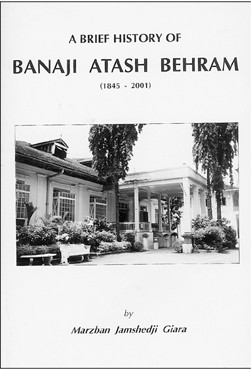
This third atash behram in Bombay was constructed after the inception of the Dadysett and the H. B. Wadia Atas Bahram. The booklet explains how the Banaji family, originally Shahenshahis (from the first wave of Zoroastrian migrants to India who, as per their ancient practice, intercalated an extra month of 30 days at the end of 120 years to synchronize with the solar calendar), opted to become Kadmis (the group who had stayed back in Iran did not allow for this extra month and hence fell back by 30 days in their calendar): Faramji Cawasjee Banaji was sent to China as an agent of Dadi Noshirwanji Dadiseth. After finishing his work he left for India but reportedly lost contact with his family who used to make anxious enquiries with Dadiseth. On one such day when father Cawasjee came to enquire about Faramji’s whereabouts, Dadiseth is said to have asked, "What would you do if your son Faramji returns safely? Would you and your son become Kadmis?” Cawasjee is believed to have responded in the affirmative following which Faramji returned safely within eight days. Cawasjee, after whom the Atash Behram is named, along with his seven children became Kadmis, reports Giara.
The eight center pages carry color photographs of the eminent members of the Banaji family, the precincts of the fire-temple including the sacred wells and the varasyo who is given pride of place, and the framed Persian carpet which adorns the front entrance of the Atash Behram. According to Giara, "the sixth border of the carpet portrays along with some Persian shahs, reigning before and during the period of making this carpet, many well-known ancient Zoroastrian monarchs, members of royal families and nobility, chiefs and courtiers, heroes and heroines with their names in the seventh border deliberately set and indicated not in accordance with the reign and rank on account of the powerful hatred and discrimination prevailing at that time against the Zoroastrians.”
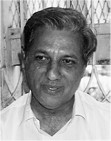
Giara: faithfully recording
The latter half of the book dwells on the layout of the Atash Behram, the dasturs who have served this house of worship, and the remembrance of Jalbawa on Monday evenings when many members of the community throng this fire-temple in time for the maachi offered in the Aiwisruthrem gah. Giara reasons: "If a righteous man such as Jalbawa publicly or secretly minimizes the hardships of the faithfuls and helps in their good wishes being fulfilled which gives him a place in their hearts and they remember him, what objection could anyone have?”
Dastur Minocherji JamaspAsa’s description in Persian verse of this imposing Atash Behram has been translated thus: "That place is not merely a monument but a place where God’s mercy descends, as also the farohar and ameshaspands, where the splendid fire of the truthful, good religion is enthroned. This place of worship of God refreshes the body and gives joy. This royal palace having sea breeze is so constructed that by seeing it, one would forget a garden...”
Priced at Rs 60, this booklet is dedicated to Phiroze Navroji Patel whose two sons Hanoz and Zubin of Din Publications and Powerpusher Financial Services Private Limited requested Giara to work on this project. Copies of this booklet are available with Giara, Dhunmai Building, 667, Lady Jehangir Road, Dadar, Bombay 400014, Tel: 4166204 or Din Publications, 306, MB House, 3rd floor, 79, Janmabhoomi Marg, Fort, Bombay 400001, Tel: 2846521/22.
S. J. P.
◆ ◆ ◆
From the archive