
Blessings in the bylane
With no regular income and few devotees, the 170-year-old Bai Avabai Wadia (Indawalla) Agiary is dependent on the largesse of well-wishers
There are neither ripples nor reflections seen in the well water at the Bai Avabai Ardeshir Wadia (Indawalla) Agiary. Income from the well water that once sustained the fire temple is drying up and with barely one or two devotees coming to pay their obeisance at the 170-year-old fire temple each day the trustees have to depend on the largesse of devout philanthropists.
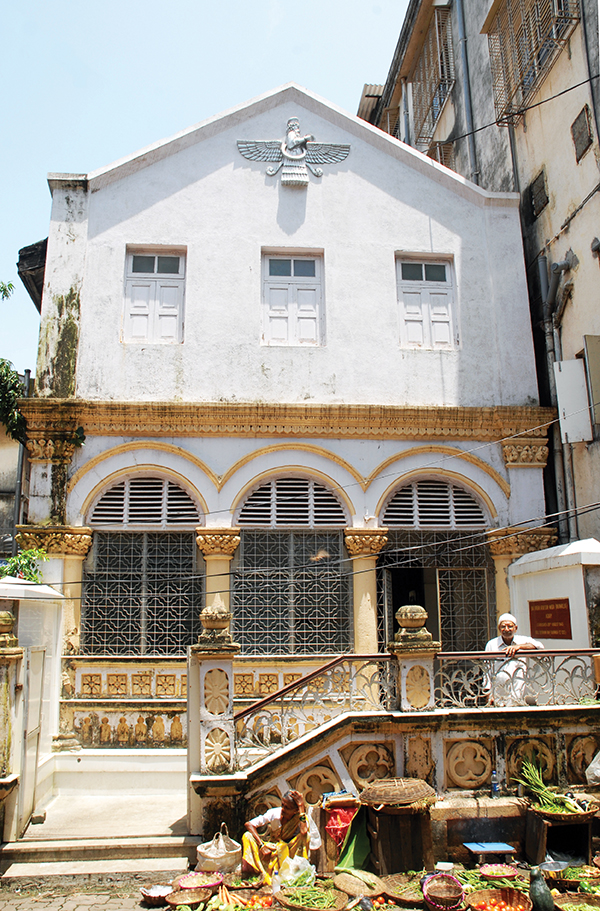
Located in the midst of the busy Dhobi Talao market, this Agiary can be accessed from two entrances, one on the bustling S. S. Gaekwad Marg (Trinity Street) and the other from the perpendicular road that does not have any signage at either end but is familiar by the name of Hamalwadi. In fact near the Hamalwadi entrance is a board in Marathi specifying "Parsi sivay aat yaaychaa nahi" unlike the usual notices in English or Gujarati announcing that admission is restricted to Parsi/Irani Zoroastrians only. At the road intersection between the two entrances lies a park for children and a vyayamshala (gymnasium).
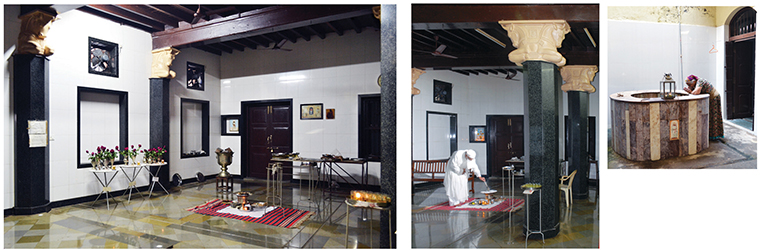
Adjacent to the fire temple entrance on Trinity Street is a Jain temple that is reportedly a new development in the area. When Parsiana visited the fire temple on its anniversary on August 28, there was blaring Marathi music being played on the loudspeakers that could be heard down the length of the road. The jarring disturbance persisted whilst one did the kusti prayers in the foyer outside, crossed another room, and approached the sacred well, water from which is used for religious and domestic purposes (water from the second well was sold commercially and they have been on the lookout for another contractor for the last six months). Fortunately the din recedes once one enters the sanctum.
The spacious hall that was renovated around six years ago has imposing sculpted pillars. On two of them were posted appeals for kathi but considering that barely a couple of devotees visit the agiary each day, it is usually the same benefactors who support the running of this temple mentions the panthaky Ervad Behram Dordi: Cyrus Irani (Spenta Foods, Free India Bakery and Yazdani Bakery), Tanaz Kerawalla (Kerawalla and Company), Nozer Meherji (Mazda Hitech) and Hoshang Antia (construction expert). On a floor mat were laid the implements in preparation for prayers that were to be recited for one of the three families that continues its loyalty to this temple.
During the last muktads in August there were only three tables that bore flower vases for the deceased, one of which was for Dordi’s own family. After completing the prayers at this Agiary, he goes to other temples like Vachaghandhy Agiary (Hughes Road), Banaji Limji Agiary (Fort) and also to pray at the Doongerwadi to make two ends meet. When he accepted the panthakyship at this Agiary, there used to be regular prayers for five families, it has now reduced to three, he mentions. He feels he is duty bound to offer five bois for all the gahs for the sacred adarian fire and even prior to taking over as panthaky here when he was a mobed at the Aslaji Agiary he would come and assist with boi prayers, states Dordi.
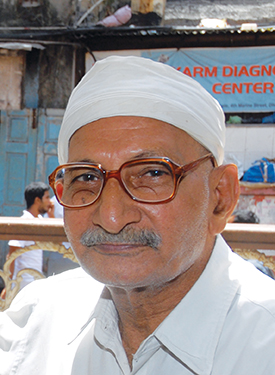
Ervad Behram Dordi
Dordi stays on the Agiary premises with his wife Ruby in a room specially renovated for them on the first floor that can be accessed by climbing a spiral iron staircase. The kitchen on the ground floor lies a little beyond the kebla and is close to the second well and entrance to the Agiary from Hamalwadi. It is here that Ruby prepares the sacred food for the prayers and even receives orders from neighboring atash behrams when they want special items like kera bhajias, patrel, etc made by her.
Currently the Agiary has no regular income. Since February this year they managed to oust the earlier paaniwalla (water contractor) who had encroached on their premises and was constantly defaulting in his payments. Instead of paying them Rs 25,000 per month as promised he would barely give the trust one lakh each year, mentioned Colah who also serves as treasurer at the Agiary. Being yet on the lookout for another suitable water contractor who will agree to their terms and conditions, they are losing out on income that could help finance the maintenance of the one-storeyed structure as also pay the annual property tax which used to be Rs 1,968 (but the new claim for which is Rs 7,866), plus Rs 15,000, the monthly salary for Dordi who has been the panthaky here for the last 19 years. Appreciative of the cooperation of his trustees Dordi is happy that he will now be granted Rs 10,000 extra each month under the BPP Mobed Amelioration Scheme.
The sprawling structure with several closed rooms that serve as "godowns" faces leakage during the monsoons and is a hub for mosquitoes since an adjoining building is only separated by a gutter covered with a metallic sheet. As realizes 69-year-old Dordi, "Jagaa bau chhè pan karé su (there is ample space but what can we do)?" He is neither willing to perform prayers here for those who are cremated nor does he want children of interfaith couples to come and pray here.
The history of this fire temple is only available in parts. As recorded by Marzban Giara in the Global Directory of Zoroastrian Fire Temples, the Indawalla Agiary was established on August 28, 1843 (mah Bahman, roz Behram) by Rustomji Sohrabji Bharucha (alias Indawalla). The heirs of Indawalla subsequently entrusted it to the trustees of Bai Avabai Wadia Daremeher in 1897. According to Giara, Avabai, at her own expense had built a daremeher in memory of her daughter Soonabai that was open to "all Zoroastrians" on April 15, 1862. When the Indawalla Agiary structure became old, Avabai’s grandson Navroji Nasserwanjee Wadia had it rebuilt at his own expense, merged it with Avabai’s daremeher and left it open "for all Zoroastrians for religious work" in April 1899.
Currently neither the trustees nor the panthaky are in favor of relocating the sacred fire. According to Dotivala, "Many in the surrounding area have tremendous faith in the Agiary." Dordi is convinced, "Iya aavi né muraad mago, puri thasé (come here and seek favors, they will be fulfilled)."
With inputs from Mahafreen H. Mistry