
Blessings for the bicentenary
The Bai Soonabai Hirji Dar-e-Meher at Gowalia Tank has been drawing devotees to its fold for the last 200 years
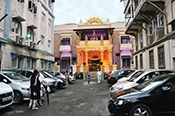
In the last 36 years of her life there was not a single day, not even one gah, when Sethani Soonaiji had missed her farajyat prayers. Owner of several properties in Bombay in the 18th and 19th centuries, the plucky lady who was known for her piety and philanthropy had contributed substantially to the building of the Bai Soonabai Hirji Dar-e-Meher (better known as Soonaiji Agiary) that is celebrating its bicentenary this year. Tucked in a lane off Gowalia Tank, the sacred structure stands like a sedate 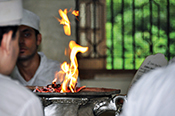 sentinel sheltering those in the vicinity.
"We need (God’s) blessings and guidance all the time," reminded chief guest Nadir Modi at a jashan ceremony and function to mark the 200th anniversary of the Agiary on August 4, 2012. Terming Ahura Mazda "the supreme mind and lord of wisdom," he said the fire temples were "His special place." Referring to the holy fire as "the son of God," he recalled his experience when he moved to a house nearby the Soonaiji fire temple over 60 years ago. "Surrounded by problems, I came to this Agiary regularly." His troubles subsided convincing him "ask and it is given, seek and ye shall find."
 Visit an agiary regularly, if not daily, the noted lawyer urged the gathering of around 150 who had assembled on the first floor hall of the Agiary. He asked the audience if they "find the agiaries crowded." The answer was a resounding "no." He attributed that to Parsis "not putting first things first. People go for show and publicity, not piety."
On an average, around 10 visitors frequent the Agiary daily plus "there are some weekenders who usually come on Saturday or Sunday," mentions Mahrukh Madon who has been substituting as a 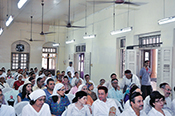 panthaky ever since her husband suffered a paralytic stroke while praying inside the kebla. Whilst there are some devotees who come from neighboring Nana Chowk and Tardeo and some afar from Colaba and Borivli, she regrets that there are very few regulars who come from the buildings adjoining the Agiary. "Parents are rarely interested in bringing their children from a young age. Faith has to be instilled from naanpan (childhood)," she reiterates.
Most heartening is to see devotees from overseas who are specially drawn to the Agiary after hearing stories of "Zarthosht sahib marble par pragat thayaach (the outline of Zarathushtra’s image has manifested itself on the wall below his portrait)." To accommodate the routine of such visitors who may have an international flight to catch at odd hours, the attending priests are willing to keep open the doors of the Agiary well past the 6.30 a.m. to 1 p.m. and 4 p.m. to 8 p.m. routine. But when regular devotees insist on coming at wrong hours, showing inconsideration to the convenience of the attending priests, Madon expresses her chagrin: "If Parsis cannot respect the board outside the Agiary stating the timings, why should we expect non-Parsis to respect the adjoining board stating admission is only restricted to Parsi Zoroastrians?"
The Agiary structure is known to comprise mixed elements from neo-Gothic and Persian architecture with the rising sun at the apex symbolizing the glory of the Zoroastrian religion. With the Agiary featured as a prominent backdrop for her movie Little Zizou, director Sooni Taraporevala who had grown up in the vicinity had even devoted a section in her compilation Parsis: A Photographic Journey to "The Fire Temple at the End of the Lane." "The outer hall is dim and deserted," she recalled a trip to the Agiary. "Large portraits of distinguished ancestors keep watch as I walk past them towards the courtyard at the back. Sparrows twitter their evening song in the date palm that grows beside the well as I wash my hands and face, untie and tie my kusti around my waist. My kusti prayers finished I enter the prayer room with bare feet." She subsequently detailed, "In the Agiary along with the human occupants are four dogs, three parrots, one tortoise, three turtles, three hens, two chicks and four goats."
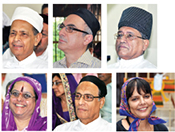
Soonaiji Agiary "is managed very well," says trustee Saroosh Dinshaw who is also on the trust boards of Ashburner Agiary in Khetwadi, the Bhuj fire temple in Gujarat and the Cowasji Dinshaw Dare-Meher in Lonavla. The Bai Soonabai Hirji Agiary Trust (BSHAT) that manages the Agiary garners income from "the estate around the Agiary," reports Dinshaw referring to the residential buildings on the Agiary estate that earn a sizeable income for the trust. As a matter of fact the BSHAT and the Sir Cowasji Dinshaw Trust, which manages the Lonavla agiary, contribute income for the running and maintenance of the Ashburner Agiary.
"Interact with trustees"
Recommending that the affluent should "adopt an agiary or an atash behram" as both institutions "need financial help," Modi reminded, "A great amount of cost" is incurred in procuring kathi. "We are a well-to-do community. Our (fire temples) should not become anemic for want of money." He recommended placing donations in the charity boxes located in the houses of worship as "the lower staff also need help." Normally people put money in the chamach for the mobeds.
He stressed the importance of worshippers "interacting with trustees." By this improvements are possible in the functioning of fire temples. People complain about mobeds dressed in sudrehs or entering the kebla without a jama. He noted that kathi is sometimes wasted and water taps are left open. If all this is brought to the attention of the trustees they can speak to the concerned priests. Devotees can also assist with maintenance work and help in other ways. He noted that many doctors "do not charge" for treating a patient if he is a practising mobed. He suggested that chartered accountants, lawyers, etc could also offer their services free to priests.
He mentioned how one of his former students at Jai Hind College had written a book pertaining to "etiquette in our agiaries." Though notices have been put up in agiaries requesting worshippers to wear appropriate clothing when entering a fire temple, switching off their mobile phones and praying softly, people dispense with such necessities. "Some people pray so loudly… they think God is deaf. They also hog the area in front of the atash." He stressed the importance of observing timings for the agiaries which even trustees should adhere to. He recommended people take their children to the agiaries. "They are happy to be there. Sometimes they are so happy they disturb others."
 He noted that as agiaries were often short of funds they should exploit their "potential" for earning income. In some places they could avail of extra FSI (floor space index) which could be "developed for the benefit of the agiary and the community." Premises could be given out on leave and license but this must be "done in an open manner with total transparency" and with the trustees availing of the "best offers."
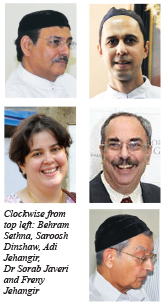
In his welcome speech the Agiary chairman Behram Sethna noted that a generous donation made by a devotee and former resident of one of the Trust buildings Armeen Kalyaniwalla enabled the trustees "to restore the Agiary façade to its original state." He also thanked his co-trustees, Dr Sorab Javeri, Freny Jehangir, Adi Jehangir and Saroosh Dinshaw, as also Kaiwan Kalyaniwalla, Vispi Dastur, the trust CEO Gev Bhumgara. Then followed a round of felicitations: for the Agiary’s incapacitated panthaky Ervad Pervez Madon, his wife Mahrukh and son Ervad Farshogar, contractor Cyrus Unvala, Khodadad Irani of WIBS who supported the renovation and Ratan Katrak who supervised the undertaking and the staff of the Trust, including Perin Bhathena who coordinated the event and Tanaji Dhond who assisted.
Also amongst those to be felicitated was trustee Adi Jehangir, the ninth generation offspring of Hirji Readymoney, who shared with Parsiana an article on Soonaiji (see "Sethani Soonaiji"). But neither was he able to trace the author of the piece nor was he able to procure any photograph of her. Dinshaw narrated a brief history of the Agiary and its association with Sir Cowasjee Jehangir and Adenwalla families (see "Sacred sanctuary").
Responsibility to the legacy
In an interview on November 22 at the Cowasji Dinshaw trust office Saroosh Dinshaw states Soonaiji Agiary is the best placed when compared to the Ashburner Agiary, the Bhuj fire temple and the Cowasji Dinshaw Dare-Meher in Lonavla. "Bhuj is at the worst end of the spectrum." There are no Parsis; a Muslim caretaker manages the 107-year-old property. "Ashburner is (in dire straits) because of its location." There are few Parsis in that area and the number of worshippers is low. The Lonavla agiary is one of the "rare cases where the number of residents in Lonavla-Khandala is increasing."
The former investment banker outlines three major expenses in running a fire temple. "You spend on the kathi, on the priests and the maintenance of the physical structure." The salaries and firewood costs "have skyrocketed… Kathi expenses break your back." At the Lonavla agiary — the only one to have two fires burning, a dadgah fire and an adarian fire from the former fire temple in Aden — the cost of kathi is double. "You need deep pockets to keep the legacy going," said Dinshaw.
While Dinshaw states he is "clearly impressed with the forward thinking of the Karachi and Delhi anjumans that have opened the doors of their agiaries to the children of Parsi women married to non-Parsis, he is averse to following their example at any of the four agiaries he is associated with "because of family sentiments. The Adenwallas are known to be very, very orthodox. My dad was very orthodox. I don’t want to disturb those sentiments. I want to keep things on a steady keel."
Piety and priests
Most priests today are graduates and double graduates. "Instead of showing them respect, if the community treats them with scorn, why would they want to do mobedi?" Mahrukh Madon asks rhetorically. In her dealings with priests she has realized that "they have to be tackled with kid gloves. They can ditch you at the drop of a hat... They don’t like to receive instructions from a woman. But here they don’t have a choice. In the end everything boils down to money."
Priests, mainly part-time, are paid according to the nature of their prayers. Boiwalla priests who recite prayers in the kebla at the turn of the gah are paid differently from those who participate in after-death prayers at the Agiary. Even for the boi prayers, the payment varies depending on the gah for which the prayers are recited. She can empathize with priests whose need for income takes them from one agiary to another, but finds it "very shameful for the community that at the age of 80 and 90 priests have to work for their bread and butter."
Members of the community will spend "Rs 500 to 1,000 to consult a doctor who may or may not dispense medicine... with no guarantee that the treatment will work." But they are reluctant to pay a priest saying "‘éloko lootvaa bèthaach; étlu badhu maangéch (their remuneration demands amount to looting)’... Have you ever heard that after a mobed’s prayers a man hasn’t gone to heaven?" she enquires. To pay a priest Rs 1,000 for sitting in at a navjote, many host families show their reluctance but she doubts whether they would ask caterer Tanaz Godiwalla to reduce her rates.
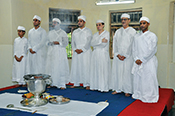
Every year there are two or three young boys who undergo navar/maratab training at the Soonaiji Agiary. "Young priests are not interested in taking up mobedi. You find them only during muktads," observes Ervad Percy Daruwalla who prays at the Soonaiji Agiary despite a neurological problem that makes it difficult for him to keep his balance. Besides Soonaiji he also prays at other agiaries. "Gai jétlu charé tétlu khai (the more a cow grazes the more food she will get)," states Madon. He will continue in the profession until his voice and limbs support him, he says. With no provident fund, no gratuity or retirement benefits offered, "the question on the mind of any full-time priest is ‘what will happen to me and my family in my old age?’" he says.
It is not only priests that are difficult to find, even chasniwallas are few and far between despite the agiaries being willing to employ children of outmarried Parsis from rural areas. Often required to do the cleaning and delivery duties herself, Madon takes pride in reporting that they have three "full Parsi blooded" chasniwallas who are shared with the Shapurji Fakirji Jokhi Agiary at Godrej Baug where too the Madon family is in charge as panthaky.
The income they earn from the behdins goes into payments to the priests, chasniwallas and the day-to-day running of the Agiary. The trustees pay the Madons an annual salianu amount of Rs 36,000. Sandalwood and kathi for the sacred fire is "a team effort," she states. Realizing that the younger generation "doesn’t believe so much in prayer," she wonders what the future will be "if we are going to stay the way we have been."
Devotees complaining of the exorbitant cost of kustis, makes Madon reason: Why should they hesitate to pay Rs 700-1,000 on a kusti that is worn 24x7 if they are willing to spend an equal or much higher amount on an outfit that they may wear only occasionally?
Compared to agiaries like Sethna, Aslaji, Cama Baug, Vachaghandhy, that have around 70-100 muktad tables a year, Soonaiji has less than 30 but Madon believes, "There is no fun in taking up a lot of work when you don’t know kaun-nu soo bhanaich (which prayers are being said for whom). We would rather do little work but do it properly. If my quota is full, I don’t overload myself. I say ‘no’ especially when a behdin from another agiary says he/she wants to shift because of differences with the priest there. We don’t want to sell religion for the sake of money."
The demand for after-death prayers is on the decline as "nowadays it is in fashion to say that ‘my parents did not want prayers said after the chahrum,’" she relates. Does the Agiary permit prayer facilities for those cremated? "No comments," is her answer. "You should do what the high priests say. ‘They are wise... They have done their PhD,’" she repeats the common refrain. And when they have differing viewpoints? "Go with the majority."
Declaring her "implicit faith in God," Madon believes "whatever He does is with some purpose. He wants you to learn something... He knows the best... What is wrong today may be right tomorrow and what is right today may be wrong tomorrow."
Sacred sanctuary
The Soonaiji Agiary has its genesis in a Dar-e-Meher built in 1812 by Ervad Dorabji Hormusji Ranji with the financial support of Soonaiji, daughter of Hirji Jivanji Readymoney (the first Parsi to start trading with China) and widow of Nusserwanji Rustomji Banaji. It was consecrated by Dastur Khurshedji Jamshedji JamaspAsa, notes a historical account compiled by Marzban Giara. At that time cows and bullocks used to drink water from the pond in the vicinity and hence the locality earned the name Gowalia (gwalia in Hindi meaning cowherd) Tank. Ten years later Soonaiji purchased this estate of 17,000 sq yds along with the Agiary. On September 13, 1842 (roz Bahram, mah Spandarmad, YZ 1211) Soonaiji built a new dar-e-meher on her estate at Forjett Street wherein was consecrated an atash adaran. After 20 years she entrusted 12,000 sq yds to the Agiary, keeping aside 5,000 sq yds for the family house.
When Bai Soonaiji Hirji Dar-e-Meher became dilapidated, her grandson Sir Cowasjee Jehangir Readymoney, Kt CSI had it repaired at a cost of Rs 3,000 and the old fire was reenthroned on its mah and roz anniversary on September 4, 1876. When the Dar-e-Meher at Forjett Street became too old, a new building was constructed at the head of the Tank and inaugurated by Dastur Minocher Kaikhushroo JamaspAsa on roz Fravardin, mah Avan, April 25, 1925.
The BSHAT that manages the Agiary owns several residential properties and shops on Forjett Street, some buildings next to the Agiary and other lands on lease that yield income for the maintenance of the Agiary, and religious and charitable objects of the Trust.
Sethani Soonaiji
Throughout her life and even after death, Soonaiji was known not by her married name, Banaji, but by her maiden name Readymoney, according to a write-up forwarded by Adi Jehangir. Although she inherited some property from her husband, being the eldest of three daughters she inherited vast properties and huge sums from her wealthy father Hirji who had passed away in 1794 when she was 31 years old.
Dutifully managing the wide estates that she had inherited she came to be known as "Sethani Soonaiji." The whole of Ghatkopar was owned by her as also the area where stands the Victoria Garden. Gowalia Tank, the maidan and the surrounding property too were owned by Soonaiji. The place where the maidan stands was then a big pond and she had willed the pond for the cattle to drink water.
Fond of reading and writing, Soonaiji befriended scholars like Dastur Mulla Feroze, Bin Mulla Kaus, Fardunji Marzbanji and Dosabhai Sorabji Munshi. When she was 40 years old the progressive lady studied Persian from Munshi who was then only 17. Being well educated she was often invited to arbitrate on family disputes. At the age of 84, shortly before her demise, she prepared her own will. Recording her death on May 14, 1847, Mumbaina Chabukh in its issue of May 16 referred to her as "a well-known lady of this island. Though she was a lady she was more courageous and wise and intelligent than men. Though she was a human being, she had the qualities of a saint…She was a quiet, charitable person..."