
Zoroastrians Abroad
The trusted therapist
As president of the International Association of Group Psychotherapy Dr Sabar Rustomjee oversees the apex body’s therapeutic and organizational work
"The meaning of life is quite important for me. At a personal level it means not leading an egocentric but a sociocentric life,” says the Australia-based consultant psychiatrist Dr Sabar Rustomjee who aims to "work towards non-violence, to enhance family values and to help bring out the best in mankind.”
As the first Asian president of the International Association of Group Psychotherapy (IAGP) for the term 2000-2003 she coordinates the working of 30 elected members on the board and oversees the functioning of 63 group psychotherapy organizations and 750 individual members affiliated to the apex body. When Parsiana met Rustomjee at Bombay’s Taj President Hotel on December 20, 2001 she had come to the city to attend the Southeast Asia Regional Conference on Scientific and Applied Psychology. "I’m not a psychologist. I’m a psychiatrist (whilst both treat mental ailments, unlike a psychologist, a psychiatrist is qualified to administer drugs). "Being the head of IAGP I was invited to this meet to chair a session on ‘Women’s contribution to society and culture’ and to conduct a pre-conference workshop on group psychotherapy,” explains the unassuming, soft-spoken lady. Her new role requires her to make three overseas trips in a year: to an American city to attend a board of directors meeting, to a European or South American country, and to an Asian destination like Singapore, Japan or Bombay.
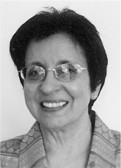
Rustomjee: raise quality of life
Any opportunity to visit Bombay where she has her roots is a welcome break from her regular duties in Melbourne where she is consultant psychiatrist at The Monash Medical Center and the Maroondah Hospital, and also conducts her private practice. Americans dash to psychiatrists at the first opportunity; Indians try to keep their distance from psychiatrists; and Australians lie somewhere in between these two extremes, points out Rustomjee. In case of mental illness, a patient in Australia will first be taken to a general practitioner who will initially attempt to treat but if there is no progress, refer him/her to a psychiatrist.
"Only mad people do psychiatry,” Rustomjee recalls her spontaneous response when she had been approached by the superintendent of the hospital in Mooroopna in Australia to put her medical training to good use, candidly confesses the doctor who had studied at Bombay’s J. B. Petit High School for Girls, Elphinstone College and Grant Medical College before marriage to Pirosha Rustomjee (coincidentally, her maiden name also was Rustomjee), a surgeon, took her to Ceylon and thence to Australia. She had initially planned on pursuing pediatrics but since there were no vacancies in this department, Dr Tom Mu, the psychiatrist in charge at the Shepparton twin complex in Mooroopna convinced her to specialize in psychiatry.
Presently a full clinical member of the American Group Psychotherapy Association, the Group Analytic Society, London and the Victorian Association of Psychoanalytic Psychotherapists, Rustomjee has worked extensively in the field of group psychotherapy for end stage renal failure, patients with metastatic breast cancer and with parents, families and children at the Royal Children’s Hospital in Melbourne, mentions her bio data. Knowing that death is round the corner "we try to improve their quality of life. Within this homogenous group they find support and peer acceptance and are willing to discuss intimate and personal subjects which they may not want to do with even their family. They discuss highly emotion-laden issues; morbid issues like life and death. ‘Will my husband remarry after my death?’ ‘Will the money I saved over the years be spent on the new woman?’ are some of the questions that plague them,” she explains. Not only the patients, even the highly qualified nurses who have to deal with these patients year after year "need support to remain professional.” If they become friends with the patient they tend to lose their cool and show anger or impatience, it has been observed.
In collaboration with the Maroondah Hospital she will now be initiating research on first episode psychosis (when the first breakdown occurs between the ages of 16 and 25). As early intervention is known to have helped such patients, group therapy sessions will be conducted for patients and their families. An in-depth follow-up program is meant to reduce the recurrence of psychotic behavior.
In fact group analysis, psychodrama, family therapy, organizational and transcultural work constitute the core areas of IAGP’s activities. Their publication forum is planning on starting a newsletter and the public visibility committee keeps the member associations posted of each other’s progress. Sometimes Rustomjee is required to answer 30-40 e-mails a day from the members. "With each one of them being a high-up in their respective organization, to integrate all of them is a challenge” for her. Every year the elected board members spend a fortnight together when they are able to bridge cultural differences, assess ongoing programs and initiate new ones. Her prior experience as treasurer of IAGP plus chairmanship of one of its sections prepared her for her presidential role for a three-year term. "After which you’ve got to give others a chance. And anyway by then you’ve got enough grey hair,” smiles Rustomjee.
As course coordinator of the Master of Group Analytic Studies and senior lecturer of Monash University, Melbourne, Rustomjee announces the University’s distance training program leading to a graduate diploma (and subsequently a master’s) course in group psychotherapy and/or student or full membership of the IAGP (those interested can contact her at 44 Cummins Road, East Brighton, Victoria 3187, Australia; e-mail: sabar@iprimus. com.au).
Happy that her family migrated to Australia, Rustomjee observes, "Australians recognize an individual’s worth.” Former president of the Australian Association of Group Psychotherapy Rustomjee says, "I practice in an area where there are no Zoroastrians but live in an area where there are. My preference is not to treat people I know so that I can be objective.” As a community she observes that Zoroastrians in Australia "are less prone to mental illnesses,” qualifying further that it is "the healthier ones who have migrated. Zoroastrians have adjusted better than other races, by and large.”
When asked to compare the Zoroastrians in Colombo with those in Melbourne, Rustomjee states that with "their culture of being totally involved with other Zoroastrians, in Colombo if one child in a family has a cough, half the community will enquire about his progress.” Colombo however is a small city as compared to Melbourne where it is not possible to keep a track of all developments, she adds. Her leisure time in Melbourne is spent not necessarily with other Zoroastrians although her family migrated in 1969. Of her three married children who all live in Melbourne, son Hormaz is pursuing a career in computers, daughter Niloufer has taken to psychology and the youngest Firoza is a general practitioner.
Husband Pirosha was the first president of the Zoroastrian Association of Victoria. While the elder two children have Zoroastrian spouses, the youngest is married out of the community. Religious by nature Rustomjee, who always travels with her Khordeh Avesta and likes to regularly visit the Iranshah at Udvada, does not see intercommunity marriages as a major issue although in Melbourne there are some in favor and some against accepting children of intercommunity marriages. "I’m a very accepting person. I can’t think of not accepting any human being. Those who are very keen should be given an opportunity (to enter the religious fold). The quality of commitment should be considered. After all, Zoroastrians were converted from another faith. It would be a pity if the race dies out. I would hate to see the day when this happens,” she declares.
"Family life is important to me. It’s wonderful to be a grandparent,” says the psychiatrist who takes pride in her four grandchildren’s accomplishments. Charter president of the Lioness Club in Camberwell, Rustomjee’s other interests include embroidering tapestries, dressmaking for children, travelling, skiing.
Her attachment to the community has been growing since her student days in Bombay. As her father Maneksha Rustomjee died when she was but five years old, it was her mother Mehra who had to bring up the children. The N. M. Wadia Trust financed the cost of all the textbooks for her medical studies, she gratefully acknowledges: "It was such a bonus that I’d really like to thank them and in return do something for my community. Once my presidency is over I wouldn’t mind spending my life towards educating the Parsis.”
◆ ◆ ◆
From the archive