
History
Imperialists, but also educators
The spread of western education in India had altruistic motives
In 1931, Mahatma Gandhi, in a speech at Chatham House declared that the British had done more harm than good to education in India and, consequently, India was left more illiterate than it was 50 or a 100 years ago. "Instead of taking hold of things as they were, (the British) began to root them out. They scratched the soil and began to look at the root, and left the root like that, and the beautiful tree perished.” Sir Philip Hartog, an eminent British educationist, who spent many years in India as an education advisor promptly wrote to Gandhi quoting the official census figures, that male literacy in British India had in fact steadily increased. But Gandhi was not convinced.
Dr Zareer Masani, who has a DPhil from Oxford University and who is the author of several books on India (as well as a moving personal memoir) examined the role of the British in improving education in India and tried to remove the preconception that "empire” is a dirty word, the sole motive of which was to plunder and acquire wealth. Masani said, "The idea that imperialism could be a benevolent, modernizing force, involving collaboration and exchange between rulers and ruled, is now deeply unfashionable.” The lecture was organised by Dr Hoshang Merchant, former professor of English at the University of Hyderabad, (who has published several volumes of poetry, critical works, two memoirs and who has edited an anthology of gay writing in India) in memory of his sister Whabiz. Whabiz studied for a PhD in anthropology at Chicago University, taught sociology and wrote an autobiography and a travel book. She passed away in USA in January 2011 at the age of 64 and the brother began the evening reciting a moving poem he had written in her memory.
Dr Zareer Masani, who has a DPhil from Oxford University and who is the author of several books on India (as well as a moving personal memoir) examined the role of the British in improving education in India and tried to remove the preconception that "empire” is a dirty word, the sole motive of which was to plunder and acquire wealth. Masani said, "The idea that imperialism could be a benevolent, modernizing force, involving collaboration and exchange between rulers and ruled, is now deeply unfashionable.” The lecture was organised by Dr Hoshang Merchant, former professor of English at the University of Hyderabad, (who has published several volumes of poetry, critical works, two memoirs and who has edited an anthology of gay writing in India) in memory of his sister Whabiz. Whabiz studied for a PhD in anthropology at Chicago University, taught sociology and wrote an autobiography and a travel book. She passed away in USA in January 2011 at the age of 64 and the brother began the evening reciting a moving poem he had written in her memory.
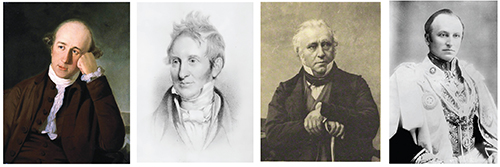
Above, from left: Lord Warren Hastings, Governor Mountstuart Elphinstone,
Thomas Macaulay and Lord George Curzon Photos: Wikipedia
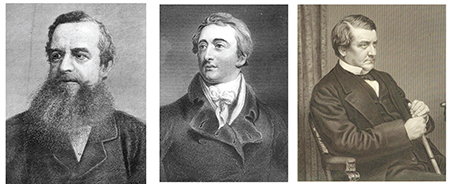
Above, from left: George Robinson, Governor-General William Bentinck
and 6th Earl of Mayo Photos: Wikipedia
Masani spoke convincingly about the work of the British orientalists and how, "far from wanting to plunder our cultural riches or colonize our minds,” they worked with single minded determination to rediscover India’s forgotten past.
The speaker began his presentation by noting the ironic fact that there are no ‘Indian’ reports about the state of education before the East India Company (EIC) took over. Most of the evidence comes from the reports of foreigners. The only eyewitness account of pre-colonial academic life in India is from the 17th century French traveller, Francois Bernier. When he visited Benares, he complained that "There was nothing there approaching a decent university; neither colleges nor classes, just small groups of disciples under religious gurus, housed in the homes of rich merchants.” Other foreign travellers alleged the students were lazy, the curriculum was restricted to the holy texts and the teachers were incompetent.
The state of primary education was even more deplorable. Though, in the 1820s and 1830s, every village in Bengal, Madras and Bombay had a school, with relatively high rates of attendance, there was a total absence of textbooks or even slates. Students studied under a banyan tree or in shabby classrooms where they were taught by incompetent teachers. They left even before they reached the level of literacy.
It was against this background that the British Parliament in 1813 budgeted a very modest provision of one lakh rupees annually (about 50 lakhs in today’s money) which was later raised to Rs 10 lakhs (rupees five crores today) "for the revival and improvement of literature and ... the promotion of a knowledge of the sciences…”
Masani explained though that these funds went initially to Calcutta’s Sanskrit College and the Muslim Madrassa, which were both committed to traditional learning. In 1816, the Calcutta Hindu College, India’s first Western-style college was founded as a private, joint venture between committed British officials and the Bengali elite, led by Raja Ram Mohan Roy.
Though some directors of the EIC, were not pleased with this policy, several far sighted Englishmen like governor-general Lord Warren Hastings and governor Mountstuart Elphinstone argued in favor of the education policy. The Bombay Native Education Society published thousands of new school textbooks, many in local languages, opened several new schools, started classes in medicine and engineering and founded the prestigious Elphinstone College.
An authority on the much maligned historian and politician Thomas Macaulay, Masani said the Englishmen’s idea was, "to first create a new class of westernized intermediaries and then encourage them to filter down modern, scientific knowledge through vernacular languages.” But the education policy was crippled by lack of funds in spite of the best efforts of governor-generals William Bentinck, Auckland and Dalhousie as well as Lord Ripon and Viceroy Lord Mayo who believed that besides creating a few babus, the British had done little to disseminate education to the masses.
Governor-General Charles Canning established India’s first modern universities at Calcutta, Bombay and Madras. followed by other cities and some were endowed by Indian princes and rich businessmen. As a result, in the course of three decades, the number of Indians in higher education had risen to 60,000.

Dr Zareer Masani
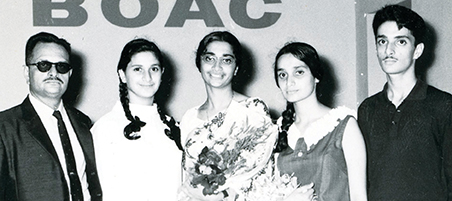
The Merchant family (from l): Dinshaw, Arnoo, Whabiz, Maharoukh and Dr Hoshang
In 1901, Lord George Curzon convened the Simla Conference, which lasted 16 days and was attended by the entire education establishment of the Raj, including vice chancellors of major universities. Curzon opined that the present system of education was a failure, the universities were mere examining bodies, standards of the affiliated colleges were very poor and the system merely encouraged cramming and passing examinations. "A people cannot rise in the scale of intelligence by the cultivation of memory alone,” he lamented. He was appalled by the number of students who failed to pass the university entrance examinations, that the emphasis was entirely on the liberal arts and not sufficiently on technical or commercial or vocational courses.
Curzon was equally unhappy about the lack of female education, "the most conspicuous blot on the educational system of India…. Only one girl attends for every 10 of the male sex, and only two percent of the female population of school-going age; and the total expenditure upon female education in primary and secondary schools from all public funds ...was ... only Rs 11 lakhs, as compared with Rs 80 lakhs on boys.”
Curzon’s reform to make the governing bodies of universities and colleges more academically rigorous was opposed in the imperial legislature by most of its Indian members, led by politician and social reformer Gopal Krishna Gokhale. But the reforms were implemented and, it was evident that they greatly improved academic standards.
Curzon also did a lot to improve the primary schools by generously sanctioning grants as a result of which the number of recognized primary schools increased by 25,000 within a decade.
In fact, Masani thought that the state of affairs post-Independence was reprehensible as the Indian government took 60 years to introduce a haphazard policy of free and compulsory education.The educationist Anil Sadagopal called it "a fraud on our children. It gives neither free education nor compulsory education. In fact, it only legitimizes the present multi-layered, inferior-quality school education system, where discrimination shall continue to prevail.”
The historian ended his presentation by highlighting some statistics pertaining to education during the Raj. Male literacy rose from nine percent to 27% between 1900 and 1947. Female literacy during the same period increased from half percent to almost nine percent. In 1947, there were 2,10,000 primary schools, an average of one to an area of five sq miles; there were 21,000 middle and secondary schools and 27 universities and 498 colleges, with an enrolment of about one million students.
Since independence, higher education has increased by leaps and bounds, with the number of universities increasing 18-fold, the number of colleges by 35 times and enrolment more than 10-fold. But Masani wonders if we have sacrificed quality for quantity. He ends on a personal note, "Elphinstone College, where Whabiz Merchant and I studied, used to be the jewel in the crown of Bombay University. Today, it’s the pits, whereas Hoshang Merchant’s alma mater, St Xavier’s, run by the Jesuits, now leads the way. I wonder what that tells us.”
◆ ◆ ◆
From the archive