
Food
For the love of food
Chef Ashtad Dadachanji toils at his profession to please the diners’ palate
"Many people said that I should not become a chef since my life would never be a normal one: no birthdays, no holidays, no anniversaries and no vacations, but little did they know that I was not looking for it to be easy,” says Canada based chef Ashtad Dadachanji. "I was looking to overcome the hurdles and come out victorious and I am still proud to say that after 15 years in the industry, I stand stronger than ever as a chef.”
Executive chef at Marigolds and Onions Catering and Event Production company (MaO), the 35-year-old Dadachanji says, "I live for food. I live to make others happy.” One of the major catering companies in Toronto, MaO employs 70 personnel, of whom 45 work in the kitchen. The company recently catered for 800 guests at a sitdown three-course meal for the Hockey Hall of Fame where they fed legends of ice hockey in honor of 75 years of Canadian ice hockey and celebrated 25 years of the association in Toronto. The team at MaO is now readying for the Rogers Cup Tennis Championship that begins on August 4. This year Dadachanji is part of a three-member Celebrity Chef team that will be doing live food demonstrations for the public alongside a top seeded tennis star.
Executive chef at Marigolds and Onions Catering and Event Production company (MaO), the 35-year-old Dadachanji says, "I live for food. I live to make others happy.” One of the major catering companies in Toronto, MaO employs 70 personnel, of whom 45 work in the kitchen. The company recently catered for 800 guests at a sitdown three-course meal for the Hockey Hall of Fame where they fed legends of ice hockey in honor of 75 years of Canadian ice hockey and celebrated 25 years of the association in Toronto. The team at MaO is now readying for the Rogers Cup Tennis Championship that begins on August 4. This year Dadachanji is part of a three-member Celebrity Chef team that will be doing live food demonstrations for the public alongside a top seeded tennis star.
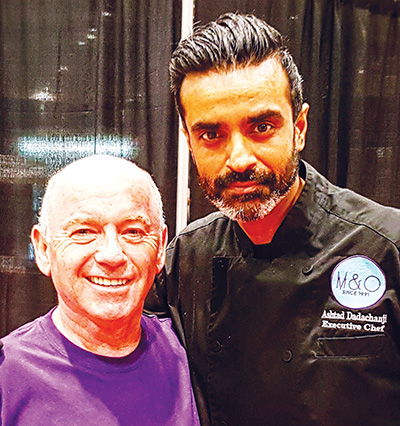
Ashtad Dadachanji with Al Salomon
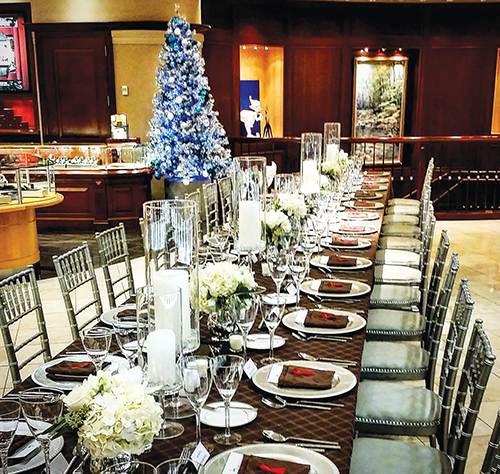
View of an event catered to by Marigolds and Onions
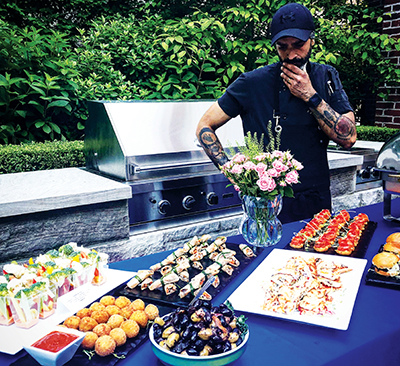
The chef overseeing his creations
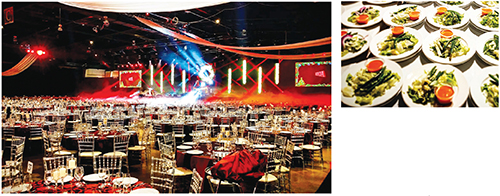
Presentation by Marigolds and Onions (R) for the Legends of Hockey gala (L)
Being a chef "is back breaking; labor intensive, long hours of being on your feet, sweaty, filled with cuts and burns. Intense mental pressure and physical tolls are taken by our bodies. But when all of the above is fuelled by an intense passion, an unwavering commitment to your craft and most importantly love for what you do — nothing seems like hard work. I may work 15 to 16 hours a day and sleep only for a few hours at night, but I wake up every morning with a smile on my face and a drive to face the day even more than the day before... To see someone’s face light up after taking a bite of my food or just be in awe after what they have tasted is the best award I can get. I think it’s the Parsi in me. We love to eat and feed people all the time. My dream is to bring Parsi and Italian cuisines to the forefront in Canada.”
The chef has created several signature dishes, one of his best renditions being a chicken dhansak prepared with Italian risotto flavored with dhansak masala and daal. The chicken is actually a Cornish hen marinated in dhansak spice and charcoal fried. The kachuber is confit of shallots and macerated tomatoes and frisée. His Akuri Tart is a hors d’oeuvre that is featured on the menu at MaO. It is a flaky pastry filled with creamy akuri and finished with a crispy shard of Italian prosciutto.
Dadachanji, whose food looks like works of art, knew that he wanted to be a chef since the age of nine. He says, "Just being the food enthusiast, rather glutton, that I was, spending time with my grandmothers and mother, helping in any mundane activity in the kitchen, be it stringing beans or peeling onions to washing and cleaning chickens, I would just love being there, seeing how dishes were prepared, how they became something magical and eventually how they made my taste buds dance.”
Dadachanji recounts his childhood memories which are filled with joy, nostalgia, food and love. He tells us that "growing up for the first six years of my life in Bombay, some memories have faded but the ones that aren’t will forever glow in my mind. The best times that I can remember were the delicious family dinners that we would have at my grandmother’s home. I grew up in the Grant Road and Sleater Road areas of Bombay and the streets were filled with Parsis. As kids, we would play cricket on the streets and then decide after a good match to go get some bhelpuri or eat the famous Tibb’s Chicken Frankie or even go to the famous Alice bakery with my uncle Fardoon Ghadialy (my mother’s brother) who would buy me the famous lacey cutlets or kheema pattice. My mouth is watering as I am reliving those memories right now. Moving to Poona was a huge change for me as a child. I thought I was in a foreign land. Although it is only four hours away from Bombay, it felt like a whole new world. I joined the Bishop’s School in 1988 and was there all the way till class 10. I completed my class 11 and 12 at the St Vincent’s College of Commerce and eventually went on to do my bachelor’s degree.
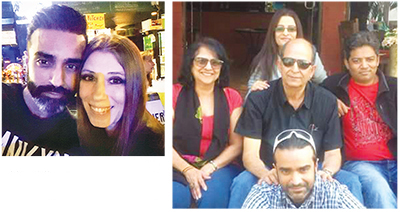
Above: Ashtad with Hayley and (r, in front) with family (from l) Hutoxi,
Anahita, Porusasp and Sabyasachi
"Through college, I trained in prestigious hotels such as the Taj in Bombay under the guidance of chef Hemant Oberoi’s talented brigade of chefs, the Holiday Inn in Poona and then the Park hotel in Bangalore where my most memorable training experience was working under the deft hands of chef Mandaar Sukhtankar. Mandaar had worked with Chef Antonio Carluccio who had helped in establishing the Park’s prized Italian speciality restaurant named Italia. I have been very fortunate to have worked under so many reputable chefs throughout my career.”
After completing his bachelor’s degree in hotel management with the Welcomgroup Graduate School of Hotel Administration in Manipal, he proceeded to start his management training program with the Park Group of Hotels in Madras and was eventually posted to one of their properties in Vishakapatnam. "During my time in Vishakapatnam I was actively planning my next steps in my budding cooking career as I was eager to learn and study my craft in greater depth. My love and obsession for Parsi and Italian cuisines have always been at the forefront of my life as a chef. I grew up with dhansak and curry chaval (rice) running through my veins and I now needed to go onto something bigger,” he says. Enter, the Italian Culinary Institute for Foreigners in Piedmont, Italy, a prestigious culinary academy "where, in 2005, I would leave India (in the middle of my management training program) to pursue a master’s degree in Italian Culinary Arts. This was the turning point in my life.”
After completing his studies and work in Italy, Dadachanji returned to Poona, but it was never the same. "The passion and the knowledge that I had come back with then led me to join a few Italian restaurants in the city. It was a couple of years after my return that I made the decision to migrate to the West to pursue my dream of becoming a reputable chef and my first country of choice was Canada,” he states.
In February 2009 he was hired as a cook (on a work visa) in a small hotel called the Park Inn and Suites in the depths of the Canadian East in the province of New Brunswick in a very small yet beautiful city called Miramichi. "Let me tell you, migrating to another country is no cakewalk, nor is it a bed of roses like some may think. At least it was not for me. Starting out from scratch in a foreign land where you have no family or friends is one of the toughest things to do. But that, in my opinion, builds character. I worked as a cook for 10 months and then in late December 2009 I got a call from the Canadian embassy in India informing me that my permanent residency had been approved. Countless nights of hard work, emotional roller coasters and intense perseverance had all led to that day. I returned to India for another two months and then in March 2010 I landed in Toronto. This was the city that I knew would give me the chance to dream and make those dreams a reality.
"Once again, I had returned without a job, not knowing where to start. So I walked from restaurant door to restaurant door, searching for opportunities to showcase my skills and start my journey. What I thought would be easy was certainly not. After having a few bad experiences in the restaurant industry, I was slowly losing hope but I persevered. Finally, a good friend of mine asked me if I would like to try my hand in the catering field. I agreed and was then referred to one of Toronto’s leading catering chefs who ran a major catering and event production company’s kitchen. The chef was Robert Christie and he was the executive chef at MaO. Robert brought me onto the team as a freelance chef, which meant that I had to rely totally on an email or a phone call from him everyday to find out whether or not he had some work for me. It was hard to maintain a life like that but I was so amazed by his skills and persona as a chef that I decided to stick it out and study his methods so I could understand the catering field better. From 2010 to 2012 I worked very closely with Robert, gaining all the knowledge and experience I could by working in different environments with different people and different food styles every day. My creative juices were flowing in overdrive and I realized just how much I loved it. It was at this time that the stars were beginning to align and on one particular evening I was fortunate enough to get a ride to a very important job with the owner of MaO, Al Salomon. I spent an hour with him in his car and he seemed very interested to know all about me and delve further into my life. Little did I know that within a matter of a year Al would end up hiring me as the new executive chef at MaO since Robert Christie was retiring! I sometimes still pinch myself to make sure that I am not dreaming. To be an executive chef for such a major and successful catering company in a city like Toronto is still beyond me and I am ever so grateful to Ahura Mazda for guiding me and giving me strength and hope that through hard work and perseverance, anything is possible.”
After a long day at work Dadachanji relaxes reading about "spirituality, history and food. I am also a drummer and when I get the chance I get onto my drum set at home and get lost in my world of music. I have also been skydiving and love riding roller coasters. My relaxation includes spending a lot of time with my beautiful wife Hayley and our pets. We have an Australian Cattle Dog named Tala and three cats, Baba, Mosi and Precious.”
The Dadachanjis are a tight knit family. "We are pretty much stuck at the hip when it comes to everything in life. My father Porusasp, is a retired chief engineer from the merchant navy. After sailing the seven seas for over two decades, he now works in Poona with a company called Kam Avida Enviro Engineers. He designs chassis mounted high pressure jet drain cleaning machines, working with municipalities of various regions in India, hospitals and hotels too. He is my superhero. My work ethic, my ways in life, the choices that I have made have been based on the blueprint of his life. My father has always been there for me and supported me through every endeavor I have undertaken in my life.
"My mother, Hutoxi is the rock in the family. I have always been a mama’s boy, and my mother is a true supporter and fan of mine as I am of her. Being the most amazing homemaker that she is, to keep herself busy, mum is also a self-employed LIC (Life Insurance of India) agent. But the thing that has always inspired me the most about my mother is her nurturing ability. She is a true mother, a giver to everyone but never asks for anything in return. Her humility and generosity have always astounded me. My mother now volunteers to teach English to blind students in Poona city.
"My sister, Anahita Bhadra was also a part of the food and beverage industry. After having acquired her diploma in hotel management she kick-started her career with the then Holiday Inn hotel in Poona (now the Sun n Sand). Like me Anahita too did her speech and drama with the Trinity College of London. In her college days Anahita was also a runway model, and she got her big break when she was hired to be the official face of the Kit Kat chocolate bar. Anahita has also done public relations for advertising and media. She got married to the love of her life, Sabyasachi in 2005. My brother-in-law Sabyasachi, also known as Micky, is a gem. Having done his bachelor’s in commerce and an MBA in finance, he currently works with the Development Bank of Singapore as a senior relationship manager.
"My wife Hayley is a Canadian from the city of Sault Ste Marie, here in Ontario. We were married in October 2016 in her hometown. She is a nurse, working with a mental health facility in Toronto that tends to the needs of patients with brain injuries. Besides being my wife, she is also the one that completes me. We met in the summer of 2014 on an online dating site. After our first date we were pretty much inseparable and the rest, as they say, is history. She is the apple of my eye, whose unending support is a necessity with the way I work. She is so dedicated to her craft as well and it’s this mixed with the love and support we have for each other that make us such a good team together.”
Dadachanji’s views about the Parsi community and Zoroastrianism are straightforward. "We are a home and community based religion,” he says. "We have always worked toward enhancing society around us by being charitable and holding the need for education and other social initiatives in high regard. We see everyone as equal and one only surpasses the other in my opinion through their righteousness.”
"Food is extravagance as is theater. The excitement and the anticipation for it to reach the customer sometimes for me is too much to handle. My creations are a part of me. Every creation is in existence for a matter of moments before it becomes a wonderful memory forever in the customer’s mind. As a chef I am not only creating food, I am also creating memories,” believes Dadachanji.
He shares below a few of his creations.
PANKO AND CHILLI SESAME CRUSTED DEEP FRIED DEVILLED EGG WITH A SRIRACHA AND EGG YOLK MOUSSE WITH MONTREAL SMOKED MEAT BITS
Eggs (8 – hard boiled cut into halves)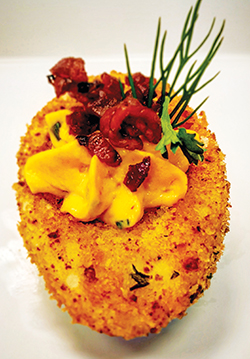
Japanese panko breadcrumbs (150 g)
Red chilli sesame seeds or black sesame seeds (60 g)
Fresh parsley (25 g — chopped)
Sriracha sauce or tabasco sauce (as per taste)
Mayonnaise (1.5 tbsp)
All purpose flour (for coating)
Eggs (3)
Salt and pepper (to taste)
Canola oil for frying (2-3 cups)
Montreal smoked meat (30 g — cut into small cubes)
Immerse four whole eggs in cold water and boil on high heat for 10 mins. Remove from the stove, take the eggs out of the water and allow to cool completely. Peel off the shells and cut each egg into half lengthwise. Scoop out the yolks and place in a bowl. Set egg whites aside. To the hard boiled yolks add the mayonnaise and sriracha or tabasco sauce and season with salt and pepper to taste. Mix thoroughly to form a smooth mousse and place into a piping bag with a star tip nozzle. Leave in the fridge to firm up.
Take three separate bowls, add flour in one, beaten eggs in the other and to the last the panko and chilli sesame seeds or black sesame seeds mixed with the parsley. Place the egg whites in the flour and gently coat them completely. Transfer to the egg wash before finally coating them with the panko crumb mix.
In a pan heat the canola oil up to around 180 degrees celsius and gently drop the eggs into the oil and deep fry until golden brown. Drain off excess fat on kitchen paper. Allow to cool completely. Pour out most of the oil from the pan leaving behind just enough to saute the smoked meat cubes till crispy. Once again drain off excess fat on kitchen paper.
To assemble, very carefully pipe the egg yolk mousse into the fried egg whites and top with the smoked meat bits.
Eggs (8 – hard boiled cut into halves)
Japanese panko breadcrumbs (150 g)
Red chilli sesame seeds or black sesame seeds (60 g)
Fresh parsley (25 g — chopped)
Sriracha sauce or tabasco sauce (as per taste)
Mayonnaise (1.5 tbsp)
All purpose flour (for coating)
Eggs (3)
Salt and pepper (to taste)
Canola oil for frying (2-3 cups)
Montreal smoked meat (30 g — cut into small cubes)
Immerse four whole eggs in cold water and boil on high heat for 10 mins. Remove from the stove, take the eggs out of the water and allow to cool completely. Peel off the shells and cut each egg into half lengthwise. Scoop out the yolks and place in a bowl. Set egg whites aside. To the hard boiled yolks add the mayonnaise and sriracha or tabasco sauce and season with salt and pepper to taste. Mix thoroughly to form a smooth mousse and place into a piping bag with a star tip nozzle. Leave in the fridge to firm up.
Take three separate bowls, add flour in one, beaten eggs in the other and to the last the panko and chilli sesame seeds or black sesame seeds mixed with the parsley. Place the egg whites in the flour and gently coat them completely. Transfer to the egg wash before finally coating them with the panko crumb mix.
In a pan heat the canola oil up to around 180 degrees celsius and gently drop the eggs into the oil and deep fry until golden brown. Drain off excess fat on kitchen paper. Allow to cool completely. Pour out most of the oil from the pan leaving behind just enough to saute the smoked meat cubes till crispy. Once again drain off excess fat on kitchen paper.
To assemble, very carefully pipe the egg yolk mousse into the fried egg whites and top with the smoked meat bits.
SOYA SAUCE AND TAMARIND MARINATED SEA BASS, WOK TOSSED SHITAKE MUSHROOMS AND CILANTRO AND COCONUT MILK GAZPACHO
Sea bass fillets (2)
Light soya sauce (2 tbsp)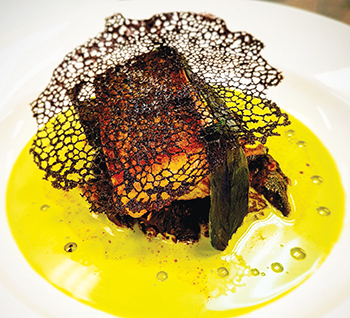
Tamarind pulp (1 tsp)
Minced garlic (¼ tsp)
Minced ginger (¼ tsp)
Kaffir lime leaves (2)
For the shitake mushrooms
Rehydrated shitake mushrooms (1 cup)
Sambal olek (Indonesian chilli paste — 1 tsp or as spicy as you like it!)
Shallot (1 — chopped)
Minced garlic (½ tsp)
Salt and pepper (to taste)
Sesame oil (2 tbsp)
For the gazpacho
Minced garlic (1 tsp)
Minced ginger (1 tsp)
White wine (20 ml)
White vinegar (10 ml)
Cilantro (½ bunch)
Coconut milk (50 ml)
Thai basil leaves (6)
Cayenne pepper (to taste)
Lime juice (to taste)
Salt and pepper (to taste)
For the fish
In a bowl whisk together the soya sauce, tamarind pulp, garlic and ginger. Tear the kaffir lime leaves and rub them between the palm of your hands to release their oils and drop them into the bowl. Coat the bass fillets thoroughly, cover tight with plastic and allow them to marinate for a maximum of an hour. Pan sear (skin side down) in a hot pan for three minutes. Do not touch the fish! Turn over and cook further for another two-and-a-half minutes. Set aside to rest.
For the mushrooms
In a wok, add some olive oil and sauté the garlic and shallots together. Cook the shallots and garlic without color. This allows the shallots to release their natural sweetness. Cook for around two-and-a-half minutes. At this stage add the shitake mushrooms and toss on high heat and drizzle in the sesame oil and sambal olek. Season to taste.
For the gazpacho
Start by sautéing garlic and ginger in some olive oil until it is caramelized and golden brown. Deglaze the pan with white wine along with the vinegar and let it reduce. When reduced, remove from heat and cool. Add a good handful of cilantro to a blender along with the coconut milk. Put in the ginger and garlic reduction, some Thai basil leaves along with the cayenne pepper and lime juice.
Blend till smooth. Taste and then season. If you find it on the sour side you can balance the gazpacho by adding palm sugar or honey. Strain the mix through a fine sieve and then allow to reduce further on the stove.
Plate up
Spoon some of the shitake mushroom mix in the middle of a pasta bowl. Pour the gazpacho around the mushrooms to form a pool. Place fish on top and serve.
Sea bass fillets (2)
Light soya sauce (2 tbsp)
Tamarind pulp (1 tsp)
Minced garlic (¼ tsp)
Minced ginger (¼ tsp)
Kaffir lime leaves (2)
For the shitake mushrooms
Rehydrated shitake mushrooms (1 cup)
Sambal olek (Indonesian chilli paste — 1 tsp or as spicy as you like it!)
Shallot (1 — chopped)
Minced garlic (½ tsp)
Salt and pepper (to taste)
Sesame oil (2 tbsp)
For the gazpacho
Minced garlic (1 tsp)
Minced ginger (1 tsp)
White wine (20 ml)
White vinegar (10 ml)
Cilantro (½ bunch)
Coconut milk (50 ml)
Thai basil leaves (6)
Cayenne pepper (to taste)
Lime juice (to taste)
Salt and pepper (to taste)
For the fish
In a bowl whisk together the soya sauce, tamarind pulp, garlic and ginger. Tear the kaffir lime leaves and rub them between the palm of your hands to release their oils and drop them into the bowl. Coat the bass fillets thoroughly, cover tight with plastic and allow them to marinate for a maximum of an hour. Pan sear (skin side down) in a hot pan for three minutes. Do not touch the fish! Turn over and cook further for another two-and-a-half minutes. Set aside to rest.
For the mushrooms
In a wok, add some olive oil and sauté the garlic and shallots together. Cook the shallots and garlic without color. This allows the shallots to release their natural sweetness. Cook for around two-and-a-half minutes. At this stage add the shitake mushrooms and toss on high heat and drizzle in the sesame oil and sambal olek. Season to taste.
For the gazpacho
Start by sautéing garlic and ginger in some olive oil until it is caramelized and golden brown. Deglaze the pan with white wine along with the vinegar and let it reduce. When reduced, remove from heat and cool. Add a good handful of cilantro to a blender along with the coconut milk. Put in the ginger and garlic reduction, some Thai basil leaves along with the cayenne pepper and lime juice.
Blend till smooth. Taste and then season. If you find it on the sour side you can balance the gazpacho by adding palm sugar or honey. Strain the mix through a fine sieve and then allow to reduce further on the stove.
Plate up
Spoon some of the shitake mushroom mix in the middle of a pasta bowl. Pour the gazpacho around the mushrooms to form a pool. Place fish on top and serve.
LEMON AND ROSEMARY ROASTED CHICKEN THIGHS ON A BED OF UMBRIAN WHITE BEANS AND PANCETTA
Chicken thighs (4 with bone and skin)
Rosemary (2 sprigs — chopped)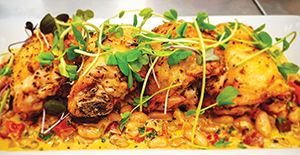
Lemon zest (1 tsp)
Salt and pepper (to taste)
Extra vigin olive oil
For the umbrian white beans
White onions (2 medium — diced)
Cherry tomatoes (12 — cut into halves)
Garlic (2 tsp)
White wine (35 ml)
Thyme (2 tsp)
Heavy cream (25 ml)
Salt and pepper (to taste)
Pancetta (20 g — cut into 2cm dices)
Parmesan (2 tbsp)
Parsley (1 g — chopped)
White kidney beans (1 can — drained)
In a bowl mix together the chopped rosemary, lemon zest and olive oil. Pour over the chicken and sprinkle with salt and pepper. Set aside at room temperature for 20 mins. Pre-heat your oven to 375 F and roast chicken for 25 mins. The juices should run clear. Once they do, your chicken is cooked. In a pan on medium heat add olive oil and saute the pancetta until most of the fat has been rendered. Drain the pancetta, but save the fat. Add rendered fat back into the pan and saute the garlic and onions until translucent. To this add the halved cherry tomatoes, thyme and pancetta. Saute on high heat for two minutes.
Add the white kidney beans; saute for a further 2 mins and then deglaze the pan with white wine. Allow the white wine to reduce by half. Once reduced, add the heavy cream and further reduce by almost one-third. Season to taste. Finish with parmesan. To assemble, ladle the beans at the bottom of a platter. Top with the chicken and drizzle generously with olive oil.
Chicken thighs (4 with bone and skin)
Rosemary (2 sprigs — chopped)
Lemon zest (1 tsp)
Salt and pepper (to taste)
Extra vigin olive oil
For the umbrian white beans
White onions (2 medium — diced)
Cherry tomatoes (12 — cut into halves)
Garlic (2 tsp)
White wine (35 ml)
Thyme (2 tsp)
Heavy cream (25 ml)
Salt and pepper (to taste)
Pancetta (20 g — cut into 2cm dices)
Parmesan (2 tbsp)
Parsley (1 g — chopped)
White kidney beans (1 can — drained)
In a bowl mix together the chopped rosemary, lemon zest and olive oil. Pour over the chicken and sprinkle with salt and pepper. Set aside at room temperature for 20 mins. Pre-heat your oven to 375 F and roast chicken for 25 mins. The juices should run clear. Once they do, your chicken is cooked. In a pan on medium heat add olive oil and saute the pancetta until most of the fat has been rendered. Drain the pancetta, but save the fat. Add rendered fat back into the pan and saute the garlic and onions until translucent. To this add the halved cherry tomatoes, thyme and pancetta. Saute on high heat for two minutes.
Add the white kidney beans; saute for a further 2 mins and then deglaze the pan with white wine. Allow the white wine to reduce by half. Once reduced, add the heavy cream and further reduce by almost one-third. Season to taste. Finish with parmesan. To assemble, ladle the beans at the bottom of a platter. Top with the chicken and drizzle generously with olive oil.
MOROCCAN CHICKEN WITH PRESERVED LEMON AND OLIVE SAFFRON RISOTTO
Serves 4
For the chicken
Chicken (4, with skin on wing tip)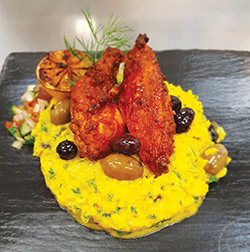
Garlic (1 tsp — chopped)
Ginger (1 tsp — chopped)
Cinnamon powder (½ tsp)
Cumin powder (2 tsp)
Paprika (1 tsp)
Zest of 2 lemons
Extra virgin olive oil (1 tbsp)
For the Risotto
Arborio rice
(1½ cups)
Saffron (¼ tsp)
Chicken or veg broth (3 cups)
Unsalted butter (3 tbsp)
Green and black whole olives (1 cup)
Parsley (½ cup — chopped)
Shallots (3 — chopped)
Extra virgin olive oil (2 tbsp)
Garlic (2 tsp – chopped)
In a bowl mix together the garlic, ginger, cinnamon, cumin, paprika, lemon zest and olive oil.
Add chicken, season with salt and pepper and marinate for 30 minutes.
Pre heat oven to 350°. Place marinated chicken on parchment lined baking sheet and cook for 12-18 minutes.
For the risotto
In a stock pot bring to a boil the water and chicken or veg stock. Once boiling reduce the heat so the stock is barely at a simmer. In a pan, add three tablespoons of butter, the garlic and shallots and cook till translucent. Add the raw rice and sauté for a minute and a half. Add one cup of broth to the rice and stir frequently. Once the water has been absorbed, constantly keep adding half a cup of stock at a time. Add saffron and continue cooking. Add chopped preserved lemons and mix well. Cook rice till tender and creamy, approximately 18 minutes. Once the rice is well cooked, add the remaining butter to achieve a creamy consistency. Add the olives and let them warm through. Fold in fresh chopped parsley. Season to taste.
To serve
Baste the chickens with marinade before reheating in the oven. Once heated, slice in half. On a plate spoon creamy risotto and top with the chicken. Garnish with a grilled lemon and a salad of fresh chopped onions and tomato. Enjoy!!
Serves 4
For the chicken
Chicken (4, with skin on wing tip)
Garlic (1 tsp — chopped)
Ginger (1 tsp — chopped)
Cinnamon powder (½ tsp)
Cumin powder (2 tsp)
Paprika (1 tsp)
Zest of 2 lemons
Extra virgin olive oil (1 tbsp)
For the Risotto
Arborio rice
(1½ cups)
Saffron (¼ tsp)
Chicken or veg broth (3 cups)
Unsalted butter (3 tbsp)
Green and black whole olives (1 cup)
Parsley (½ cup — chopped)
Shallots (3 — chopped)
Extra virgin olive oil (2 tbsp)
Garlic (2 tsp – chopped)
In a bowl mix together the garlic, ginger, cinnamon, cumin, paprika, lemon zest and olive oil.
Add chicken, season with salt and pepper and marinate for 30 minutes.
Pre heat oven to 350°. Place marinated chicken on parchment lined baking sheet and cook for 12-18 minutes.
For the risotto
In a stock pot bring to a boil the water and chicken or veg stock. Once boiling reduce the heat so the stock is barely at a simmer. In a pan, add three tablespoons of butter, the garlic and shallots and cook till translucent. Add the raw rice and sauté for a minute and a half. Add one cup of broth to the rice and stir frequently. Once the water has been absorbed, constantly keep adding half a cup of stock at a time. Add saffron and continue cooking. Add chopped preserved lemons and mix well. Cook rice till tender and creamy, approximately 18 minutes. Once the rice is well cooked, add the remaining butter to achieve a creamy consistency. Add the olives and let them warm through. Fold in fresh chopped parsley. Season to taste.
To serve
Baste the chickens with marinade before reheating in the oven. Once heated, slice in half. On a plate spoon creamy risotto and top with the chicken. Garnish with a grilled lemon and a salad of fresh chopped onions and tomato. Enjoy!!
BOCCONCINI PASTA WITH TURKEY RAGU, SWEET SUMMER PEAS AND VINE RIPENED TOMATOES
Bocconcini pasta or Rigatoni (300 g)
Shallots (2 — finely minced)
Fresh garlic (2 tsp — minced)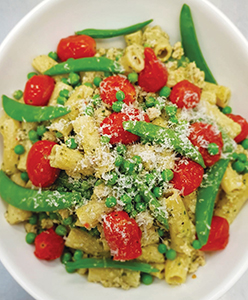
Turkey sausage (200 g — casing removed)
Green peas (100 g — fresh or frozen)
Sugar snap peas (50 g)
Vine ripened cherry tomatoes (75 g)
Parmesan cheese (50 g) plus more
Cream (35 ml — half and half or 35%)
Basil pesto (4 tbsp)
White wine (50 ml)
Fresh thyme (as much as you want)
Extra virgin olive oil (as needed)
Salt and pepper (to taste)
Fill a large heavy bottomed pot with water and add salt. Cover with a lid and bring to a rolling boil. Once the water is boiling add your pasta and cook any-where between two to three minutes lesser than what is written on the bag. Drain the pasta and immediately drizzle with extra virgin olive oil. Do not rinse the pasta under running water. Set aside to cool.
In a heavy bottomed pan, add the olive oil and garlic. Allow the garlic time to flavor the oil, approximately 30 to 40 seconds in the pan on a medium heat. Once the captivating aroma of the garlic is released, add the shallots. Saute on a medium heat for approximately a minute-and-a-half or until the shallots turn translucent. Add a pinch of salt to the pan. This allows the shallots to release their sugars faster and become sweeter.
Using your hands, add the turkey sausage around the pan trying not to throw it all in at once. This would result in the meat boiling rather than caramelizing and breaking up to start the formation of a ragu. Stir frequently till all the meat is cooked and broken down evenly. Try to avoid big chunks of sausage.
Deglaze the pan by adding the white wine at this stage. Time to turn up the heat to full blast and allow the wine to reduce by half. By doing that you are allowing the alcohol to evaporate and concentrating the flavors further. Add the cream, bring to a boil. Once boiling, bring down the heat and simmer the ragu for a further five to six minutes. Now is the perfect time to add the fresh thyme.
Once the ragu has reached the thickness of a Bolognese sauce, check for seasoning. Taste before adding salt, fold in the parmesan cheese and adjust the seasoning to your taste. Ragu done. Get it off the heat.
Either use a homemade pesto or a store bought jar of pesto works just fine. Fold the pesto into your ragu and watch the color change from a white to a basil cream green.
In a bowl, place cherry tomatoes, season with salt and pepper, olive oil and put them in a hot oven for five minutes. Once they blister pull them out.
Blanch the sugar snap peas and sweet green peas in salted water and shock in ice cold water. Drain.
Assembling the dish
Put the pan with the ragu back on the heat. Once heated through, add the pasta and fold into the sauce thoroughly. Then add the peas and fold into the pasta. Pour pasta into a serving dish and garnish with the blistered tomatoes. Freshly grate parmesan over the top and drizzle with extra virgin olive oil. Enjoy with a great glass of vino bianco and a lot of friends and family!
Bocconcini pasta or Rigatoni (300 g)
Shallots (2 — finely minced)
Fresh garlic (2 tsp — minced)
Turkey sausage (200 g — casing removed)
Green peas (100 g — fresh or frozen)
Sugar snap peas (50 g)
Vine ripened cherry tomatoes (75 g)
Parmesan cheese (50 g) plus more
Cream (35 ml — half and half or 35%)
Basil pesto (4 tbsp)
White wine (50 ml)
Fresh thyme (as much as you want)
Extra virgin olive oil (as needed)
Salt and pepper (to taste)
Fill a large heavy bottomed pot with water and add salt. Cover with a lid and bring to a rolling boil. Once the water is boiling add your pasta and cook any-where between two to three minutes lesser than what is written on the bag. Drain the pasta and immediately drizzle with extra virgin olive oil. Do not rinse the pasta under running water. Set aside to cool.
In a heavy bottomed pan, add the olive oil and garlic. Allow the garlic time to flavor the oil, approximately 30 to 40 seconds in the pan on a medium heat. Once the captivating aroma of the garlic is released, add the shallots. Saute on a medium heat for approximately a minute-and-a-half or until the shallots turn translucent. Add a pinch of salt to the pan. This allows the shallots to release their sugars faster and become sweeter.
Using your hands, add the turkey sausage around the pan trying not to throw it all in at once. This would result in the meat boiling rather than caramelizing and breaking up to start the formation of a ragu. Stir frequently till all the meat is cooked and broken down evenly. Try to avoid big chunks of sausage.
Deglaze the pan by adding the white wine at this stage. Time to turn up the heat to full blast and allow the wine to reduce by half. By doing that you are allowing the alcohol to evaporate and concentrating the flavors further. Add the cream, bring to a boil. Once boiling, bring down the heat and simmer the ragu for a further five to six minutes. Now is the perfect time to add the fresh thyme.
Once the ragu has reached the thickness of a Bolognese sauce, check for seasoning. Taste before adding salt, fold in the parmesan cheese and adjust the seasoning to your taste. Ragu done. Get it off the heat.
Either use a homemade pesto or a store bought jar of pesto works just fine. Fold the pesto into your ragu and watch the color change from a white to a basil cream green.
In a bowl, place cherry tomatoes, season with salt and pepper, olive oil and put them in a hot oven for five minutes. Once they blister pull them out.
Blanch the sugar snap peas and sweet green peas in salted water and shock in ice cold water. Drain.
Assembling the dish
Put the pan with the ragu back on the heat. Once heated through, add the pasta and fold into the sauce thoroughly. Then add the peas and fold into the pasta. Pour pasta into a serving dish and garnish with the blistered tomatoes. Freshly grate parmesan over the top and drizzle with extra virgin olive oil. Enjoy with a great glass of vino bianco and a lot of friends and family!
BALSAMIC GLAZED CHICKEN SUPREME
Serves 4
Chicken breasts (4 with skin)
Balsamic vinegar (¼ cup)
Garlic (2 tsp — chopped)
Fresh thyme (½ tsp — chopped)
Fresh rosemary (½ tsp — chopped)
Dried chilli flakes (½ tsp)
Honey (3 tbsp)
Preheat oven to 350°F
Whisk all ingredients(except chicken) in a bowl until well combined. Add chicken to the above marinade and massage into chicken breasts for about one minute. Allow chicken to marinade up to one hour. Place marinated chicken breasts on parchment lined baking tray, skin side up. Bake for about 25-30 minutes. A great accompaniment for the Balsamic Glazed Chicken is a buttery mashed potato and oven roasted vegetables. Enjoy!
Serves 4
Chicken breasts (4 with skin)
Balsamic vinegar (¼ cup)
Garlic (2 tsp — chopped)
Fresh thyme (½ tsp — chopped)
Fresh rosemary (½ tsp — chopped)
Dried chilli flakes (½ tsp)
Honey (3 tbsp)
Preheat oven to 350°F
Whisk all ingredients(except chicken) in a bowl until well combined. Add chicken to the above marinade and massage into chicken breasts for about one minute. Allow chicken to marinade up to one hour. Place marinated chicken breasts on parchment lined baking tray, skin side up. Bake for about 25-30 minutes. A great accompaniment for the Balsamic Glazed Chicken is a buttery mashed potato and oven roasted vegetables. Enjoy!
MaO master pastry chef Andres Monterosso shares his dessert recipe with Parsiana readers.
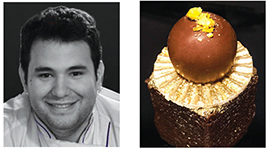
Master pastry chef Andres Monterosso (far l) and Exceptionally Brownie
EXCEPTIONALLY BROWNIE
Semisweet chocolate chips (2 cups, divided)
Unsalted butter (1½ sticks — cut into pieces)
Unsweetened chocolate (4 ounces — chopped)
Granulated sugar (1½ cups)
Eggs (3 + yolk of 1 egg)
Vanilla extract (1 tsp)
All-purpose flour (3/4 cup)
Fine sea salt (¼ tsp)
Sweetened condensed milk (3/4 cup)
Gelatin (7 g – powdered)
White chocolate (12 ounces — roughly chopped)
Heavy cream (2½ cups)
In a large microwave-safe bowl combine one cup chocolate chips, butter and unsweetened chocolate. Heat in the microwave for a minute, then stir. Continue heating in 30-second bursts, stirring between each burst, until the mixture is melted and smooth but not scorched. Remove from the microwave and let cool slightly.
In a large bowl, use an electric mixer to beat the eggs and sugar on medium-high speed until light and thick, about three minutes. Beat in the vanilla extract. Stir in the cooled chocolate mixture with a rubber spatula. Add the flour and salt, folding gently until well combined.
Dissolve gelatin in ¼ cup of cold water and set aside for five minutes. Place chocolate in the bowl of a food processor and pulse until finely chopped. Prepare an ice-water bath; set aside. Place 3/4 cup cream in a small saucepan and bring just to a boil over medium-high heat. Add gelatin and stir for 30 seconds to dissolve completely. Pour into food processor with the motor running and process until chocolate mixture is smooth.
Transfer to a medium bowl and place over ice-water bath. Chill until the mixture is thick enough to fall from a spoon in ribbons.
Whip remaining 13/4 cups heavy cream to soft peaks. Fold into chocolate mixture. If not using immediately, refrigerate in an airtight container.
Semisweet chocolate chips (2 cups, divided)
Unsalted butter (1½ sticks — cut into pieces)
Unsweetened chocolate (4 ounces — chopped)
Granulated sugar (1½ cups)
Eggs (3 + yolk of 1 egg)
Vanilla extract (1 tsp)
All-purpose flour (3/4 cup)
Fine sea salt (¼ tsp)
Sweetened condensed milk (3/4 cup)
Gelatin (7 g – powdered)
White chocolate (12 ounces — roughly chopped)
Heavy cream (2½ cups)
In a large microwave-safe bowl combine one cup chocolate chips, butter and unsweetened chocolate. Heat in the microwave for a minute, then stir. Continue heating in 30-second bursts, stirring between each burst, until the mixture is melted and smooth but not scorched. Remove from the microwave and let cool slightly.
In a large bowl, use an electric mixer to beat the eggs and sugar on medium-high speed until light and thick, about three minutes. Beat in the vanilla extract. Stir in the cooled chocolate mixture with a rubber spatula. Add the flour and salt, folding gently until well combined.
Dissolve gelatin in ¼ cup of cold water and set aside for five minutes. Place chocolate in the bowl of a food processor and pulse until finely chopped. Prepare an ice-water bath; set aside. Place 3/4 cup cream in a small saucepan and bring just to a boil over medium-high heat. Add gelatin and stir for 30 seconds to dissolve completely. Pour into food processor with the motor running and process until chocolate mixture is smooth.
Transfer to a medium bowl and place over ice-water bath. Chill until the mixture is thick enough to fall from a spoon in ribbons.
Whip remaining 13/4 cups heavy cream to soft peaks. Fold into chocolate mixture. If not using immediately, refrigerate in an airtight container.
◆ ◆ ◆
From the archive