
Books
The good doctor
Lifegiver by Rashmi Uday Singh. Published in 2015 by HarperCollins Publishers India. A-75, Sector 57, Noida, Uttar Pradesh, 201301. Pp: 220. Price: Rs 499.
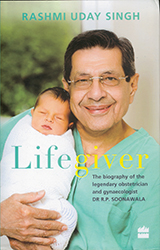 Rashmi Uday Singh’s biography of gynecologist Dr Rustom P. Soonawala is indeed a labor of love written by a grateful patient about a man of indifferent scholastic achievements who rose to phenomenal heights in the profession of his choice. Rusi, as he is affectionately known to both friends and acquaintances, has become a legend in his lifetime not only by the excellence he has achieved in his craft, but for the way in which he cares for his patients. This the author highlights step by step in a well written biography which took five years to complete.
 The son of much loved and respected physician Dr Phiroze Soonawala, and brother of physician Jamshed, pioneering genito-urinary surgeon Fardoon and dentist Soli, the author shows how Rusi was molded in an environment of excellence and care. In addition to his intuitive feel for his specialty, Soonawala is remarkably innovative. He first designed an IUCD (intra uterine contraceptive device) which was a modified version of the Lippes’ Loupe. Over the years he redesigned it with many improvements, including a "Y” shaped loupe with a pain free method of removal. He has also designed a series of surgical instruments for sterilizations and safe abortions.
What is remarkable is that in a highly commercialized environment Soonawala seeks no financial rewards for these innovations. He has not bothered to obtain a patent for any of his cost effective instruments which are now widely used by members of the profession. In the mid-1970s Soonawala pioneered micro-surgery techniques and his work on infertility is widely recognized. As a result he has travelled, demonstrated and lectured at universities all over the world.
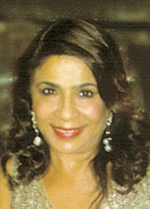
Author Rashmi Uday Singh
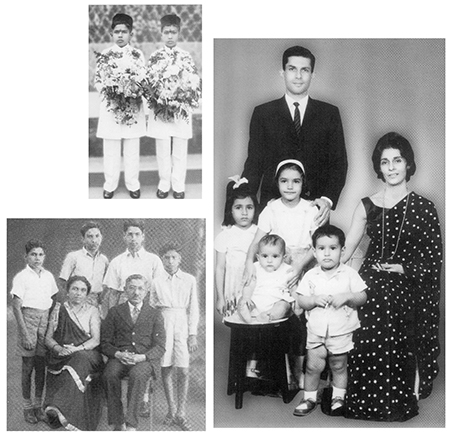
Clockwise from right: With younger brother Soli, at their navjote ceremony;
with wife Piloo and children Jenai (middle), Kamal (left), Behram (right) and Feroze (seated);
with his parents and three brothers, 1940
Soonawala’s childhood was spent in a large joint family of 17! Very much like that of many a Parsi boy from a educated middle class family. The book effortlessly moves back in time to a different era when trams crisscrossed the streets of Bombay. The boy grew up in the sleepy, leafy by-lanes of the Dadar’s Parsi Colony. While his two elder brothers were sent to boarding school, Rusi stayed at home and developed a special bond with his parents. His father, a gentle, caring and much loved doctor played a huge role in shaping Rusi’s character. As a little boy he would accompany his father to the clinic and learnt by precept and example how a doctor should behave with his patients, whether they be poor or rich. He saw how his father treated with the same gentleness and showed the same empathy and care for the big and the small. This influenced the young boy tremendously.
Soonawala’s mother was outgoing and gregarious by nature and enthused in him a love for sport and travel. He excelled in sport and as a result his academic career was never brilliant. Despite a chequered scholastic career Soonawala cleared his MBBS and MD at the Nair Hospital and went on to Glasgow to obtain his FRCS (Fellowship of the Royal College of Surgeons). The Soonawalas were always a closely knit family and initially they all worked out of their father’s Grant Road clinic. As their practice increased, they moved to bigger establishments. When Rusi is asked about his phenomenal success he modestly attributes it to his destiny and the fact that he had hardly any competition in Bombay, which is not really true. Medicine is in this man’s genes and he was groomed for success both by birth and the environment in which he grew up.
Soonawala recalls the time when he saw five to seven patients in a day and charged each one the princely sum of Rs 20. It was not long before these numbers grew to 50 to 70 patients a day with Soonawala routinely finishing consultations at midnight. Among his patients are the rich and famous, actresses and the wives of industrial tycoons but also the poor and the underprivileged whom he cares for with the same measure of skill, commitment and dedication. This is why his patients say that this legendary doctor has the gift of healing.
However, all this adulation does not match up to the man himself: humble, compassionate, gentle, a man who is passionate about his work even at the age of 86. The book is replete with anecdotes and reminiscences which bring out his qualities of head and heart. In the present scenario a doctor is often respected, but it is not often that a doctor is both loved and respected in equal measure. I found Rashmi Uday Singh’s book both interesting and informative about a man I thought I knew quite well.
◆ ◆ ◆
From the archive