An ultra sound urologist
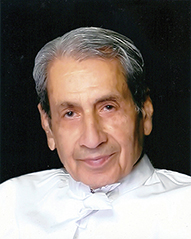 Died: Dr Fardoon Phiroze Soonawalla, 85, pioneering urologist who is credited with performing among the first successful kidney transplants in India, on July 24, 2012 in Bombay.
Just a day before he passed away in his sleep the Indian Medical Association had felicitated the senior surgeon who acknowledged the honor with a brief speech. The Urological Society of India (USI) described him as "a superlative kidney transplant surgeon,” in their newsletter of October 2012. A founder member of the Indian Society of Nephrology as also the Family Planning Association of India (FPAI), Soonawalla’s expertise in urology and andrology was valued by his peers as also his juniors.
Associated with Jaslok Hospital since its inception, having introduced the kidney transplant facility there, at the memorial meeting organized in his honor, a colleague appreciated that whenever he disagreed with a fellow doctor’s observation, he would never state, "You are wrong.” As was his wont he would say, "You may have a point, but I think…” Invariably his thinking would be right. At the memorial meeting at the Breach Candy Hospital where too he had set up the kidney transplant infrastructure, an eminent doctor commented that instead of mourning his passing they should celebrate his exemplary life.
 Soonawalla’s contribution of over five decades to the field of urology in India has been respected ever since he designed the first artificial kidney machine in India. To treat patients with chronic kidney disease he pioneered hemodialysis (one of the three renal replacement therapies that is used to achieve the extracorporeal removal of waste products such as creatinine and urea and free water from the blood), peritoneal dialysis (where fluid is introduced through a permanent tube using the patient’s peritoneum in the abdomen as a membrane across which fluids and dissolved substances like electrolytes, urea, glucose, albumin are exchanged from the blood), microsurgery in urology, renal surgery and transplantation. He was honorary urologist at the Bombay Hospital, Nanavati Hospital, Saifee Hospital, Western Railway Hospital and the B. D. Petit Parsee General Hospital. His first appointment in India was as honorary assistant surgeon at the B. Y. L. Nair Hospital and T. N. Medical College that was made even without interviewing him, solely on the basis of his credentials. On the panel of Well Care Hospital in Dubai, he made innumerable trips overseas to set up a state of the art hospital. At Poona’s Ruby Hall clinic too he had set up a kidney transplant center.
His primary role model in the medical field was his father Dr Phiroze, head of medicine at the Nair Hospital whose words the son never forgot: "Dikra, you are born to be a good doctor and serve humanity. Don’t let making money be the sole aim of your life.” From his second mentor, Dr Kersi Dastur, a pioneer in open heart surgery, Soonawalla learnt to perform complex surgical procedures and even assisted him in the creation of the first heart-lung machine that gave him the confidence to later make his own indigenous kidney dialysis machine. "It demanded hard work and sacrifice of personal life for many years,” Soonawalla was quoted in Ashavans: A Legacy of Leadership.
"Inspirational events in any surgeon’s life are when he evolves and carries out major and new operations,” expressed Soonawalla referring to Dastur’s heart-lung machine used for the first time to save the life of a young girl suffering from congenital cardiac defect and his own invention utilized to perform over 1,000 kidney transplant operations.
Actively involved with the FPAI and being vice president of the Indian Association of Fertility and Sterility, along with his gynecologist-obstetrician brother Dr Rustom and their team he would go every month to remote areas of India and nearby countries to voluntarily train doctors in family planning techniques. He had developed the technique and the instruments for suture-less vasectomy and also devised the single layer micro-surgical technique of reversal of vasectomy which has been adopted in many centers in the USA. A member of the Regional Committee of the International Fertility Research Programme, Chapel Hill, USA, he lent support to the International Planned Parenthood Federation as well.
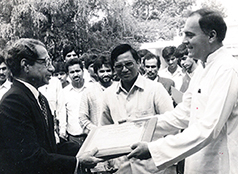
Honorary urologist to the governor of Maharashtra he was invited by the governor to be on the board of King George V Memorial Infirmary and Lady Dhunbai Jehangir Home for the Destitute, giving him an opportunity to fulfill his medical oath: "to consecrate my life to the service of humanity.” In 1984 he was presented the National Citizens Award in Medicine at the hands of then Prime Minister of India Rajiv Gandhi. The same year he was also conferred the Dr Bhansali Medal.
For nearly two decades he was professor of surgery at the Nair Hospital and in 1985 was given the title of emeritus professor of urology and transplantation. Being a member of the medical faculty of the University of Bombay he was examiner for several years at the MBBS and MS examinations. The Indian Council of Medical Research had appointed him evaluator. As mentioned in the USI newsletter, "Soonawalla was an excellent teacher and the hallmark of his clinics was the thorough preparation that went into the data he presented to his students.” His lectures, laced with humor, could make any subject interesting. The good teacher would be overjoyed when his students who had branched out in different corners of the world, came visiting to apprise him of their work and success. He was appointed visiting professor at Wayne State University, Detroit, USA too. Author of over 70 papers in his field of expertise, he was editorial committee member of the British Journal of Urology.
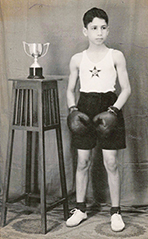 Soonawalla’s education was at the Antonio D’Silva High School and St Xavier’s College after which he completed his MBBS and MS from Nair Hospital. A keen sportsman, he represented his College and the Bombay University in athletics, hockey and boxing. His well-maintained physique had won him the title of "Mr Medico.” In 1956 he was the highest scorer at the Master of Surgery Examination and was conferred three gold medals, mentions his life profile. The following year he proceeded to England and passed the primary and the final FRCS (Fellow of the Royal College of Surgeons) examinations in a record period of six weeks and returned to India as the youngest FRCS. Whilst valuing his father’s guidance he was equally appreciative of his mother Piroja who nurtured his spiritual growth. As he acknowledged, "She was a person with immense mental and physical energy. She instilled in us the tenets of our religion by taking my brothers and me for lectures by Dasturji Kutar every Sunday. On every Navroz she would take us to four agiaries and all atash behrams. This evoked in me an abiding love for our religion and our community.”
For several years he served as president of Parsi Medical Amateurs whose annual dramas raised funds for medical scholarships. "My personal contribution to the community has been the free medical service I have given all my life to the poor. I have also rendered free service to priests and teachers of all communities,” recounted Soonawalla.
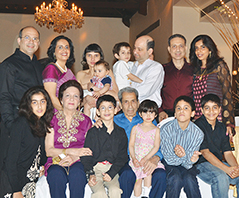
In all his endeavors he enjoyed the support of his wife Katy and he ungrudgingly recognized her sacrifice to become a homemaker and bring up their three sons "despite being a triple graduate.” A voracious reader with a sharp and enquiring mind, he could converse with anybody on any topic, recalls Katy. During their extensive travels, he always made time to visit the museums abroad, admire the beautiful temples and miniature paintings of India and the ancient heritage sites which he liked to capture on camera. An active member of the Rotary Club of Bombay for nearly 30 years, he was "always available to help and support Club projects,” stated the July 31-August 6, 2012 issue of The Gateway, the Club’s bulletin.
He had no qualms in accepting that he could think of retiring because his three sons Phiroze, a urologist and andrologist, Darius, an orthopedic surgeon, and Zahir, a gastrointestinal surgeon who is practising in England have joined the medical field, taking the count of doctors in three generations of the Soonawalla family to 14.
Known for his humility and compassion Soonawalla believed in according respect to his trainees who appreciated that he would never introduce them as a junior, assistant or registrar but always as "my colleague.” In return he earned their unbounded love, affection and admiration. He was ever a favorite of the nurses and staff at different hospitals who would invariably turn to him to resolve their problems being sanguine that he would espouse a just cause and speak his mind, regardless of the consequences.
The sensitive surgeon is survived by his wife Katy, sons Dr Phiroze, Dr Darius and Dr Zahir, and brother Dr Rustom.