
Medicine/Health
“I like to win”
Pioneer of new procedures in obstetrics and gynecology, Dr Bomsi Wadia’s contribution has won him much acclaim
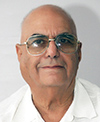 Describing himself as "semi-retired,” going to hospitals only when invited by his former students to demonstrate his phenomenal skills as one of India’s leading obstetrician gynecologists, Dr Bomsi Wadia, 79, is very much at home in his plant filled aerie atop one of Bombay’s art deco buildings at Opera House. Looming larger than life, the senior surgeon turned out to be an engaging raconteur with many a tale to tell. Last year, on Doctors’ Day, July 7, he was conferred the Dr H. M. Shah Life Time Achievement Award by the Indian Medical Association’s (IMA) Bombay branch at a function attended by over 1,000 persons where he received a shawl, citation and the award.
The citation reads: "The IMA... takes great pride in conferring upon you today the Dr H. M. Shah Life Time Achievement Award in recognition of your unique and outstanding contribution to the family planning program of India, especially among the rural and tribal population.” It lists the positions Wadia has held and the many awards received during his career: professor since 1979, he was the youngest medical consultant to pass from Bombay University, becoming head of the department of obstetrics, gynecology and family planning at Grant Medical College and Sir J. J. Group of Hospitals where he is still Emeritus Professor. In Montreal, Canada, Wadia has been consultant to McGill University since 1987. He is recipient of the Dr B. C. Roy National Award in 1987, Dhanwantari Award in 1997, IMA Award in 1991 and honor Summus Medal from the Watumull Foundation of USA in 1986. More recently he was nominated life member of the Royal Medical Society of England, London, a major provider of medical education. As a special honor, Wadia was exempted from paying the stiff membership fees.
During his long and distinguished career Wadia has designed and patented several universally accepted surgical instruments, the most noteworthy being the Wadia Uterine Elevator and the Wadia Skin Clamp. These are manufactured by Storz and Diener of Germany and Down Brothers of England. Wadia recounted that foreign manufacturers would send him their instruments for testing. The IMA’s citation notes that Wadia was pioneer of many gynecological procedures like laparoscopy, hysteroscopy, microsurgery, vaginal ultrasonography and research in genetics. He has been invited to Russia, Germany, France and the USA to demonstrate the use of his instruments and surgical procedures, the doctor revealed.
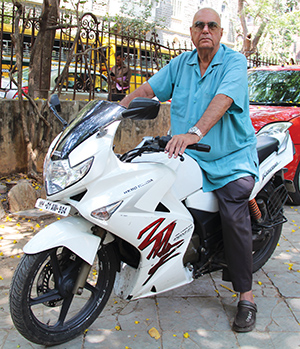
Dr Bomsi Wadia (top) and alongside Photo: Jasmine D. Driver
Wadia has performed more than 25,000 major surgeries and 3,00,000 tubal ligations (female sterilization) in 150 medical colleges, railway hospitals, army, navy, air force and port trust hospitals, rural hospitals and health centers in India. He has taught surgeons, nurses and paramedics, guiding over 3,300 gynecologists in India and abroad. He was invited by J. R. D. Tata to conduct sterilization camps in Jamshedpur. At the time of his first camp at Tata Steel (formerly Tata Iron and Steel Company Limited) the average number of children a woman bore was 6.5, which came down to 2.1 during the last camp. Describing his work at these camps, Wadia said he used his special instruments, general anesthesia was administered for just one minute, the Wadia Skin Clamp was fixed at the point of the laparoscopy and a benzene dressing applied. Aftercare was undertaken by members of his team. Detailed information on each patient was recorded using methods unique to him.
Ahead of his times, on one of his trips abroad, Wadia brought back from Hong Kong a computer which resembled a suitcase and installed it in his J. J. Hospital Unit. He devised forms with options and check boxes for maintaining records of his myriad patients. In this way the hurdle of illegible handwriting on the part of his assistants was eliminated. During the out patients clinics his juniors would examine the patients first, ticking off the appropriate boxes with their findings. Then, lying in adjacent cubicles, the patients would be seen by the bada daktar (big doctor) who came prepared, having seen their case papers. This enabled him to make swift diagnoses and prescribe suitable therapy. The corridor outside the department would be monitored by a member of his staff to deter loiterers and ensure privacy for the over 100 patients Wadia would see each day at the government run hospital. How was he able to maintain discipline in the department, Parsiana asked. He was a dictator. "What I say is done,” he retorted firmly.
About 20 years ago at the International Federation of Gynecology and Obstetrics (FIGO) World Congress in Montreal, Canada, Wadia was invited to elucidate on his medical findings on pelvic tuberculosis. He made a unique presentation on how it caused sterility in women and the treatment that was indicated. The chairman of the Congress decided that this should be named the Wadia Syndrome, which is now internationally recognized.
When a multi-party parliamentary committee came to Bombay to check on sex determination, which is illegal in Maharashtra, the director of medical education in charge of the meeting asked Wadia to make a deposition to the committee headed by Renuka Chowdhary, the minister in charge. She in turn invited Wadia to depose before Parliament as a special case. There were strict rules of protocol to be observed while in Parliament, Wadia recalls. The end result was that a law was passed making sex determination illegal to prevent female feticide in India
Ahead of his times, on one of his trips abroad, Wadia brought back from Hong Kong a computer which resembled a suitcase and installed it in his J. J. Hospital Unit. He devised forms with options and check boxes for maintaining records of his myriad patients. In this way the hurdle of illegible handwriting on the part of his assistants was eliminated. During the out patients clinics his juniors would examine the patients first, ticking off the appropriate boxes with their findings. Then, lying in adjacent cubicles, the patients would be seen by the bada daktar (big doctor) who came prepared, having seen their case papers. This enabled him to make swift diagnoses and prescribe suitable therapy. The corridor outside the department would be monitored by a member of his staff to deter loiterers and ensure privacy for the over 100 patients Wadia would see each day at the government run hospital. How was he able to maintain discipline in the department, Parsiana asked. He was a dictator. "What I say is done,” he retorted firmly.
About 20 years ago at the International Federation of Gynecology and Obstetrics (FIGO) World Congress in Montreal, Canada, Wadia was invited to elucidate on his medical findings on pelvic tuberculosis. He made a unique presentation on how it caused sterility in women and the treatment that was indicated. The chairman of the Congress decided that this should be named the Wadia Syndrome, which is now internationally recognized.
When a multi-party parliamentary committee came to Bombay to check on sex determination, which is illegal in Maharashtra, the director of medical education in charge of the meeting asked Wadia to make a deposition to the committee headed by Renuka Chowdhary, the minister in charge. She in turn invited Wadia to depose before Parliament as a special case. There were strict rules of protocol to be observed while in Parliament, Wadia recalls. The end result was that a law was passed making sex determination illegal to prevent female feticide in India
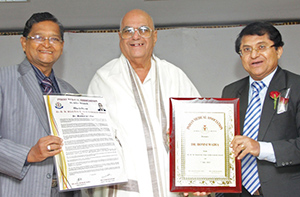
Dr Bomsi Wadia (center) with office bearers of the IMA
Son of leading obstetrician gynecologist Dr Mehra Wadia (née Dalal), a name known and revered in the community by an earlier generation, Bomsi not only took on her mantle, but forged his own path when he entered the profession in 1957. His mother was the first Indian woman MD (Doctor of Medicine) and FRCS (Fellow of the Royal College of Surgeons) and served as vice president of FIGO. While working at the Cama Hospital, as an exception she was permitted private practice, the first superintendent to be officially allowed to do so. Wadia’s father Jimmy (Jamshed) was an engineer who built the Aarey Milk Colony in Goregaon, as well as many bridges on the Bombay-Ahmedabad Highway, the son reveals. The Bhuj Dam, also constructed by him had a plaque that read: "Jamshed Wadia built this dam” at the site, but the sign is no longer there.
Wadia spoke to Parsiana on April 8, 2014 seated in his plant filled terrace garden, under a majestic stag horn fern growing atop a concrete pillar. The terrace space was filled with pots containing orchids, flowers, succulents, herbs and vegetables ("they are mainly for my staff,” he said referring to the ladies fingers and tomatoes, "I prefer more substantial carnivorous food” which is seasoned with home grown herbs). When some friends had come from abroad, he served them pani puri ("not the same boring dhansak or khichdi saas”), along with homemade chutney laced with basil and other herbs. "They loved it,” he revealed with relish. When Parsiana was able to identify some of the plants, he asked his loyal domestic helpers to bring a small pot in which stevia was growing ("Do you know what that is?” he asked, and was surprised when it was identified as a natural sweetening agent). The little sprig had just a couple of leaves on it, and he was nurturing the precious plant with tender loving care in his bathroom! (Wadia later revealed that the leaves had withered but he continued to tend to the plant and was rewarded when two tiny new leaves appeared.) The mango and chikoo trees that grow on another part of his terrace were in fruit, "But they are mainly enjoyed by the birds. I’m lucky if I can get a mango or two for myself,” he said.
Gardening is not his only hobby. Wadia is an avid bridge player and has participated in the bridge Olympics seven times. "I like to win,” he confesses with determination and invariably figures in the top three or four teams. As a national rally driving champion in his younger days, Wadia received his award at the hands of then Prime Minister Indira Gandhi – and has a photograph taken with the lady displayed on his terrace, where as a young man he looks dapper, unlike his portly current avatar. But the need for speed is very much alive and kicking and he informed Parsiana that when an old friend, a doctor, was ailing in Nasik he raced there in his red two-seater Mercedes to pay him a visit. Some weeks later Wadia turned up at the Parsiana office astride his powerful white Hero Honda Karizma ZMR fuel injection motorbike, mentioning in passing that he has ordered another custom made bike, red in color, which has an additional gear. "It saves me one hour of time every day,” he claims as he zooms around the city. Does he wear a helmet? Pointing to a facial swelling on one cheek, he says he has medical exemption from doing so and as every policeman from south Bombay to Sion knows this he is never stopped except by those new to the area!
Involved in sports medicine, Wadia was on the committee of weight lifting and body building associations. His hobbies also include flying, speed boating, yachting, winter sports and shooting. The foodie surgeon likes to try his hand at cooking. A bridge friend once gifted him some ham, with which he decided to make ham fried rice that they would eat together. "But that did not happen. The ham was so good, I ate it all up!” he announced unrepentantly and with glee. Wadia has also served as special executive magistrate and deputy coroner of Bombay city and been a consultant to the police surgeon and state and central governments in matters concerning his specialty.
When asked by Parsiana what he feels about Zoroastrianism he smiles nonchalantly: "Oh, my sister (Maki, wife of industrialist Shiamak Marshall) does everything for me!” That is her department, the doctor says, as she is very devout and goes regularly to the fire temple. Wadia however proudly acknowledges that the Prophet was very scientific and that Zoroastrianism is based on principles in harmony with nature.
◆ ◆ ◆
From the archive