
Zoroastrians Abroad
Projecting Women of Persia
The theatrical performance at the XVII North American Zoroastrian Congress showed legendary women in ancient Iran enjoyed independence, honor and gender equality
Cyrus the Great, the everlasting hero of the history of Iran, continues to be acclaimed globally as a wise and just Persian king. But few would know of his mother Queen Mandana who raised the son with great love and care and instilled in him the values of freedom and love for mankind. Mandana was the founder of many military training camps. In these camps, young men and women were taught how to ride horses, archery, science of war and law. She was the daughter of Astiag, King of Medes and wife of King Cambyses I, also known as Camboojiyeh.
There is strong evidence that women of ancient Persia were high achievers and successful members of society. Being highly intelligent, innovative, strong and just, they held the same authority as their male counterparts and enjoyed independence, honor and gender equality.
Cyrus’ daughter Atusa was considered the most important female political figure in the Achemenian Empire due to her knowledge, wisdom and capability to analyze political matters. Married to Darius the Great, Queen Atusa was one of the greatest and most renowned queens and women of Iran, being well educated and knowledgeable about the latest scientific developments of her time. She was the half sister of Cambyses II (named after his grandfather) and mother of Khashayar (Xerxes).
One of the bravest and most well-known Iranian women who has left a memorable image was Artemis, the first fleet admiral and mariner, and a great navy commander of Khashayar who often consulted with her on various matters due to her wisdom and wide knowledge. With her leadership skills, she led Iran’s fleet against that of Greece and succeeded in defeating the enemy. This brave lady has been referred to by many well-known historians including Herodotus who wrote that the Greeks had wagered tens of thousands of coins for the head of this warrior.
There is strong evidence that women of ancient Persia were high achievers and successful members of society. Being highly intelligent, innovative, strong and just, they held the same authority as their male counterparts and enjoyed independence, honor and gender equality.
Cyrus’ daughter Atusa was considered the most important female political figure in the Achemenian Empire due to her knowledge, wisdom and capability to analyze political matters. Married to Darius the Great, Queen Atusa was one of the greatest and most renowned queens and women of Iran, being well educated and knowledgeable about the latest scientific developments of her time. She was the half sister of Cambyses II (named after his grandfather) and mother of Khashayar (Xerxes).
One of the bravest and most well-known Iranian women who has left a memorable image was Artemis, the first fleet admiral and mariner, and a great navy commander of Khashayar who often consulted with her on various matters due to her wisdom and wide knowledge. With her leadership skills, she led Iran’s fleet against that of Greece and succeeded in defeating the enemy. This brave lady has been referred to by many well-known historians including Herodotus who wrote that the Greeks had wagered tens of thousands of coins for the head of this warrior.
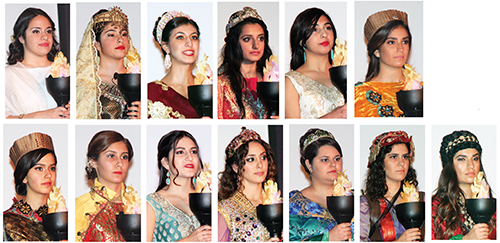
Portrayal of venerated women of ancient Iran
Yet another military strategist was the impressive commander Youtab in the reign of the Achemenian king Dariush III. When Alexander the Macedonian was heading towards Iran to attack Persepolis, she and her brother Ario-Barzan gathered an army of 25,000 soldiers to thwart Alexander’s army and block his route. Unfortunately an Iranian traitor conspired with Alexander and showed him an alternate easier pathway to Iran. This event eventually resulted in the death of Youtab and Ario-Barzan.
The daughter of the Parthian King Ardavan V, Sura was one of the commanding generals of the Parthian army. She was competent in war strategies and military planning. Known to be her father’s right hand, according to most history books, the king consulted her since he valued her knowledge and capabilities.
Pourandokht was the eldest daughter of the Sasanian King Khosro Parviz and sister of Azarmi-Dokht who ruled over 10 countries. In her maiden speech she called upon everyone to be just and law abiding citizens and stressed that qualities like justice were more important in a ruler than the masculine gender.
Women too required training in the science and art of warfare so that they could help during war time, believed Queen Azad-Dokht, wife of Shapoor I. One of the most intelligent queens of Iran, she played a key role in founding the university and city of Jondi-Shapoor which was one of the most advanced scientific and research centers in Iran for a long period, drawing well known scientists, researchers, physicians and students from distant lands.
One of the first women from Deylam who fought alongside male soldiers against the Arab invaders was Azad-Deylami. Deylam, which is currently called Gilan, has been known to be the home of many patriotic Iranians. Azad-Deylami was one of the military commanders of Deylam on the shores of the Caspian Sea.
A skilful archer since an early age, Banu Khorramdin’s bravery, skills and intelligence could startle many male warriors. She was the wife of Babak Khorramdin and always fought alongside her husband. They established one of the greatest freedom campaigns in the world called Khorramdinan’s Movement that was formed to end the Arab aggression. The center of their activities was in a town called Bazdar located about 200 km from Ardabil in today’s Azerbaijan. Today, the remains of this center is called Babak’s Castle.
Amongst the women reputed for their business savvy was Irdabama who owned many farms and fertile lands, including those near Persepolis during the Achemenid period. She managed a number of factories and wineries in which many men and women were employed. It became known that any product bearing her trademark stamp would be of the highest quality.
In the Parthian rule, Arta-Dokht had gained fame as an economist, scientist and mathematician. Due to her competence and intellect, she was made minister of the treasury by Ardavan IV when she managed the national treasury and supervised financial matters such as tax, trade and income. She was able to control the government budget, led the country towards a strong economy and monitored taxation to eliminate unnecessary pressure on citizens.
The first female missionary of the Zoroastrian religion was Pouruchista, the youngest daughter of Zarathushtra. A wise and virtuous woman, she benefited from the wisdom her father had imbibed from Ahura Mazda. From him she learnt that every individual is free to choose right from wrong and take responsibility for one’s deeds. She was urged to choose her own husband based on her best judgment and good thoughts.
Standing out amongst all the powerful women was Homay, daughter of King Goshtab of the Kianian dynasty who, along with her family became a follower of Zartosht Spitama. She was the first female ruler in Iran and perhaps in the world. In her 32-year reign she boosted the military, maintained peace, introduced new legislation and as a result ensured prosperity, justice and equality for all citizens in her kingdom.
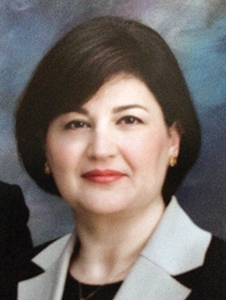 Tehran born Adeleh Alba has been active with the California Zoroastrian Center for over a decade. Her passion for arts, design and Iranian history inspired her to create Women of Persia as also other student plays in the past.
◆ ◆ ◆
One reader wrote
Very informative. Many thanks to Parsiana for the article Regards SBBadri
From the archive