
Rewind and fast forward
With Pakistan’s Parsis migrating, the community dwells on its past glory while New Zealand offers new opportunities
Sociologist Meher Noshirwani of Karachi, who has worked in the fields of women, environment and development, used a Power Point presentation to acquaint the audience with the facts about the Parsi community in Pakistan from a historical and contemporary perspective. The Parsi presence made itself felt in that region since the 19th century and the community’s contribution, especially to Karachi, has been enormous, she informed the attendees. Parsis were active in the liquor trade, in producing cloth and as stevedores. The descendants of the early settlers are still living there, noted the narrator.
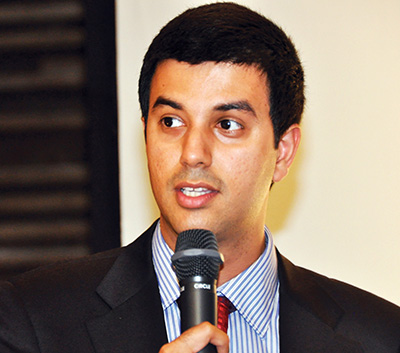
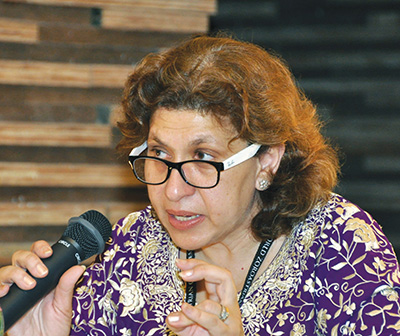
ZANC president Paeterasp Vevaina (left) and Meher Noshirwani of Karachi
The oldest house belonged to one Hormusji Pestonji Ghadialy. Sir Jehangir Kothari built Kothari Parade and Pavilion. Rustom Baug and Macca Baug were built by the Cowasji family while Edulji Dinshaw was noted for his philanthropy. As the community grew, institutions like schools, colleges and hospitals came up, including an aramgah and a dakhma. In 1859 the Wadia Dar-e-Meher, also known as the Gari Khata Agiary, was built. The H. J. Behrana Dar-e-Meher was established in 1875. In 1859 the Soparivala family gave Karachi the famed Bai Virbaiji Soparivala (BVS) High School. Years later, in 1918 Ardesher Homi Mama established the Mama Parsi Girls’ Secondary School. Edulji Dinshaw set up three dispensaries and later the Lady Dufferin Hospital for women and children. The Jehangir Baug Dharamshala, built in 1888, was closed down in the 1970s. The Parsi Ladies Industrial Institute set up by Cowasjee and Virbaijee Variava shut down its services in the 1960s, Noshirwani regretted.
Jamshed Mehta, remembered as "the maker of modern Karachi” was its first elected mayor. The Bomanshaw Minocher Homji (BMH) Parsi Medical Association hospital was set up in 1935 by "my father,” Nosherwani said with a note of pride. She is scion of the well known Marker family which owned a pharmaceutical company. Her father Khursheed’s brother is Jamsheed Marker, Pakistan’s Ambassador to a number of countries as well as to the United Nations during a diplomatic career that spanned over three decades. Other notables from the community in Pakistan are Dorab Patel, judge of the Supreme Court, the Makujina family, priests from Quetta, Bapsy Sidhwa, author from Lahore and the Bhandara family, owners of the Murree Brewery. Famed in the hospitality industry are Byram Avari of Avari Hotels and Cyrus Minwalla of Metropole Hotel. The late Ardeshir Cowasjee was a noted columnist for the daily Dawn, and a foundation has been set up in his memory.
Many Parsis in Pakistan are professionals, but there has been a decline in entrepreneurship, mentioned Noshirwani. With a shifting population and migration in virtually every family, the community is an ageing one, resulting in a need for homes for the aged. Avari and Toxy Cowasjee have been helpful in the matter, she said. Toxy headed the Karachi Zarthosti Banu Mandal and edits the World Zoroastrian Organisation’s quarterly journal Hamazor.
The session concluded with Hoshaang Gotla arriving rather late to offer both the introduction and the vote of thanks before presenting the memento.
At home in the Antipodes
New Zealand is the newest outpost of the Zoroastrian diaspora and members of the Zarathushtrian Association of New Zealand (ZANZ) are youthful indeed, as was apparent at the session. The Zoroastrian Youths of New Zealand (ZYNZ) was specially set up to organize the World Zoroastrian Youth Congress to be hosted by ZANZ in Auckland in 2015, and its members present at the 10WZC were gung-ho while promoting the meet.
Hoshaang Gotla introduced Paeterasp Vevaina, the dapper ZANZ president to a packed hall. Vevaina took the attentive audience through the history of the community in their chosen land. The first Parsi to arrive in that Antipodean nation was Hormusjee Shroff in 1877, but the real beginning of the Zoroastrian settlement can be dated to the 1960s, he mentioned. In 1990 the number of Parsi migrants was a mere 45, but by 2006 it had grown to over 1,000. The Parsis enjoy a relaxed lifestyle in New Zealand as both the country and the community are small, he stated.
In 1993 ZANZ was formed by the late visionary Yazdi Mistry who worked for Godrej and Boyce Limited in India and Malaysia before becoming an independent entrepreneur. It was registered two years later, in 1995. The goals of ZANZ are to spread goodwill within the community and ensure the welfare of its members. It is an inclusive Association with the Parsis of New Zealand welcoming migrants, often going out of their way to assist them in settling down in a new country. This would include receiving new arrivals at the airport, helping out with respect to housing, shopping and other activities to make them feel welcome.
With a membership of 150 individuals, ZANZ is working toward raising funds for a fire temple and hall where the community can meet for prayers and social events. The Association’s activities include holding prayer classes, having jashans twice a year, organizing sports, social events, picnics and coffee mornings for senior citizens. They also produce an annual directory of members and have recently started bringing out a newsletter, now in its second edition, called What’s Up BawaZ. ZANZ has its own website, www.zanz.org.nz
When the ZYNZ members present were asked whether they had the funds with which to hold the World Zoroastrian Youth Congress, they responded that they had started with NZ$ 5,000 (Rs 2,58,360) as seed money and are working hard to raise money through donations and delegates’ fees. "We will not go bankrupt,” they averred with the assurance of youth, as "no Congress has gone in a loss.” A fun Power Point presentation was made along the lines of "Who wants to be a millionaire?” and the "Kaun Banega Crorepati” (Who will become a crorepati) television game show hosted in India by actor Amitabh Bachchan, in which Tinaz Karbhari, chair of the World Zoroastrian Youth Congress was welcomed to the "hot seat” and asked questions by "Computerji.” The answers revealed to the audience that the meet would be held in Auckland in December 2015-January 2016 at King’s College, that registrations would begin from July 2014 and that the age limit for delegates had been pegged at between 15 and 35 years.
Unfortunately, with time running out the painstakingly prepared presentation, which was being enjoyed by those in the packed but makeshift room, had to be prematurely wound up so that delegates could proceed to the Mahalaxmi Race Course for the Parsi Races program arranged there.