
“Reverse the declining trends”
The alarming decline in the community’s numbers has prompted the Government of India to intervene
The ambitious program started over six years ago when Dr Shernaz Cama of the Parzor Foundation "held talks with Dr Anahita Pandole,” notes Cama in a background note prepared at Parsiana’s request. "Then at Dubai discussions continued where she was present with Dr Pilloo Hakim (ear, nose and throat specialist) who introduced me to Dr Zinobia Madan… Prof Armaity Desai prepared a draft proposal but this was a large research project. The GOI wanted a focus based result oriented project which was prepared by us. The Planning Commission had to be convinced of its need. Keki Daruwalla [member of the National Commission for Minorities (NCM)] worked at several levels.
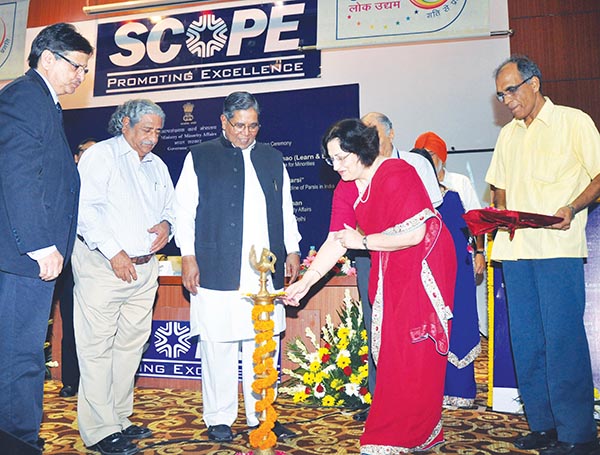
"We made a presentation to Dr Sayeeda Hamid (member of the Planning Commission, GOI) and a team of experts. Zubin Shroff and Dinyar Patel of Harvard University were present and provided medical-sociological data. MOMA received approval but needed the community to speak with one voice. We got [Bombay Parsi Punchayet (BPP) chairman] Dinshaw Mehta’s full support as also anjumans and punchayets across India who sent letters of support. The late Dr Behram Anklesaria of Ahmedabad had been with us at initial meetings when Salman Khurshid headed the Ministry. "Madan and I did the writing with inputs from Pandole. We used published data and Parzor’s demographic projects for inputs.
"It has been a long struggle to make the country aware of the demographic danger facing the Parsis. The usual reactions are that the Parsis are a rich community and do not have any ‘real’ problems. It is only after years of careful data collection that we have been able to pin point the cause as a very low TFR (Total Fertility Ratio) Parsi Zoroastrian TFR is .88. A TFR of 2.1 per couple is required for replacement levels.
"We need to now focus attention on raising this TFR both by medical intervention when necessary as well as by a community based outreach programmes. We need to make our own community more positive about its ability to change. Let us stop harping on issues which have divided us, we all need to support the growth and importance of the family.
"When other Indians around us, who are as highly educated, working and earning as well as Parsis, if not better, can still keep their primary focus on the normal human need to marry and have children at a time when family life can be enjoyed, why do we feel that we are ‘different’?
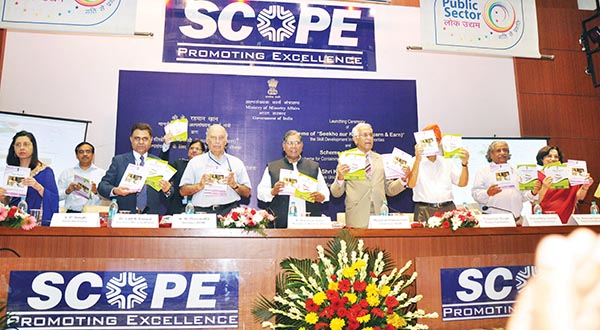
"We need families to support a young couple’s decision to marry early, we need families to help in rearing children, we need inter generational care. For this reason the advocacy and outreach programme is aimed at all members of the community. We need once more to create harmony and balance in our lives — this is not just a tenet of our faith but a need for all human beings.”
Inroduction
In order to arrest the decline in population and reverse the trend, there is a felt need of GOI intervention.
The Parsi community in India has experienced sharp population and fertility decline. It is interesting to note that the age of marriage among Parsi women is about 27 years and in men about 31 years. Only one family in nine has a child below the age of 10.
The Total Fertility Rate of the Parsi community has reached below one, which means that on an average, a Parsi woman in her total child bearing age has less than one child (0.8). Moreover, 31% of Parsis are over the age of 60 years and more than 30% Parsis are "Never married.”
In addition to late marriages, voluntary and involuntary childlessness is another important factor for the fertility among the Parsi community. There is a significant higher percentage of Parsi males unmarried compared to non-Parsis.
The studies conducted by the NCM and the joint studies conducted by Parzor Foundation and Tata Institute of Social Sciences, have identified the following reasons as the important causes for decline in population of Parsis:
Late and non-marriages; fertility decline; emigration; out-marriages; and separation and divorces.
Objectives
The objective of the scheme (to be financed by a GOI aid of Rs 10 crore) is to reverse the declining trend of Parsi population by adopting a scientific protocol and structured interventions, stabilize their population and increase the population of Parsis in India.
Approach and methodology
Infertility is a complex clinical socio-psychological issue. Infertility is the inability to conceive for more than two years and is not necessarily a disease. With advances in medical science, 90% of modern day infertility is treatable. For most couples, it may be right medical and psychological guidance, counselling and the best medical expertise at the right age may be of great assistance. The interventions under the scheme will be taken up under strict medical protocols maintaining full confidentiality.
To arrest population decline, there will be a requirement of a two-pronged approach. Thus, the Scheme will have two components:
Advocacy: Counselling family members and boys/girls of marriageable age for early marriage, treatment of medical issues from puberty onwards, parenthood at the right time and approach for assistance to treat infertility as soon as the problem is detected will all be part of advocacy. It will also include outreach programs including publicity and awareness.
Medical assistance: Assisted Reproductive Technologies (ART) which include In-Vitro Fertilization (IVF) and Intra Cytoplasmic Sperm Injection (ICSI) as medical assistance when required. To deal with fertility issues, financial assistance would be provided for investigation and detection of infertility, counselling and fertility treatment to married couples after their fertility problem is medically detected.
Outreach program
The information, education and communication or Outreach Program (seminar, publicity, brochures, ethnic journal of the Parsi community, advocacy, etc) would be undertaken by Parzor Foundation with the assistance of the BPP in Bombay and the various members of the Federation of Parsi Zoroastrian Anjumans of India in other towns, cities and mofussil areas of the country.
Type of assistance and financial norms
This is a 100% Central Sector Scheme. Although Parsis are considered relatively more affluent than many other communities, in many cases there are Parsi families belonging to the lower economic strata who cannot afford fertility treatment. Even middle class couples find it difficult to afford repeated cycles of treatment.
Parsi married couples who seek assistance would undergo treatment cycles of ART as prescribed by the concerned doctor which includes IVF and ICSI as medical assistance when required, subject to maximum cost of five lakh rupees or as per actual, whichever is lesser.
The treatment will be undertaken in the hospitals/clinics empanelled by MOMA. The empanelment of hospitals may be done in consultation with MHFW, GOI and Parsis of each concerned town/city.
Financial assistance would be extended for fertility treatment, including cost of medicines (including follow-up medicines), post-medical assistance to couples whose annual income falls within the prescribed ceiling as follows:
Annual family income from all sources: Rs 10 lakh and below; Rs 10-15 lakh; Rs 15-20 lakh
Financial assistance to be provided: 100%; 75%; 50% respectively
Income certificate would be necessary from an appropriate authority in a particular state/UT.
Parsi boys/girls of marriageable age (adolescent to the 30s), suffering from treatable clinical problems that result in infertility, would be provided medical assistance to the tune of Rs 15,000 and Rs 25,000 respectively.
Rs 1.35 crore will be earmarked for advocacy component for entire remaining four years of 12th Plan period. This will be subject to availability of resources.
Funds will be released in two instalments of 50% and
50% in a financial year.
Further, three percent of the total annual budget will be used for administration and management of the scheme in the ministry.
Role of Parzor Foundation
The scheme will be implemented by the Parzor Foundation with the help of the BPP and through the organizations/societies/anjumans and punchayets of the community concerned in existence for not less than three years.
Administrative expenditure
The Ministry shall be permitted to set aside up to the extent of three percent of the annual budget under this scheme to meet administrative expenditure and management of the scheme.