
Demography
Propping up the community
Two National Commissions for Minorities and the Tata Institute of Social Sciences are seeking a way to reverse the declining trends
"How poverty is viewed in an urbanized, educated community that in the last one century was labeled as prosperous, needs to be clarified.”
Dr Armaity Desai, former chairperson of the University Grants Commission and former director of the Tata Institute of Social Sciences (TISS) enunciated the basic question that the workshop convened by the National Commission for Religious and Linguistic Minorities (NCRLM), Ministry of Social Justice and Empowerment and TISS was required to answer. The Parsi community’s labor participation, levels of education and occupation and their relationship to poverty were under the scanner to determine whether its members were now even capable of exploiting the new opportunities opening in the country in the 21st century. She urged the gathering at the TISS conference hall on January 10, 2006 to "identify whom we may call economically disadvantaged and whom we would identify as socially disadvantaged.”
The National Commission for Minorities (NCM) interest in and concern for the problems of the Parsi community have been activated by the 2001 Census bringing the Parsis’ steep demographic decline, with prognosis of extinction within the century, into national focus. "The extinction of a community like you is a threat to India. While you are planning for others how do you plan for yourself? (The problem is that) you did not receive that attention in good time… In Scandinavia demographic decline is a permanent feature of attention since 100 years and the movement is gaining ground. There is no reason why it shouldn’t happen here…The Government of India, the states and the thinking population (of the country) should join hands to prevent extinction…I assure you that the attention of the nation is with you,” assured former chief justice of India and chairman of the NCRLM Ranganath Misra.
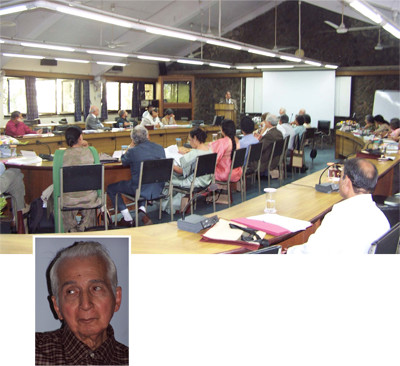
Workshop at the TISS Conference Hall. Inset: Justice Misra
With deaths outstripping births 3:1 and a skewed age structure with 31 percent of the community being above the age of 60 while only one in nine families has a child under the age of 10, the community’s social profile as depicted by the Census is a forlorn one. The heavy dependency ratio, where a growing number of retirees needs to be supported by a narrowing base of earning members in a long-lived community, precludes the desire for and ability to procreate more children. The Parsi fertility rate is said to be among the lowest in the world. The gigantic problem of raising kids in an inflationary economy where admissions to school, college and professional institutions come at escalating premiums, where merit and hard work cease to be meaningful in the face of the governments’ reservation policies, leaves young couples stressed out. Students who get admissions to institutions abroad ["There are Parsi students getting into Harvard,” as pointed out Bombay Parsi Punchayet (BPP) chairman Minoo Shroff] leave the country and their families to settle in the West — a loss to the country and the local community.
Though there are still Parsis who reach the top of their professions in India, they are fewer than they used to be. The westernized life style and increased education, professionalism and financial independence among the women of the community have led to later marriages and a large segment of unmarrieds. Add to them the DINK (double income, no kids) phenomenon among the creamy layer of the community as BPP CEO Behram Dastur never tires of ruing, and the numbers become bleaker.
L to R: Shroff; Anil Wilson and Asha Das of the NCRLM
An aide memoir for a meeting called by the Union Home Minister to discuss action points on various issues relating to the Parsi community drafted by NCM member Lt Gen (retd) Adi Sethna referred to a special mention by retired chairman of NCM Dr Tarlochan Singh in the Rajya Sabha on August 1, 2005. Singh had stated, "We are to recognize and give respect to the role they played. NCM has already recommended that there should be one person from the Parsi community in the list of nominees of the President of India to the Rajya Sabha and similar provisions to be made for them in the legislatures of Maharashtra and Gujarat…The Ministry of Health also may devote proper attention to the genetic problems of this community and open pro fertility clinics. I further request that the GOI may make special provisions for celebration of the Parsi New Year which falls on 21stAugust.” On that occasion MP Jai Ram Ramesh had associated himself with this special mention and H. R. Bhardwaj, Minister of Law and Justice, had stated, "I think the whole house should be associated with it.” Leader of the opposition L. K. Advani had endorsed the sentiment in a letter to Sethna: "I am personally in agreement with these recommendations,” adding that he would place the matter before his party’s Members of Parliament and its allies.
In his memoir Sethna had urged that the states of Gujarat and Maharashtra be advised that their general schemes do not hurt the interests and sensibilities of the Parsi community. In particular he sought the exemption of Parsi trusts from the Maharashtra government’s revision of the Charitable and Public Trusts Act and the preservation of Dahanu taluka from ecological destruction as the economic fate of not only the Parsi Irani chikoo farmers but the Warli tribals and the entire mangroves eco-system are suffering from industrial pollution. Sethna also sought that Parsi servicemen be exempted from the Ministry of Defense directive that discriminates against those with more than two children by way of rations, travel and other benefits. The general had been unable to attend the TISS meet due to an illness in his family.
The workshop had been called to provide insight and a guideline for the government to address the community’s most pressing problems among which Desai, in her introduction, included the increasing impoverishment and isolation of rural Parsis and the socio-economic dimensions of health in a long-lived and increasingly aging community. A number of recommendations emerged at the end of the day-long deliberations, some relevant to the NCM and through them, the government; others directed at the community itself.
From Left: Desai, Prof R. N. Sharma of TISS and Kamar Syed of the Maharashtra State Commission for Minorities
Desai spoke of the rich data on minority groups with the Census Commissioner which has not been published. "Planning becomes a casualty without data. We have to keep using the special monograph published in 1961 (as base for research),” she noted and sought an updated version incorporating the present realities. She also asked the NCM to tailor a scheme for the community within the Minorities Finance Commission which would give due recognition to the enterprise and education of Parsis: "The community needs certain kinds of support. For example, bank guarantees may not be possible for small enterprises.” Another exemption she sought from government was for trust properties to be exempted from the provisions of the Rent Control Act: "The housing was built for the poor and disadvantaged. Today the colonies have people with cars, people who can afford to go for holidays abroad (who cannot be evicted under the Rent Act). Is it possible for the community to say that the Rent Act does not fall in with the objectives for which the trust was created? A lot of housing stock would open up.” Referring to the present system where "the advantaged continue with their advantage while the disadvantaged remain disadvantaged,” Desai considered a move for the exemption of charity trust properties from the restrictions of the Rent Act as one which "will also help other communities.”
One of the reasons for the impoverishment of the community has been the declining aspirational levels of Parsis in smaller towns as a direct result of the decreasing ability of Parsi students to avail of higher educational facilities, noted sociologist and demographer Ava Khullar. In some cases upto 75 percent of seats are reserved by the government for scheduled castes, tribes and others and fierce national competition for the open seats leaves students with over 85 percent marks in limbo and with growing cynicism as reserved seats are allotted to candidates with 40 percent marks. Referring to the BPP’s Fertility Clinic as "too little, too late,” she sought the availability of larger government facilities run by the National Institute of Reproductive Health under the Ministry of Health and Family Planning.
Maintaining that most Indians don’t know who Zoroastrians and Parsi are, Parsiana editor Jehangir Patel suggested that the NCRLM incorporate the information in text books. He also brought to its notice that the Bombay municipality had sought to change the Parsi names of roads, thereby obliterating the Parsis’ historical contribution to the building of Bombay. An example was the Mahim Causeway named Lady Jamsetjee Road after Avabai, wife of the first Jamsetjee Jejeebhoy who had built it to link the island of Bombay with the mainland. A similar attempt to rename Khordadad Circle had been foiled by community activists, noted Patel. His third request to the NCRLM was to ensure that the children of Parsi women married to men of other faiths benefit from any measure the Commission may provide for the benefit of the community.
Again and again participants cited Sir Homi Mody’s rejection of a reserved seat in Parliament, offered to Parsis at the time of Independence, on the basis that reservation amounts to a vested interest in backwardness and Parsis were capable of achieving on their own merit. Of course, Mody had not anticipated the continuation and widening of the concept of reservation — which the Constituent Assembly had considered as a closed 10-year agenda — by vote-hungry political parties.
Many a Parsi founded/funded institution — the Victoria Jubilee Technical Institution (VJTI), Grant Medical College, J. J. College of Arts and Architecture in Bombay, the Indian Institute of Science (IISc), Bangalore, the Wadia College of Management, Poona and others — had been bequeathed to the government or municipality without any reservation of donor quota. In the words of former civil servant and ex BPP trustee Jamsheed Kanga, "The donee should show the generosity to return to us a right we did not use earlier.” He recalled how Jamsetji Tata had fought with governor general Curzon to establish the IISc, without which and the subsequent Tata Institute of Fundamental Research India wouldn’t have had its base of scientists and mathematicians for her nuclear programs. Time was when there were so many Parsi students at the College of Engineering in Poona, they had a special hostel for themselves. "We are not asking for reservation. We are asking for the donor quota which we did not take at that time,” he reiterated. Kanga also sought the intervention of the NCM in the operation of the Bombay High Court order in a public interest litigation against private charity hospitals wherein "the Court was trying to enforce that the B. D. Petit Parsee General Hospital look after the poor of other communities. We are committed to look after our own,” he noted.
"Because of the decline in the population it was that much more difficult to maintain trust properties from encroachments,” contended Thana anjuman president Rustom Cursetji. The anjuman which had won a court battle regarding a pristine piece of property has failed to enforce the order on the encroacher who belongs to a strong political party, the Shiv Sena. On the concept of donor quotas Cursetji said "It is not a question of reservation but of discrimination,” and urged that the facility should be extended to include general educational institutions also. Adding that the youths of Thana did not want reservation in employment, only in education, Cursetji noted, "If the youth don’t educate themselves, they won’t earn well and in old age may become the subject of many more such documentaries.”
SPP’s Dotivala (left) and BPP’s Dastur
Cursetji was referring to Invisible Parsis, a short documentary film produced by a team from the Film and Television Institute of India headed by Kaevan Umrigar. The film traced the daily life of penury eked out by half a dozen elderly subjects.
Speaking off the cuff from 50 years of experience in treating patients of all communities, eminent physician Dr Farokh Udwadia painted an equally moving picture of the ignominies that beset people as they grow old and feeble – a future that increasingly looms for the community en masse.
Referring to the Parsis as "the most aged community in the developed world,” Shroff pointed out that the all India poverty line of Rs 2,500 per month is hardly applicable to the community. "Rs 3,000 or 3,500 income per month is peanuts. The threshold as far as the community is concerned is much higher…What is not endowed by Parsis in Western India?” queried Shroff and noted that in his capacity as chairman of the BPP he had appealed to the GOI and leader of the Congress party Sonia Gandhi to enable Parsi youth to retain its cutting edge by restoring to the community donor quotas in institutions founded/funded by Parsis.
Dr Nawaz Mody, Sir Pherozeshah Mehta professor of politics and civics in Bombay University, spoke of government funds for coaching backward groups and encouraging entry into various government services. However, "no Parsi institutions or Parsi
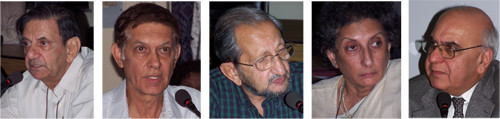
L to R: Kanga, Dhalla, Moddie, Mody and Tamboly. Below: Khullar
students are coming forth.” (Similar statements have been repeatedly made by the BPP administrators, the most recent being the reluctance of Parsi boys — and their mothers — to accept medical and engineering seats painfully acquired by the Punchayet in Mangalore on flippant grounds of vegetarian food and hostel discomfort – Editors.) On a recent trip to Shillong she said she was pleasantly surprised when the vice chancellor of North East University said he had received instructions to reserve seats for Parsis. "As of 2006 a small percentage of seats in information technology, management, etc will be available,” she noted but anticipated a reluctance of community members to go to Shillong. Heartened by such opportunities becoming available, she urged, "Revive the old attitude of following the troops.” She was alluding to the historical mobility of the Parsis in India as commissars for the western powers whose armies marched across India. The reliability of Parsis as suppliers of integrity and ingenuity had laid the groundwork of Parsi advancement and fortunes under the British. Mody endorsed the need to pursue the question of reserving donor quotas in institutions founded by Parsis with the government of Maharashtra as also a seat in the Maharashtra Assembly.
Former civil servant and management expert Aspi Moddie emphasized the need for employability programs as the lower social fringes of the community lacked the skills to avail of economic opportunities. Lauding the training provided by Poona’s Forbes Marshall group of companies since the 1950s to rural migrants in carpentry, masonry, plumbing, etc Moddie suggested a focused program of human resource development to be taken up by the community with aid from government. (It may be recalled that the Gamadia Polytechnic, in Bombay’s central Tardeo area which specialized in imparting such skills to Parsi boys, was shut down in about a decade ago because there were no takers - Editors.)
Seeking more research-based knowledge, Moddie criticized the Punchayet for ignoring issues of community demography and economic decline. He placed the responsibility for the latter on "failure due to the inadequacy of institutions governing the community…50 percent of the expenditure of the BPP is on overheads.” (Shroff later responded to the charge: "Most of our expenditure is on maintenance of housing and our huge — 53 acres — Doongerwadi estate.”) He also pilloried the Parsi Press for focusing on births and deaths in the community and the quibbling about the authenticity of the data. "The media should inform the highly educated community about the constructive work done by institutions. If you perform a survey, you will find enormous ignorance.” Addressing the NCRLM, the feisty critic asked, "What research on minorities has been done over the past 50 years? What benefits have accrued to the minorities in the non-creamy layer?”
Jamshed Dotivala, a trustee of the Surat Parsi Panchayat (SPP), suggested that people who owned land should be given preference for education in agricultural universities. Apart from scholarships and loans, reservation for higher education in engineering, medicine and information technology, he asked for a special quota in government and semi-government employment. He sought constitutional protection for minority community properties, especially those of punchayets and anjumans. "The SPP’s vast lands are encroached by migrant labor from UP, Bihar and Orissa,” he noted.
In Dahanu the establishment of the Reliance Power Plant and the resultant pollution has sent the local adivasis as well as the once proverbially rich Irani Zoroastrian chikoo cultivators into decline, both financially and demographically. Firoz Jamshedji suggested that the NCRLM find a way to get the power plant to shift from its current coal base to natural gas.
Founder president of the World Zarathushti Cultural Foundation (WZCF) Dr Homi Dhalla acknowledged the government grant it had received for excavations in Sanjan where a 1,000-year-old dakhma as well as part of the old town’s main harbor area had been excavated. The WZCF also planned on excavations and preservation of the Bahrot Caves where the Iranshah had ben sheltered for many years during armed turmoil in Gujarat. Dhalla sought government help to preserve the excavations in Sanjan as also the Bahrot Caves which he said are "totally crumbling; there is no road or electricity. It is a place of pilgrimage which is inaccessible for five months of the year.”
Substantial work in the community as BPP trustee and managing trustee of the World Zoroastrian Organisation (WZO) Trust Funds made Dinshaw Tamboly’s perceptions particularly noteworthy. "We Parsis are highly support oriented, are looked after from the cradle to the grave. Have these support systems blunted the cutting edge of the community youth?” he asked, adding, "Parsis must reassess needs and reaffirm priorities,” he said. On Desai’s urging he spoke of the relief measures that he had helped administer on behalf of the WZO when the need of 684 families in 209 villages was identified by sociologist Kashmira Bhayya in the mid 1980s. Bhayya had estimated an outlay of 85 lakh rupees to rehabilitate them.
Tamboly noted that they had begun by giving training in modern agricultural techniques in farming, horticulture and dairy farming and had provided money for wells and fertilizers. "Till today we have helped 160 families in 100 villages, spent 3.5 crore rupees. The returns are coming but not as expected. We had expected that enhanced earnings would enable the farmers to effect repayment in eight years. About 50 odd families have become self-reliant. Some are not working hard enough. Some had a hard time from nature… Last year a beautiful banana plantation was deluged and destroyed… These people are adivasis like any other adivasi but they don’t get government loans, help or project subsidies because they are Parsis. The issue needs to be addressed. They are the forgotten Parsis.”
Khullar’s situational analysis of the community in India had depicted how the community fortunes had risen and fallen over the past 200 years. The Parsis’ ingenuity and adventurousness had led them into the service of the European powers, especially the British who rewarded them with a multitude of white collar administrative tasks. "Taking wholeheartedly to higher education further ensured the better qualified to find berths in the higher professions of lawyers, doctors, accountants, teachers, etc,” noted Khullar. With experience gained in British business houses they established their own trade, banking and insurance concerns. They went to Burma and gangland China, to the Middle East and Africa in pursuit of employment and trade. The money so earned was invested in real estate and the establishment of baugs and housing colonies for the community, hospitals, libraries, schools and colleges.
When the scenario changed in and after the 1950s, the community found itself deprived of its agricultural estates under the land to the tiller law. The introduction of prohibition killed the toddy trade — toddy trees were cut down, little else would grow in the sandy soil — and the liquor business. The nationalization of road transport, banking and mines led to successive undermining of the community’s economic interests. "All this created a fear scenario where the Government of India was concerned, in contrast to the favored status perceived under the British,” leading to a sense of isolation, deprivation, loss of self esteem and self confidence and lowering of aspirations, noted Khullar.
The now heavily urbanized community concentrated in Bombay’s baugs has acquired a sense of complacency and resistance to moving out of Bombay. "There is a near total absence of Parsi youth in national professional competition, be it in government service, the armed forces, the IITs and IIMs. This middle level group, displaying no aspirations, is slowly sinking into lower levels of education and consequently low rung employment and ultimately families are sliding into shades of poverty hitherto unknown within the community,” stated Khullar.
Summing up the discussions at the end of the day Dr Shalini Bharat, head of the Unit for Family Studies at TISS, noted that the Parsi community has a unique set of problems: "What are the social disadvantages in a community known as a prosperous community?... (There are) problems of self-esteem, of self-definition. A different approach, different yardsticks and criteria are required by the Commission.”
Noting that the Commission was "going back much more educated, more aware of the sensitivities of the community,” its secretary Asha Das noted that the NCRLM will have similar workshops with other communities. Should each community be treated with a uniform approach or differently? she wondered. "We have to work in the context of the entire country. What is our role? The Commission has been specifically appointed, its tenure will end in April. We have to understand the provisions that exist and what else is required… Keeping that in mind we hope to do some justice to the hopes and requirements of your community.”
TISS research
Four faculty members of the Tata Institute of Social Sciences have been researching various aspects of the community at the behest of UNESCO-Parzor, an organization documenting the highs and lows of Parsi history and culture in India. On this occasion they presented some of their findings though analysis — and in some cases collection — of the empirical data they have gathered from the community in various parts of India remains to be completed.
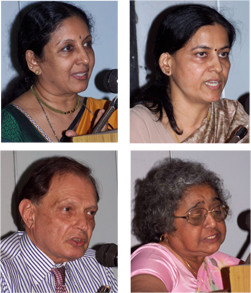
Clockwise from top left: Narayan, Bharat, Gandevia and Udwadia
Youth
The study on Parsi youth aged 20 to 35 by Dr Lata Narayan, reader in the TISS unit for child and youth research, has a sample of 760 individuals. The maximum number in the age group 20-25 are students from Bombay while the 30-35-year-olds come from the rest of India and are largely professionals, over 50 percent being women. The average qualification was a bachelor’s degree. Narayan noted that youths from Navsari and Bulsar were more keen to go for higher education while those from Bombay were more interested in going into business. Except in Bangalore, the perception of the community was that girls were doing better than boys.
While 97 percent of the sample was gainfully occupied, Narayan found the youth of Gujarat predisposed towards the teaching profession. There were a lot of lawyers in the community and relatively few doctors. Television, advertising, fitness and beauty parlors were other avenues where the youths were involved. She found that fixed deposits, life insurance and shares were the preferred modes of investment. As Jamshedpur had no institutions of higher learning the youths tended to migrate to the metros. Many had availed of scholarships for higher education in India in preference to going abroad.
Most youths asked for a few seats in Parsi initiated institutions for Parsi youths who met all the criteria for admission, noted Narayan adding that they displayed a lot of pride in their achievement. While the Gujarat youths were more aware of what their anjumans did, the group as such lacked awareness of BPP programs.
Socioeconomic disadvantages
To explore the familial, marital and socio-psychological dimensions of the demographic transition and to seek ways of preserving the community’s numerical strength and identity Dr Shalini Bharat of the TISS Family Studies Unit reported on the qualitative aspect of her study. Conducted in urban (Bombay, Baroda), semi rural (Navsari, Bardoli) and rural (several villages in Gujarat) areas the study sought to pinpoint economic and social disadvantages, the impact of the social isolation of rural Parsis on their marriage prospects and fertility, education and employment issues and community views on reservation and other protective measures.
Bharat found that families on doles had a high dependence ratio or were elderly. Able bodied persons in rural families which had no land, old couples without children, income or pension, single women residing in widows’ chawls, all female households, elderly with no earning member and chasniwalas in agiaries were all economically disadvantaged.
Apart from the social and emotional vulnerability of elderly and single people, the nassessalars as a group were most socially disadvantaged. Their marginalization and exclusion by the community affected the education of the young and hence lack of options in occupation or marriage alliances. When their children who are not orphans are put in orphanages, it brands their minds, creates a psychological dependency and abuse of doles, noted Bharat. With one to three Parsi households in the villages the social isolation creates similar problems regarding finding marriage partners and results in the continuation of the practice of blood marriages, notes Bharat. Young men migrate to urban centers, are unable to compete and return to a dissatisfied existence. Dilapidated housing and inter-group tensions add to their problems.
To cut the cycle of low education leading to low paying jobs some of the respondents said they urgently need support to start small enterprises. As one disadvantaged Bombay resident told Bharat, "What we ask for is reservation in our own Parsi institutions — is it asking too much? The problem is nobody represents the poor among us. The thinking is that all Parsis are rich. I have seven dependents on me and Rs 2,000 monthly income.”
Health problems
Katy Gandevia, reader in the department of medical and psychiatric social work, was researching the health status of the community to learn the role of gender and age in illness, the family history and adherence to treatment. She noted that she had gleaned her data from medical practitioners and medical institutions frequented by Parsis. She learnt that cardiac illnesses, cancer and especially breast cancer, juvenile as well as mature onset diabetes and stress related problems plagued the community. Parsi patients were very particular about following the doctor’s instructions except for widows and single parent families living in the suburbs whose adherence to treatment was poor.
The ailments were generally ascribed to the community’s sedentary life style, rich food habits and a superiority complex which led them to underestimate their problems. It was said that by and large the community was not particular about taking preventive measures.
What makes Parsis live so long?
Udwadia defined old age clinically as "the inability of an organism to adapt to or counter challenges in its environment…With younger people it is the body which recovers from disease; the physician only helps it to do so. But when the human being fails to adapt to change increasingly, he/she is said to become old.” The subtly slow "disintegration of body and mind, over which the individual has no control” is governed by a clock ticking within each cell. "When the time ends, the cell dies,” a process called apoptasis. But while new cells form in a young body, in the old "cellular death remains uncompensated,” notes the doctor. Organ functions decline — the brain becomes dimmer, so do the heart, gut, digestion, urinary organs. With control over basic functions slipping, hearing and vision affected, increasing inability to look after oneself, the person is beset with social and economic problems.
What makes Parsis live so long? The community has a longevity gene which is so strong that even with cancer, heart or lung problems, it prolongs life. Noting that the future belongs to molecular and genetic medicine, Udwadia said that diabetes, ischemic heart disease, strokes, cancer are being found to be genetically motivated. Hence young, lean individuals not given to smoking or alcohol, with no hypertension, get heart attacks. The oncogene predisposes a certain group of cells to madness or decreases the suppressive genes which act against the onset of cancer in both the young and the old. These genetic tendencies are said to be reinforced by marriage within a small group of people with similar genes.
"We are dealing with a population that is aging and has all the infirmities of old age. It is also one that’s inbred... Whatever you do, you and I in this community only end up prolonging the death agony of this community unless the younger generation reproduces forcefully…marries early and procreates fast.” In any event, Udwadia maintained that the aged need to be taken to places where they can be looked after when their relatives do not/cannot look after them. They need social workers, nurses, etc to go help them when they live on their own.
Invisible Parsis
Selected at random from a list of Parsis dependent on a monthly dole from the Poona Parsi Panchayat (PPP), the aged subjects in Umrigar’s film had little savings left at the end of a lifetime of labor as they had had little education and toiled at low income jobs in their prime. Though short, the film had an immediate impact on the gathering and raised a series of questions: Why were all the Parsis in the film old? Did you try to examine the background? What was the cause of the poverty? Were there no children to support them? What did the PPP have to say?
Umrigar noted that he had met poor young people also but "they were not ready to face the camera. The young have some confidence in raising their level of income.” Most of the people in the film had no children. Some had, but they could barely support their own families; there was no way they could contribute to the upkeep of their parents. Some of the poor homes had a TV and refrigerator, so some outside help was coming in. But none of them was well educated. The PPP said they did not have the funds to increase the dole amounts, responded Umrigar. As Desai noted, "What you saw was the aging process — the loneliness, the isolation from the community and hardship of life. We started with the film to sensitize the audience.”
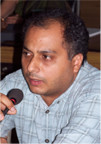
Umrigar: documenting poverty
The lonely crowd
At a second meeting in the BPP boardroom on February 7, 2006 Prof S.Siva Raju of the TISS unit for urban studies presented his analysis of a sample of 835 elderly Parsis (four percent of the total elderly in the community) from the major cities and towns of Maharashtra and Gujarat as well as other cities in India. Most of them were widowed, living alone with financial difficulties, health problems, disability and a generally weak or unstable state of mind. Raju’s survey was based on the information provided by the elderly living in community institutions as well as in their own homes.
The study was conducted to understand the family background, reasons for non-marriage, living conditions in terms of social, economic, demographic, psychological and physical health conditions, to understand the attitude to joint and nuclear families, what needs to be done for the youth (from the old peoples’ point of view), and to develop an appropriate action plan in tune with their expectations.
The researchers found that while 15 percent of community based elderly men and women were never married, 60 percent of males and 33 percent of women residing in homes were single. The respondents had married at an average age of 26 years and the mean age at first conception was 27 years whereas in the national population it was 17.5 years. Most married women had experienced two conceptions during their reproductive phase. Over 53 percent lived in nuclear families; 24 percent lived in joint families. Over 58 percent stated that family members lived outside the household which in the course of discussion meant that the family split up to keep their hold on separate residences. As noted Dr Shalini Bharat, the urge to keep properties overrides the cohesion of the family and the psychological implications are overlooked.
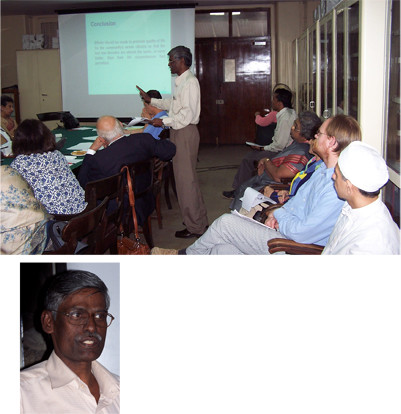
Raju (left) making his power point presentation at the BPP
Over 55 percent had studied upto secondary school level, 23 percent upto college level and 16 percent had technical/professional qualifications. One third had migrated from their place of birth, the men for employment, education or business; the women for marriage or with the family. In 54 percent of the cases interviewed, their adult children were not living with them. Most of the community based elderly resided in flats with amenities such as tap water, independent bathroom and toilet facilities. Eighty-seven percent had some assets like a house, fixed deposits, insurance, shares/mutual funds, etc which Raju maintained was unique to the community and not to be seen in the general Indian population. Those residing in the rest of India were relatively better off than those in Maharashtra and Gujarat. Over 60 percent however had an annual income ranging between Rs 50,000 and five lakhs.
This was in contrast to those who resided in homes where 52 percent had no assets of their own. Fifty-six percent said they had just enough to provide for their basic needs. However, 75 percent from Navsari and 56 percent from Bombay paid for their stay. In Surat nearly 53 percent availed of free service.
Deficiencies in vision, hearing impairment and difficulty in limb movement were the main trouble spots. Twenty-seven percent of males and 12 percent of females in Bombay said they had cardiac problems. Diabetes registered a high of 26 percent in Maharashtra compared to 17 percent in the rest of India. Most considered their intake of food as nutritionally adequate. Among the residents of old age homes well over 60 percent of males spoke of ENT problems while the women suffered pain in their joints.
As the respondents were asked questions relating to themselves, their parents and children in an attempt to create family genealogy, it was found that nuclear families have been increasing from 46.5 to over 74 percent over three generations. Raju’s assessment of an overwhelming proportion, irrespective of generations, area and sex, being married within the community was contested in the light of ground realities in the discussion which followed his presentation. Not having children or not having more children was a source of regret among the elderly.
While loneliness and lack of companionship were among the more commonly perceived social problems among those who resided alone or in their familial home, it was interesting to note that 86 percent of those residing in homes said they had little interaction with their fellows. Fifty-one percent noted that they would like to die before they became physically and mentally helpless. Nearly half those who lived in old age homes provided by the community said they had selected the institution themselves.
The main thrust of the TISS suggestions, to cope with the mushrooming problem of the aged, was to re-orient social service from institutional to non-institutional and outreach programs with trained professionals providing home based services. This would mean "help in the upkeep of the house, personal care such as bathing, meals, shopping, paying bills, postal work, banking, investments, filing income tax returns and responding to medical emergencies” as well as the provision of adequate and appropriate nutrition for the elderly. Collaboration with TISS and the College of Social Work at Nirmala Niketan would enable the community to train their staff in geriatric care.
Weekend programs to sensitize doctors in geriatric care were also proposed by Raju who said institutionalizing an individual should be the last resort. He further advocated that such institutions be established within the baugs and colonies for the benefit of the elderly and their few family caregivers. New institutions should incorporate facilities for couples or siblings to stay together and for short visits from children. All services as well as a nursing center with resident doctors, ambulance, etc on a 24-hour basis were envisioned as a package deal, as is already the case with commercial old age homes. It was recommended that the elderly residents participate in the governance of the institution.
One spin-off expected by the TISS expert was a positive impact on demography. Those who chose to remain unmarried to be able to look after their elderly parents would be able to marry "without guilt.”
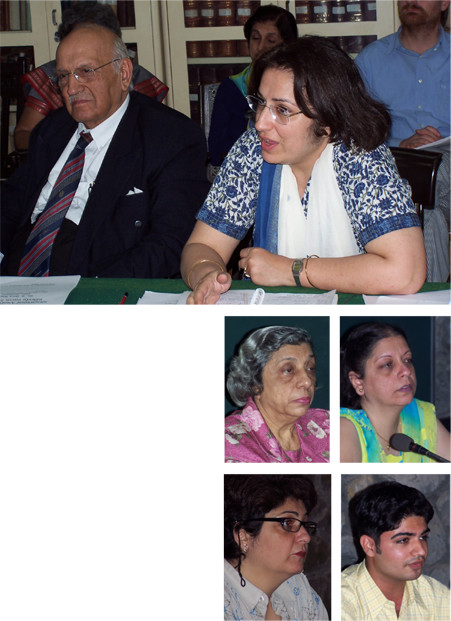
Clockwise from top: Sethna and Cama, D. Marfatia, F. Jamshedji, H. Doodhwala and S. Master
Care of the elderly is not a major concern with other communities where almost everyone gets married and procreates. Even so, the eight percent elderly population of India has provoked a " hue and cry among the NGOs and the government,” noted Raju, adding, "if 25 percent of Parsis did not marry in the earlier generation because of looking after old parents, there must be many more now.” Neither the aging of the community nor its nuclearization is a new trend. Late marriages have been happening since some generations, he confirmed.
Dr Shernaz Cama, director of the UNESCO-Parzor project that commissioned the TISS studies, referred to a project effectively pursued by the Calcutta Zoroastrians since a year. Their caregiver services are provided by the Calcutta Zoroastrian Community’s Religious & Charity Funds to those elderly who don’t have children or whose children have migrated. The "junior senior citizens” are paid by their Punchayet to visit and physically help those unable to take care of their own requirements like shopping, bank work, etc.
In response to a request from Shroff, Cama agreed to provide a synopsis of the Calcutta experiment for Bombay to work on a pilot project. But she also emphasized the need to promote tolerance in the Parsi youth at an early age as "unwillingness to adjust” has become a basic community failing.
"People feel we are not involved, only the BPP is involved,” noted an aggrieved Shroff referring to other trusts, with "more money than the BPP” and lifelong trustees, not even responding to calls for joint meetings. But Desai urged, "The BPP has to be the catalyst…” while Cama defined it as an "issue of social responsibility,” and advocated the need to shame those who shirk it.
Speaking of a need to "market a new perception,” Khojeste Mistree of the World Alliance of Parsi Irani Zarthoshtis suggested the involvement of capable people from the advertising profession. With a passing reference to the "image and other problems” of the BPP vis-à-vis the community, Mistree suggested that "like-minded people create a pilot project” for trial, discuss simple data extracted from this comprehensive report at a Federation (of Parsi Zoroastrian Anjumans of India) meeting. "Make it inclusive, not politicize it,” he noted, referring to the excellent work done by the Karachi Zarthosti Banu Mandal. "It has great possibility, but the perception of people has to change.”
While Shroff agreed to make it the principal focus at the next Federation meet, Desai noted, "The community is ready. It is waiting for leadership. ..If you demonstrate (the need) a lot of entrepreneurs will come up and do it for themselves.” BPP trustee Burjor Antia was similarly optimistic for a separate institution created with leadership from outside the Punchayet.
◆ ◆ ◆
From the archive