
Books
Fulsome tributes
Gifts to a Magus: Indo-Iranian Studies Honoring Firoze Kotwal edited by Jamsheed K. Choksy and Jennifer Dubeansky. Published in 2013 by Peter Lang Publishing Incorporated, 29 Broadway, 18th floor, New York, NY 10006. Pp: xix + 342. Price: Not mentioned.
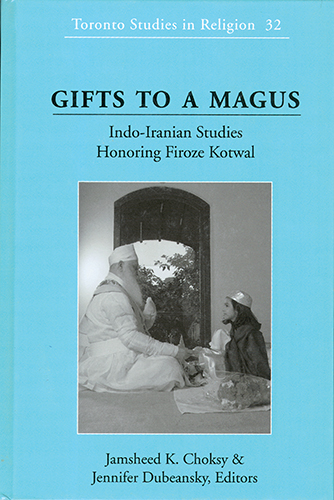 Publications of good Festschriften are few and far between. Here the honorand is the highly controversial figure of the high priest of Parsiism Dastur (Dr) Firoze M. P. Kotwal for whose felicitation several contributing scholars and enthusiasts were assembled. Was it occasioned for his 75th anniversary?
 The learned editors, Jamsheed Choksy and Jennifer Dubeansky, have elected to variously categorize the offerings under "Priests, Prophets and Poets,” "Divinities and Ghouls” (strange choice of the latter word! — were daivas not evil enough?), "Ritual and Cosmology,” and "Communities and Writings.” The contents, bearably typo-free, contain illustrations and diagrams aplenty, but without index, to regale the casual reader and drum up interest amidst ritually-orientated students.
A fulsome biography of Kotwal, as High Magus, is printed with sanitized additions by the editors. Authored by the late Mary Boyce, his mentor and facilitator, the piece touches upon Navsari Parsi priestly ritual, ceremonial and praxis. It provides a brief counterpart to her excellent ethnographical studies of the Zardushtis of Iran in the late 1960s.
Notions of current priestly tradition and authority are provided by the interview with Kotwal’s mother, Najamai, jointly authored by Philip Kreyenbroek and Shehnaz Munshi; and then the essay by Almut Hintze. For this first-named article it is impossible not to contrast present-day indifference shown towards clerics with the dutiful impositions of a bygone era when high priests of a different calibre were naturally accorded respect and acceptance of their authority.
Mother Kotwal, it appears, was "taught Avestan prayers...from a book. The meanings of the prayers were not taught.” One rues that self-same situation which obtains today — despite the closest attention by Zoroastrian and "western” exponents and text editors. Her thoughts and memories of daily recitations, the kusti weaving and its rituals remain compelling. (But surely, was not the strictly observed morning sequence: the vasidi kusti, calls of nature, ablution, the full nirang-i kushti bastan before taking the first tea, followed by household duties?) All the more reason to enjoy this abridged interview; one so closely metaphrased that this aushta (athornan) reviewer found himself relishing the nostalgia for bygone days whilst mentally transcribing the good lady’s responses in the Gujarati she herself might have used!
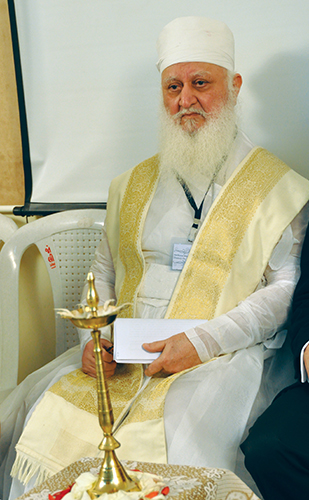
Dastur (Dr) Firoze Kotwal: savant priest
Seizing upon the first dry-eyed moments, one proceeds to Hintze’s useful summary, with requisite textual evidence, on Zarathushtra’s dual role of prophet and priest, which she quotes in substantiation of her views on the Parsi priesthood set against its Ancient Iranian background. Her ideas on the source of Zarathushtra’s inspiration (Ys.43.7) may be debated. Zarathushtra had far exceeded the bounds of "prophethood” — as ereshi, "poet-seer,” he was a forth-telling manthran, "one with Mazda-inspired utterances.” But where are vidva-, "the adept,” and ahum.bish, "healer of life/existence?” The former would justify the poet’s preference for afshman-, "(formulations in) verse,” through which he proclaimed the sentences of his profoundly experienced inner Mazdaic revelation; for the latter, his stated purpose of "world-healer.”
In the crucial issue of women priests, Hintze has recalled for us the Gathic and the Haptanhaitic sections which directly remove all doubts in the matter. If indeed there is to be genuine equality of opportunity and status then the removal of shilly-shallying terms like paramobadh and mobadhyar must be effected — after all, there are no such things as para-attorney and doctoryar, or being "slightly pregnant” and "partly menstruous!” It must be noted that the respective Vandidad and the Nirangistan sections on priests and women officiants are blithely set aside — and this before discounting Henning’s dismissal both of these (male) priest-compiled texts and their composers’ states of mind. The Hintze essay deserves to be studied with special care, for, as has been pointed out time and again, it is the male priest who chants the Old Avestic texts and cussedly refutes their clear directives in favor of "traditions” and ever-menacing presence of menses among adult female candidates!
One cannot dissociate the Hintze argumentation without taking full cognizance of the technically brilliant Martin Schwartz paper, "Avestan Kauui — and the Vocabulary of Indo-Iranian Institutions.” The serious student is urged to carefully sift through the solid philological evidence which liberally informs on the kavi (poet) profession, its function, its scope and its fate. Schwartz’s selection of the anti-kavi and anti-karpan Gathic verses leave little doubt on who Zarathushtra regarded as inimical to the daena vanhui, the most scatological being unprintable. And yet it was a kavi, Vishtaspa, who was to become the Sage’s first patron — one not a priest, but a regional poetaster and former warlord. The Appendix, "On Two Terms of Hospitality,” may well over-excite khshnumists; they would be advised to instead unlock real understanding of them.
The short article "Anything New about Zoroaster?” by Richard Frye yields cautiously balanced views on Zoroaster’s time and homeland. In the absence of written traditions, such evidence as may be obtained must remain imprecise. The datings range between 1000 BCE to the 6th century BCE; the scenes of the Sage’s activity are almost certainly to the east of present-day Iran in the central Afghan highlands and then westward into Sistan. His society was of semi-settled pastoralists whose existence was ever blighted by nomadic raids. He preached in a language akin to Vedic Sanskrit. Frye’s remarks, "of course, are impressionistic and speculative...,” cutting enough slack for nationalists and revisionists to indulge their accustomed polemics. So, nothing startlingly new, but freshly packaged in mature commonsense.
Failure to say anything really "new” is seen in the bland offering by Humbach and Ichaporia’s "Amesha Spentas and Asha Vahishta.” The problems arising could do with some expanded position statements, e.g., Why did Zarathushtra deliberately avoid the expression Amesha Spentas? Why was Vohu Mana the Gathic source of inspiration for the Sage, and not Asha the Best (cf. Ys.43.7,9,11,13,15) which predominates in the Yasna Haptanhaiti (Yss.35-41)? Why are Haurvatat and Amere(ta)tat, (Khordad and Amardad), "Wholeness” and "Un-dying-ness” — all being aspects of Mazda’s "personality” — as well as utayuiti tevishi (their enduring empowerment) absent from this latter text? Many questions on the Amesha Spentas remain unanswered!
Along similar lines is the enthusiastic "Delivering the Drug in the Hands of Asha” (Y.44.14) by Faribourz Nariman. Here good and evil are opposed via the Avestic and daivic vocabularies as were shown by Leo J. Frachtenberg in the Spiegel Festschrift, but Yasna 44.14 has been scarcely exploited: instead one is provided with widely scattered references, and the quite nonsensical "even as Ahura Mazda has been fighting against Angra Mainyu” — a dualist priestly simplification which is emphatically non-Gathic! Take it as it comes — yes?
With the joint work of James Boyd and Ron Williams "The Nature and Problem of Evil in Zoroastrianism,” one likewise enters the realms of "Divinities and Ghouls” or light and shade. Usually preoccupied with the theatricality of Zoroastrian ritual, here one gets an exhilarating break with their philosophical and theological sidelights. Mardan-Farrokh, the 10th century seeker after religious truth, is amply exercised here, and rightly so for his thought-laden exposition in his Shkand Gumanig Vizar (why abbreviated as SKG?). Students will have to juggle the theological and philosophical argumentation to better understand 10th century CE dualism — this joint essay provides essential guidelines.
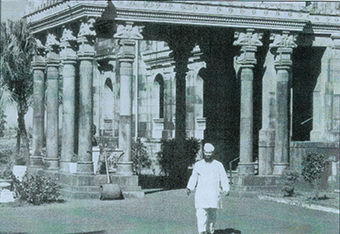
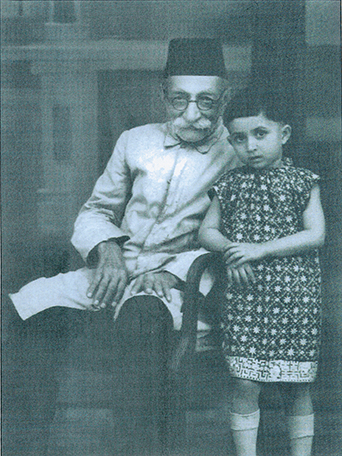
Firoze Kotwal at M. F. Cama Athornan Institute. Left: Aged two-and-a-half with godfather Navroji Desai
Aredvi Sura Anahita, popularly worshipped as Aban (Yasht 5), and perhaps better known as Ardvisur Banu, receives a double helping — firstly from William Malandra, "Anahita: What’s in a Name?” and then from Oktor Skjaervo, "Anahita: Unblemished or Unattached?” Both are agreed through thorough variant synonymic investigations, and the cautious student will be wise to tread carefully in turn, for these top scholars both seem to have drawn near-blanks: Malandra, "the ambiguity is still preserved,” with Skjaervo’s " I do not see how to decide between the two interpretations.” The river goddess, "(of) the Waters,” is often associated with the mythological world rivers. Were these suggested by the Nile, Tigris and Euphrates, Volga, Indus, or Wakhsh (Oxus)?
And from here a protest must be launched against the uglification of Avestan when transcribed in roman characters: why must students and researchers endure -ii- for median -y- ; -uu- for -w- ? After all, there are precedents for using -y- with a diaeresis or umlaut, and, for goodness’ sake, the English letter "w,” "double-u” could happily supplant the ghastly uu! Try, for example here, Kellens with daeuuaiiasna-, etc., in transcribing Vd. 18.60, when daevayasna- could have sufficed!
Kellens’ article, "Jahika et le Vocabulaire Daivique” focuses on the imputed word obscenely used to execrate out-married Zoroastrian ladies. Here the Belgian master carefully argues the case of misuse on a broader canvas: "The jahika is not a prostitute, but a woman without culture [uncouth?] as conceived by the Avesta”! He concludes with "And the etymology of jahika remains open” [reviewer’s translation].
A further protest must be directed at the editors of this prestigious volume: Why was Kellens’ piece not translated for students’ ease of use? Not all involved in Avestic studies are necessarily acquainted with French, or German, or Italian, for that matter. Kellens’ French is very precise; why cannot it be made so in idiomatic English?
Stargazers, astrologists, fatalists and dualists, will be hugely rejoiced by the articles of Antonio Panaino, "The ‘Gift’ of the ‘Givers,’” and Gernot Windfuhr’s "The Yasna Ritual and the Geometry of Mithra’s Rock Birth.” The first deals with the divinities and daivic entities represented by the noble asterisms and demonic planets; the second has a very intriguing build-up of the Mithraic phenomenon in connection with the Zoroastrian ritual temenos and the calendar (studies on which are thin on the ground). Gathicists will notice that these lead on to very different fields dealing with star-lore and the disturbing irregularity of planetary appearances. The 12 zodiacal constellations (there are 13 actually, but one mustn’t upset astrologers and fortune-tellers!) helped define the seasons and fix our calendar; the "seven” known planets were Mercury, Venus, Mars, Jupiter and Saturn, with added "dark sun” and "dark moon” to account for the dreaded eclipses. No surprise, then, that planets were seen as malevolent.
With Dr Homi Dhalla’s essay "Excavations at Sanjan” one enters the practical field of archaeology. This captivatingly engaging piece is a progress report on the several finds made there in the course of annual digs which have to date unearthed fragments of well-described artefacts whose illustrations depict the trade in upmarket wares between Iran and western India. Fascinating!
Mardan-Farrokh reappears as polemicist in Choksy’s splendid exposition on "Historical Trends in Interactions between Zoroastrians and Jews.” Here are found developments and controversies among the two ancient faiths on the common ground of Iran, and pictures of tombs, synagogues, and former fire temples that amply support Choksy’s thesis. Islam had fashioned mosques over dad-gahs in the oasis cities, just as in the west Christian churches covered once-thriving pagan edifices.
Connected in similar ways is Vera Basch Moreen’s "Self-Perception and Perception of Muslims.” This fine independent scholar has utilized three strangely neglected Judeo-Persian texts to substantiate her argument. They date from the 17th, 18th and 19th centuries and retail some mainly urbanized Iranian Jews’ experiences under Shi’ite Shahs, and make for much disturbing reading. Of interest to Zardushtis and Jarthostis alike is that these writings offer backgrounds to persecutions, oppressions, and rare ameliorations for other religious minorities — without specific mention of rural Zoroastrians, yet affording clues to their abominable treatment under the Safavids and, later, the Qajars.
History of a different order is displayed in John Hinnells’ "The Zoroastrian Diasporas.” Here one encounters his customary partisan Parsocentric outlook particularly when launching a discussion on the East African dispersals and arrivals in Britain, managing to avoid mention of the World Zoroastrian Organisation — perhaps he deems it unworthy of consideration. The Zardushti diaspora is sketchily dealt with — unsurprising, since many had declined participation in his researches. When amidst the North Americans in this essay, Hinnells just could not resist swipes at Ali Jafarey, highly regarded by West Coast Iranians, and Prof Kaikhosrov Irani, hugely esteemed among Parsis and Iranis alike. To his question whether it will be the entrepreneurs or traditionalists who will steer the future course of Zoroastrianism, Hinnells has himself provided a kind of answer: it will always be the pretend orthodoxists.
With Dastur (Dr) Kaikhusroo JamaspAsa’s careful study, "A Pahlavi Revayat Based on Vendidad,” one re-enters the convoluted worlds of purity and pollution. This painstaking article, complete with transcription, translation, and appropriate TD2 folios, continues JamaspAsa’s sterling work on the neglected portions dealing with commentarial Pahlavi chapters — the zand i fragard — of the Vandidad, and here its pedantic Pahlavi Rivayat not to be confused with the Persian series of the 15th to the 18th centuries. This early 17th century TD2 is among the precious Pahlavi manuscripts collected by Herbad Tahmuras Dinshaw (hence TD) Anklesaria in the late 19th and early 20th centuries. One appreciates here the bold, confident hand of its Iranian copyist Feridun Marzban. Concerning the wood deemed proper or unfit for ritual use, it is largely based on empirical commonsense answers to the anxieties of the rural Mazdaean communities who most often sought priestly guidance on matters deemed of crucial ritual importance.
Ritual matters, specifically to do with kusti significance, is given a fresh airing, via 19th century perspectives by Michael Stausberg in his "Manekji on the Sudre-Kusti.” Here Stausberg’s eponymous hero expatiates on the ritual garments, their significance and proper uses. One has to remember that Hataria’s journeying purpose was ameliorative, not missionary: hence what he had gleaned from his forbears about Parsiism and its ritual usages was necessarily at a popular level. Nevertheless, it makes for an interesting read.
Firoza Punthakey-Mistree’s darkly sinister reworking must suffice for those unable to access the Boyce volume or the several half-baked notions of what really are unZoroastrian, occult meddlings with the inferior powers. For those able to stomach unZoroastrian priest-condoned practices of the "dark arts,” they will find past condemnation in our Pahlavi Mazdaean encyclopaedia, the Denkard, whose Book III’s chapter 169 provides enough detail. Failing both, then Leo Frachtenberg’s "Allusions to witchcraft and other primitive beliefs in the Zoroastrian Literature” (in Festschrift Dastur Hoshang Jamasp, Bombay 1918) may be easier to obtain.
Sinistral (left) and dextral (right), the hoyag and dashnag, occupy Ervad (Dr) Ramiyar Karanjia in his constricted offering on the positioning and utilization of priestly hands during their ritual performances when every flick of the wrist and inflexion of the voice are thought to possess some deep significance — but what?
No less baffling is Khojeste Mistree’s "The Kadmi Atash Bahram Boy Ceremony” where he has unwisely chosen to preface his utterly wearisome dissertation with some ill-formed calendrical views. They raise all manner of disputations concerning the (mis)timeliness of ritual and ceremonial observances. He has additionally succumbed to a profuse footnoteitis. Despite these remarks, someone, somewhere, is surely bound to show some interest — but who?
◆ ◆ ◆
From the archive