
Tradition
Enduring embroidery
Tracing the 250-year history of these traditional embroidered ‘Parsi’ saris, Perveez Aggarwal says in their modern manifestation they are prized by other communities as well
"We Parsis have been in love with this embroidery for more than 250 years,” said Perveez Aggarwal speaking on "The grandeur of garas” on February 14, 2013 at the K. R. Cama Oriental Institute (KRCOI). The embroidered garments are "worn at the rites of passage,” the proprietor of My Beautiful Embroideries stated referring to them as "cherished heritage.”
A Parsi child’s first garment is an embroidered jhabla or tunic along with an embroidered cap. "At the navjote ceremony an ejar, a calf length pyjama or loose trouser along with a shawl is worn,” notes the entrepreneur. Often the first sari a Parsi girl wears is a gara.
A Parsi child’s first garment is an embroidered jhabla or tunic along with an embroidered cap. "At the navjote ceremony an ejar, a calf length pyjama or loose trouser along with a shawl is worn,” notes the entrepreneur. Often the first sari a Parsi girl wears is a gara.
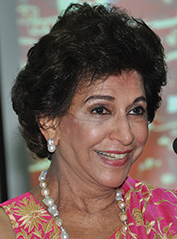
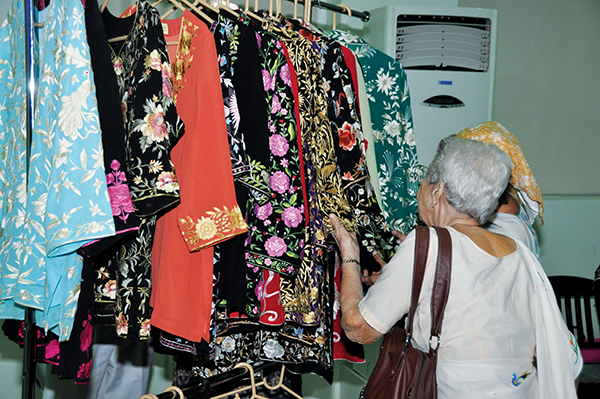
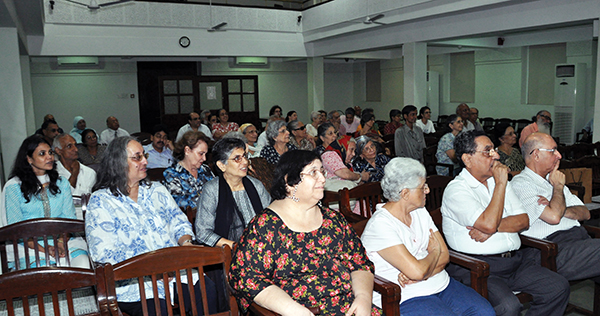
Perveez Aggarwal, guest viewing gara jackets and kurtas on display, section of the audience
"It is said that the first gara was made in Canton, where a Parsi trader, taken up by the beauty of Chinese embroidery, requested a craftsman to embroider a six-yard length for his wife. Soon a novelty became a rage and a rage matured into a classic that transcended the vagaries of fashion and the confines of a community,” related Aggarwal.
Silks being only 36 inches in breadth at that time, the first garas were ingeniously joined together to make a sari length. "Later versions were not only sari length, but also had the mandatory border and palau…
"Many garas are fully embroidered and the density and the intricacy of the embroidery determines their value. They were redolent in the use of auspicious symbols, embroidered to convey blessings for the wearer…
As designs changed, Indian motifs such as the paisley and the lotus appeared along with traditional Chinese. Persian and European motifs were added. "Even flower basket designs showed up, acknowledging British influence. So beautiful and lifelike were the designs that, it is said, grandmothers would use their garas as picture books to tell stories to their grandchildren.”
Amongst the symbols, a pair of pheasants signify literary refinement or education; elephant depicts strength, prudence and power; the lotus represents purity because "the delicate flower rises in muddy water.” A pair of fish represent domestic felicity, happiness and fertility; while peacocks represent beauty and dignity.
"Beside, flowers, a favorite subject in Chinese embroidery, fruits such as peach and pomegranate are depicted, along with growths, like fungus and the bamboo, both of which symbolize longevity. Several kinds of animals and birds also appear such as the deer and the crane, both symbolizing long life, the bat, the mandarin duck, pheasant, peacock, elephant and the lion generally represented playing with a ball of brocade. Butterflies are emblems of happiness and are often embroidered on female apparel.”
Aggarwal recommended garas be stored in white muslin and aired once in six months. Her garas are embroidered on chiffon and georgette, materials she believes are better suited to today’s requirements.
A helping hand
.jpg)
Display of garas on another occasion
Along with her husband Shamsunder, Perveez runs Diners Club India which they took over from Kali Modi. The franchise was sold to Citibank around 1991. The enterprising couple also started India’s first business center, DBS Office Business Centre at Nariman Point. They now have business centres in New Delhi, Calcutta, Madras, Bangalore and Hyderabad.
Perveez entered the embroidery business by chance. During the Bombay riots of 1992-93 following the demolition of the Babri Masjid in Ayodhya, the couple gave shelter to Muslims fleeing the wrath of militant Hindu outfits.
"We organized our cars, gave them money and took them to the farthest railway station so they could go to their villages and be safe. Months later when peace was restored, one of them came knocking at my door, looking for work. I told him that I could not give him employment as he could not write and speak English. He came back and showed me an embroidered cushion. I gave him the border of a gara sari to copy and he did it to perfection.” Other assignments followed.
An article in The Taj magazine Volume 40, 2012 noted, "Perveez became the karigar’s patron, giving the finished pieces to family and friends ‘until I ran out of people.’ She took a suitcase of shawls to a conference in the US, wore a different one each night, got 20 orders, and returned to Bombay with the good news. ‘I had enough work for them for one year,’” she recalled.
Holding regular sales of garas, jackets and kurtas at the DBS House on Prescott Road, Perveez says Marwaris are her biggest buyers, believing that one gara was essential for a bride’s trousseau.
KRCOI president Muncherji Cama noted that garas enjoyed their heyday in the 1960-70s but then fell from grace. The valuable heirlooms were cut up to make cushion covers, curtains etc. KRCOI honorary secretary, Dr Nawaz Mody noted the Institute was "a great fan of Perveez’s products, presenting them as gifts to women delegates.”
◆ ◆ ◆
From the archive