
Seminar
UNESCO Parzor: Textiles and embroidery seminars
Seven-day sessions on the unique Parsi embroidery heritage will be held in Ahmedabad, Surat, Bombay and Navsari
The UNESCO Parzor project has been working in diverse fields. Over the past year the youth of the community and the elderly have been interviewed across the country by teams headed by Dr Lata Narayan and Dr Siva Raju respectively for their separate studies. Prof Shalini Bharat is conducting detailed surveys of the Parsi family while Dr Katy Gandevia and her team have studied numerous Parsi medical practitioners in Bombay. Along with the demographic researches, the medical projects are also progressing thanks to support from the community. Volunteers have willingly donated blood for cancer and genetic studies and given their time for the neurological surveys. In other fields, Sabeena Gadihoke’s book on Homai Vyarawalla, India’s first woman photo journalist is about to go into print while Dr Bharati Modi’s linguistic study of Parsi Gujarati is being finalized for publication.
For the past four years Parzor’s craft documentation program has also continued, documenting this embroidery tradition through various field trips and exhibitions across the nation. Priya Mani has been working on a manuscript entitled "Painting with a Needle” which has attracted considerable attention. Ashdeen Lilaowala and Mani, textile. designers from the National Institute of Design (NID), Ahmedabad have recorded Parsi crafts in areas ranging from Navsari to Madras. Parsi crafts and their designs are a special contribution of this community which have so far not received the acknowledgement deserved. Garas, kors, jhablas carry specific designs, which are often found on tanchoi fabrics, torans and even chalk boxes. Can this be just a coincidence? Parsis today seem to forget a great tradition of creativity, which has produced beautiful crafts in the past. The aim of the crafts module of the Parzor project is to rekindle interest and pride in this tradition while at the same time recording it for posterity.
In the first ever serious research into the origin, history, development and technique of what is known as Parsi embroidery, the Parzor project has traveled across India and plans many more field trips in the country while also tracing roots and routes from Yazd and Kerman in Iran to Hong Kong, Shanghai and Canton in China. Many discoveries have already been made — the Zoroastrian reverence for nature has been celebrated in the motifs of their embroidery since time immemorial, the rooster symbolizing Sarosha and the divine fungus seen regularly on textiles give protection, especially to children when embroidered on their jhablas, Taoist symbols decorate Parsi kors, the Sassanian "Circlet of Pearls” traveled from Zoroastrian Persia to China in the Tang Dynasty (618-907 AD) and then traveled back to the Parsis, embroidered on the gara. So Parsi embroidery is not just expensive, beautiful silk embroidery conceived, designed and executed by skilled Chinese craftsmen and simply ordered by prosperous Parsi traders who were involved in the China trade for their women folk. It is much more.
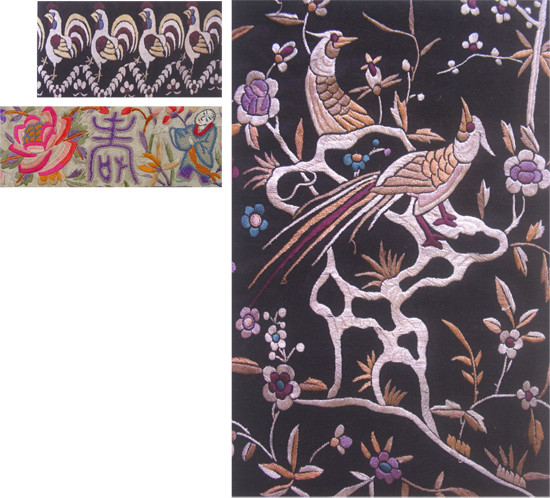
Clockwise from top left: the rooster is a widely used motif in Parsi embroidery and signifies the day and death of the evil night; the confronting birds motif originated in West Asia; Buddhist and Taoist symbols were used mainly in Chinese embroidery but solely for ornamentation on Parsi textiles
The intermingling and connection between the Chinese materials and motifs and the Parsis who wore these garments appears to go much beyond a mere buyer-supplier relationship. The historical trade in silk between Surat and China, the incorporation of European designs and even the Gujarati mochi stitch, all went to create a fabric which was unique. It is this aspect of Parsi craftsmanship and taste which needs exploring and recording. This will establish that both at the stage of ideation in the choice of special motifs, designs and at the stage of production Parsis, especially women, were involved. Kors and garas worn by Parsi women were distinctive, even in the rich textile heritage of India and were popularly known as the Parsi sari in all parts of the country.
Community accounts verbally passed down and still recalled by the elderly across India from Bharuch to Calcutta confirm the role the Chinese pherias (hawkers) played in familiarizing Parsi women with Chinese embroidery. Parsi elders recall how these cycle wielding Chinese men would leave their bundles of embroidered silk cloth on verandahs of Parsi homes while they made their rounds selling their silk ware. When they returned in the afternoons, Parsi women, by then free from their household chores, would sit on the verandahs observing them working on their small embroidery frames, thus learning their special embroidery stitches including their use of curved needles. With this newly acquired skill Parsi women created their own garas, jhablas and kors. The creations by Parsi women exhibited their preference for certain motifs such as the rooster and fish which have significance in Zoroastrian tradition as against dragons and snakes popular in Chinese tradition.
The Chinese had over centuries perfected the craft of embroidery in their great embroidery schools. Archeological finds have established that Chinese embroidery was first produced during the Shang Dynasty (1600-1027 BC). They were therefore well trained in their use of the finer aspects of color, stitch, stylization of the motifs and overall balance, proportion and harmony in their work. As the demand from the Parsis increased, Indo-Chinese settlements dealing in embroidery are believed to have flourished in western India. The craftsmanship of the embroidery and designs done in India was distinguishable from the original Chinese.
Enterprising Parsis traveled and settled in other parts of India especially the Deccan and hence acquired local skills like Zardozi embroidery and incorporated it in their embroidery repertoire. With European influence came European stitches, designs and new shades of color. There was a large crossover of vocabulary as Parsis imbibed the best from east and west to create a special form.
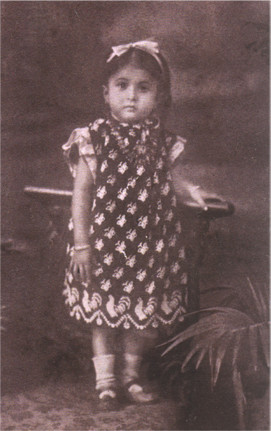
Zoroastrian children were made to wear rooster motif jhablas to ward off evil
The Ministry of Textiles, Government of India has realized the heritage value of Parsi embroidery adding to the magnificent textile heritage of India and the Government is keen not only to protect but also project it. Today as Parsi settlements in the interiors become empty, the Indian Government and UNESCO wish to ensure that this craft heritage does not vanish. The Commissioner Handicrafts and the Textile Ministry have taken great interest in the work done so far and have given a grant under their craft development projects to take this study further.
In order to endure, a craft needs to cater to the needs of the time. While the classic embroidery patterns of the gara and kor will be a treasured part of Parsi heritage, the actual craft technique needs to be invigorated. In a constructive effort to preserve and adapt this craft for the community and the country, Lilaowala will conduct craft seminars/workshops in Ahmedabad (mid July 2005), Surat (first half of October 2005), Bombay (January 2006) and Navsari.
These seven-day sessions are especially aimed at creating awareness and sensitizing the Parsi community to this wonderful heritage. The workshops will draw upon the expertise of some of India’s best designers as well as older Parsi practitioners of the craft both interacting with and motivating the chosen craftsmen. After familiarizing them with the Parsi embroidery tradition, the workshops would encourage them to initiate new ideas to carry the craft forward. A craft can only prosper if the craftsmen are patronized to innovate and create new forms, thus constantly challenging and improving their own skills. There is an assurance of benefit to the craftsmen involved. Effort will be made to ensure that the contemporizing for product development would be sensitive to the original and carry the hallmark of Parsi tradition.
Parzor hopes to encourage young Parsis to continue an ancient heritage as well as use the sessions as an opportunity for enterprising Zoroastrians to build teams, collaborate with craftsmen and develop a business module which will take this heritage into the future. The workshops will empower members of the community with technical knowledge, introduce them to professional designers as well as teach basic management skills, packing of products and interaction with prospective buyers.
Parzor requests the various anjumans in India to identify Zoroastrians who are familiar with the craft and have a strong inclination to participate in these workshops. Any interested individual is welcome to contact us. Preference will be given to those who have worked in the fields of embroidery, design or craft and those who would like to take Parsi craft and textiles further as an entrepreneurial venture. Since seats will be limited an early response is recommended. There is no charge for the training program but cost of travel and stay must be borne by the participants. Please contact Ashdeen Lilaowala, Project Head, at ashdeenl @rediffmail.com or write to him at Textile Workshops, Parzor Foundation, F-17, Hauz Khas Enclave, LGF, New Delhi 110016, Ph: 26513560, Fax: 51626248.
If you have any special embroidery to be documented for posterity in any part of India or Hong Kong or if you would like in any way to be a part of the UNESCO Parzor exploration of Parsi textiles and embroidery please contact Dr Shernaz Cama, Director, UNESCO Parzor Project at shernaz cama@hotmail.com or at the above address. You could also contact our Bombay representative Perin Panday at 6, Shiv Sadan, 2nd floor, Marine Drive, Bombay 400020. Ph. 022-22045017. Any information from Zoroastrian families willing to share their unique heirlooms for the documentation project will add greatly to the value of this community study.
◆ ◆ ◆
From the archive