
Life-Style
The supremacy of a sari
Splurging on saris is inevitable at wedding time
"Your women must put on clothes like our women,” Jadi Rana is believed to have stipulated as one of his conditions before granting asylum to the visiting Zoroastrians who had landed on the shores of India. The assurance given by their forefathers is honored by the community till this day who, at the time of wedding and navjotes within their families, continue to wear the sari although they may not feel obliged to don this garb at functions hosted by others. The fascination for the gara though remains unabated with every new bride insisting on including one in her trousseau, reveal the proprietors of 11 concerns dealing in saris whom Parsiana interviewed to ascertain the popularity of this traditional dress today.
Those who have been in the business for decades lament that the custom of a bride being gifted four sets of clothes (sari, blouse, petticoat, sudreh, kusti) from her mother’s home and four sets from her mother-in-law no longer remains. Many are content with two joris (sets), one for the adarni/madavsaro and the other for the lagan, the bride’s rationale being "where do we have time for other functions?” Instead of dipping into their savings to buy additional saris — priced between Rs 2,000 to Rs 1,00,000 — they would much rather buy salwar-kameez or other outfits that they wear regularly.
The new entrants in the field of embroidered saris are happy that despite competition in prices and varieties their creations are in demand not only among Parsis but also members of other communities.
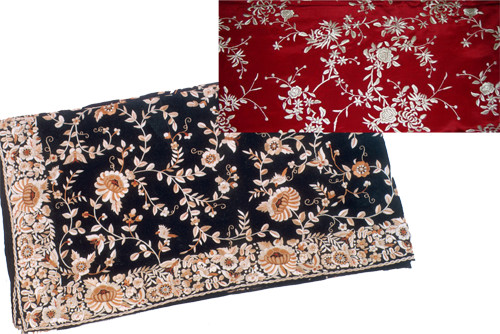
As in years past, for the wedding ceremony the bridal finery "is predominantly in ivory, silver, off-white,” points out Niloufer Aga of Armayesh. "Bronze, golden and black are good for receptions.” With beaded and lace work being the latest trends, the shade and fabric for the sari is determined by one’s choice of embroidery. Exquisite embroidery being their forte, Aga has noticed a rising demand for their saris among Parsis and reveals that members of the community must be constituting nearly 60-65 percent of their clientele.
Those from abroad are usually willing to spend more, Naju Daver has noticed. Whether it is her sequence work, lace or embroidered saris she ensures that she never oversteps a customer’s stipulated budget. Considered as an heirloom, most like to include a gara in their trousseau too. For the wedding saris it is always pastel shades which are popular, although for the garas, brighter colors like red, purple, navy blue and black are considered better options. Referring to her 50 percent Parsi clientele, she says floral designs are more popular than the geometric patterns. The choice of fabric among Parsis in India now is synthetic, one which can be washed and laundered. Parsis from Karachi though still prefer the original materials. The asli garas were on ghat (which gave a satin finish), saligaug, ojhaaryu and crêpe de Chine.
Dealing only in garas, Perveez Ag-garwal of My Beautiful Embroideries has one-third of her clients who are based abroad. Of her Indian clients, 50 percent are Marwaris who now ensure that they have a gara sari in their wedding trousseau. As against the purple, red, crimson, black garas of yore, presently even those in emerald green and shocking pink are in vogue, mentions Aggarwal. When the more knowledgeable customers complain that "pèhlé jéva taaka nathi (the stitches are not as fine as by earlier craftsmen),” she has to point out that to afford those original garas a client has to be willing to spend up to Rs 1,50,000. And even then there will always remain the fear of the old fabric developing a sudden tear: she relates her personal experience when she heard the ‘karr’ sound of the gara tearing as she lowered herself on a chair at one function! "Horrified that Parsis have now chosen to wear outfits” other than a sari for festive wear, she realizes that this is possibly an irreversible trend just as the Japanese have almost given up wearing a kimono. She well recalls the sight she beheld with awe when she first came to Bombay of old, rich Parsi ladies suitably attired in their fashionable saris and net sudrehs. "My reason for promoting the garas was different: to see that this craft does not die out and to give employment to these skilled workers,” reveals Aggarwal who has 50 percent of her clientele coming for gara saris and the others who want this embroidery on other garments and shawls for a more distinguished look. Since there are some who pose their ware as garas and sell it cheap, she is wary of slipshod work — "sambhé hee-raa né paachhal keeraa (diamonds in the front and worms on the rear).”
The garas that he makes to order on Italian crepe and georgette are more in demand by the Gujaratis and Marwaris than the Parsis, mentions Rayomand Maneckshaw of Revival. Such fabrics being lighter to carry they are more popular than chamoux silk which often slips down and does not stay in place. But whilst the Parsis would prefer birds, flowers and Chinese figurines, non-Parsis would insist on floral designs, he discloses.
The chakla-chakli, margha-marghi, batak-machhi, China-Chini (sparrows, cocks, ducks, fish, Chinese) motifs are particularly popular among Parsis, reports Baktaver Percy Karani of Monidel Fashions who has been selling garas not only in Bombay but through her exhibitions in Poona, Bangalore and Secun-derabad too. While the outstation Parsis invariably go in for saris, many in Bombay and a few from Dahanu have started opting for gara embroidery on chanya-choli outfits, she observes. In addition to the popular red, purple, maroon and navy blue on which embroidery in off-white and multi-colored strands is in vogue, there is now demand for black and bottle green saris too, she states. As against chamoux satin which was once popular, the trend now is towards using a variety of georgette and crepe. If the fabric is too flimsy, it would not hold the weight of the embroidery, she points out. She also does sequence saris using imported sequences so that the shine and effect is unique. Such saris are invariably included in the sés-tirath (considered an auspicious omen), and ideal to gift to the in-laws — naran-daakhal, sasu-daakhal.
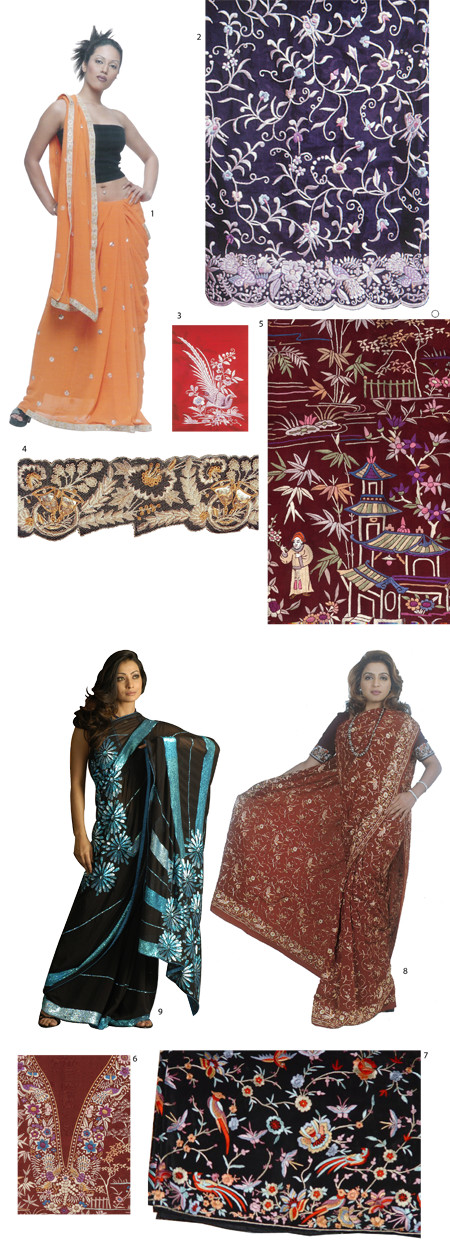
Zardosi work is a favorite among her customers, 90 percent of whom are from the Parsi community, conveys Zenobia Davar. The combinations and permutations can be infinite and Davar tries not to repeat a design. The prices can fluctuate depending on the needle and technique — stitching needle for finer stitches or hook (aari) needle as used by cobblers, she discloses. Orders for designer chanya-cholis for engagements have been executed yet no one has come to her for such wedding outfits. She advises fabrics and colors depending on the work to be undertaken on the sari and the jewelry that the customer will wear with it.
"Out of 20 shoppers, 19 come in to take a look and only one will actually purchase a sari,” mentions Arnavaz Ela-via of Damania and Company. Eighty percent of Elavia’s customers are Parsis, 50 percent of whom come specifically to buy a gara. The rest are interested in the cutwork and zardosi saris. Elavia believes in offering something exclusive — like six yards (waar) of lace with additional work done on the pallav as well.
Shops owned by non-Parsis entice Parsi customers too. Remarking on the preferences of his 30 percent Parsi clients at Queens Emporium, Dharmesh Motla observes that while the younger generation continues to wear saris the frequency is much less compared to their parents’ generation. They want to drape it only on festive occasions. The community is also known for opting for "softer fabrics, nets and laces and sober, ethnic designs.” The embroidery can range from "resham work to zardosi, to beads like swarovski crystals.”
Among his 30-40 percent Parsi clientele, the maximum demand is for garas, with zardosi, and sequence work ranking next, mentions Suresh Dedhia of Mahavir’s Embroidery. The older generation usually opts for lighter colors while the younger generation is willing to experiment with new colors as also new outfits. Although there has been no demand for chanya-cholis from his Parsi clients, there have been orders for specially created salwar-kameez sets and kurtis from the college going lot.
Not just for festive wear, Parsis are always on the lookout for new designs and patterns, cutwork and sequences, has been the experience of Mitesh Yadav of Shree Pushpam. For saris that they plan to wear themselves, they easily spend up to Rs 10,000 and for those that they will be gifting to relatives they choose within a budget of Rs 2,000. Red and purple are the favorite colors for his garas on crepe with birds and Chinese figurines being the popular motifs.
"The tradition of dabavi né sari péti maa mukvaani (squeezing the saris into a trunk) has gone,” reveals Roshan Daver who only deals in garas and kors, although she does not make any. "Parsis are sellers and the buyers are Marwaris. Every week I have a Parsi customer coming to sell though no Parsi is coming to buy. There is no concept of tradition...The younger generation is not interested. They would rather sell and invest in jewelry. The brides believe ‘why should I spend Rs 50,000 on one sari when I can have a variety of four or five to wear on different occasions?’” Daver explains their logic. She has noticed that western outfits, foreign designers and the Bollywood style ‘chikki-bikki (artificial-glittery)’ stuff seems to appeal to the younger lot, glitzy borders which you can neither polish nor preserve but just need to throw away after a lapse of time.
For the present, those in the sari trade are holding on to their customers as they try to juggle with their pleats, pallav and purses to continue the sari tradition.
◆ ◆ ◆
From the archive