
Books
Parsis’ progress
Tower by Avan Jesia. Published in 2012 by Penguin Books India, Penguin Books India Private Limited, 11 Community Centre, Panchsheel Park, New Delhi 110017. Pp: 402. Price: Rs 399.
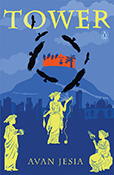 In Avan Jesia’s debut novel Tower, Faram Framji, a young man of 26 and a resident of Sumari, borrows Rs 70,000 from his father’s employer, Soonamai Sethna, which he promises to repay in regular instalments with interest at four percent per annum. With this loan, he sets out to build, in Bombay, a tower consisting of a block of flats to house his family and those of his relatives, homes for the people he loves. It is possible that this desire to construct a tower stems from his childhood when his father gifts him an expensive set of building blocks as well as a subconscious need to "be worthy” of his doting parent who proudly pastes the blocks and mounts the toy house which Faram constructs on a board and names it ‘Faram’s House.’ Faram works in a solicitor’s firm earning a stipend of Rs 700 a month (which seems to be a very large income for the 1920s). Soonamai also decides to indulge in a little bit of matchmaking and finds Sera, the daughter of Dinshah and Mitha Pardiwalla, whom she considers a suitable bride for Faram.
 Jesia’s novel charts the progress of this family through three generations. Keeping track of the names of grandparents, parents, aunts, uncles, grandchildren, relatives and neighbors over more than a century is quite a challenge. There are at least 40 major characters to remember. There is no family tree or dramatis personae to help the reader through this maze and Jesia further complicates the situation by giving multiple characters similar names. The aunts of both Faram and Sera are called Roshan and are only differentiated by "big” or "little” which precedes their names. And of course children are named after their grandparents and close relatives so one has to contend with two Khorsheds, two Homis and two Rubys.
There is a lot to praise in Jesia’s first novel. Her ability to portray characters in a few sentences is admirable. When Sera’s parents, Dinshah and Mitha, come to visit Jamshed and Khorshed Framji to discuss the marriage of their children, the differences between the two mothers is delineated very effectively in a few sentences. Mitha is reticent and quiet. Khorshed is spontaneous, friendly and welcoming; she immediately opens the packet of malai na khajaa (a sweetmeat) which Mitha has brought; her instinctive warmth wins over the shy Mitha creating a bond between the mothers-in-law which they cherish throughout their lives. In a few deft strokes, Jesia conveys Faram’s reluctance to marry and Sera’s plucky and forthright character when she tells the slovenly Faram off. This outstanding quality can also be seen in Sera and Faram’s engagement party where, though one gets lost with all the names of the relatives and friends who appear for the first time, Jesia captures the essence of their natures very vividly and with great economy. It is difficult to forget Fancy Freny and her two daughters, Elizabeth and Victoria, though they do not really have a very important part in the novel.
Jesia is a teacher of English and, as expected, the novel is very well written and structured though the style, at times, may be ponderous and convoluted. It also comes as no surprise that the novel is liberally peppered with literary allusions; though it is not really necessary to be aware of the sources, recognizing the references brings an added dimension and a sense of enjoyment to the reader. T. S. Eliot seems to be her favorite and there are several quotations from The Wasteland. Quotations from Shakespeare’s Hamlet also frequently make an appearance as well as Edgar Allen Poe’s Raven. These references are often integrated into the very fabric of the novel. Soonamai, who engineers the match between Faram and Sera, is reading Pride and Prejudice and Jesia casually and cleverly paraphrases the opening lines of Austen’s novel by mentioning, "Faram was a single man, educated and employed, and it was not inconceivable that he would soon be in possession of a modest fortune. Accordingly, she deduced, he must be in want of a wife. However these were not truths universally acknowledged...” In Jesia’s skilful hands, mava cakes melt into Proustian madeleines and, like Virginia Woolf’s Clarissa Dalloway, a character decides that she will buy the flowers herself.
An important motif in the novel is a picture of the three Fates which Mitha buys at a fair to cover a patch of peeling paint on a bedroom wall: Clotho, spins the threads of life; Lachesis, measures and weaves the threads with a destiny of her choice; and Atropos, with shears snips at the handiwork of her two sisters. At the beginning of the novel, the Fates have had a long and tedious day and Clotho has run out of thread. So in a callous manner they determine the destiny of a child. He is born three times in the same family; the first time he suffers crib death, the second time it is death by drowning and the third time he has trouble breathing as "water snakes coil around his lungs.”
Like a Wagnerian opera, Jesia uses repetitive motifs in the novel which give it a cohesive effect despite the fact that the events are spread over a century and several generations. The sharp edge of the lemon grass which cuts Sera’s finger is repeated when Mitha pricks her finger while stitching sudrehs for Faram and a generation later, Deena, Sera’s daughter-in-law pricks her finger while teaching her daughter embroidery. Water imagery is also a binding force whether it is the river Styx, and Charon the boatman in Demeter and Persephone, a play enacted by Sera’s grandchildren, or a visit to the beach where Zaal loses his life. The beehive which hangs on the ledge of the tower is referred to at several points of the novel but gets its greatest significance at the very end. The sound of an-an kou-kou which the wheel of the cart makes is repeated at critical moments. The novel which begins with the construction of a tower comes full circle at the end when Sera’s grandson discovers the model which Faram had built when he was a child.
For a first novel, the canvas does seem too vast for Jesia to handle and often one feels that the novel is unravelling and losing focus. Also the Parsi background is overdone. It is evident that the tower which Faram builds is paralleled in the Towers of Silence but Jesia seems to be obsessed with death, vultures and this constant harping often gets a bit monotonous. Several Parsi customs and rituals are constantly paraded or referred to: the Parsi fondness for mava cakes, the use of garlic and onions in cooking, the elaborate making of a typical Parsi cup of tea with lemon grass and mint, the explanation of the girehban, the relative importance of Hormazd roz over Bahman roz, a reference to the pre-wedding madavsaro ceremony, descriptions of a wedding meal, the dog brought in during a funeral ceremony, the birthday bath with full cream milk and rose petals...and if this is not enough there is also a Parsi quiz which lists the gahs and the number of threads in the kusti! There is such an overdose of this that one occasionally feels that the novel should have carried a subtitle: "Everything you wanted to know about Parsis but were afraid to ask.”
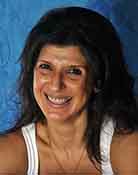
Avan Jesia: Recurring motifs
◆ ◆ ◆
From the archive