
An offering of tradition
The Iranian Zoroastrian Youths Organisation is ageing without its young
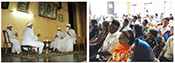
"Iranians are a king-hearted people,” Darayush Zainabadi (Irani) proudly proclaims to a gathering of close to 100 elderly Zoroastrians at the N. M. Petit Fasli Atash-Kadeh Hall at Marine Lines. Irani is the "administrator” of the informal organization Sazeman-e-Jawanan-e-Zarthoshty-e-Irani or The Iranian Zoroastrian Youths Organisation (IZYO) which is inching towards its 72nd jubilee. The organization was marking "Paitesahem-gah-ghambar (a celebration of Ahura Mazda’s priceless creation Earth)” on September 15, 2012. Four priests performed a jashan as the predominantly elderly audience sat silently. Interestingly, no one went forward to place loban (frankincense) as is traditionally done at Parsi jashans.
Zainabadi, 58, who prefers to be called Irani, teaches Persian and spoke in Farsi. Few, however, in the audience understand the language. His speech is short as he is accustomed to the chatter.
Large thals (platters) of seer va sadab were circulated. Benefactors always come forth to finance the gahanbars or jashans. Irani shares the recipe of seer va sadab stating, "this is a mixture of the leaves of the pious plant sadab ground to a paste with seer (garlic) and vinegar.” Seer va sadab is served "only during prayers for the dead and not at times of khushali (happiness).” The sadab leaves are transported from Irani-owned farms and orchards in Dahanu, in Maharashtra and bordering Gujarat. "The sadab bush is very pious (sacred). If a menstruating woman approaches, the plant wilts,” claims Irani. On offer is also vadrin or chasni, consecrated fruit.
"Each gahanbar is dedicated to an element. All jashans are celebratory,” explains Irani. At the end, packets of dry fruits (lorki) bought in wholesale and naan (nooni or bread) are customarily distributed. Attendees even carry tiffin boxes with them to take home whatever they can. Some plead for an additional packet of dry fruits, which Irani gives. "We unfortunately do not have genuine naan as it is difficult to make and the young do not know how to make the original,” he laments. Consequently, this evening nooni is not served.
Keep it going
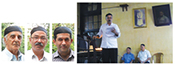 The tradition has been kept alive since it was established in 1940 by the late Dr Farhad Abadi and the late Mehraban R. Bahmani. Irani also mentions the names of other founders of the IZYO, now passed on — Arbab Sheriar Bamasi, Sohrab R. Dahmubed and Yazdanyar A. Bonshahi. Some have immigrated like Gustad Faramarazi, Kaikhushroo Biouk and also Sohrab Dahmubed. The "dahmubeds”
  are those who worked under priests like para-mobeds, the administrator informs us. Currently, Irani, Ardeshir S. Bakhtiyari and Behram M. Kermani steer IZYO voluntarily, holding no official post.
"Lots of Iranians were here between the 1950s and ’70s. No more youth now. Hamé oldies chalavyéch (we oldies are running the program.) In the 1970s and ’80s people from Iran and India visited each other regularly. Several mobeds came under a student visa to join madressas. Today, not so. No one wants to take the initiative… Parents would come first, reconnoiter, see hostels, accommodation and study possibilities,” the Bandra resident states. Most Iranis in the past spoke Farsi, English and Dari (a language spoken by Zoroastrian Iranis.) Wife Manijeh (54), an office assistant in a school speaks Dari, his sons Shazad (30) and Nauzad (28), do not.
Dates for all six gahanbars dedicated to the dead and four jashans are set by the Irani calendar published in the magazine Fravahr shipped from Iran. "This year (1382 Yazdezardi) the symbol of Khorshidi (Persian) or Shamsi (Arabic) calendar is the whale,” he clarifies. On receipt of the calendar, "we arrange religious dissertations, plays, lectures, get-togethers, songs, monajats and other Iranian songs.”
"There are (mostly) no servants in Iran. All ladies look after the kitchen and the cleanliness of the house. The dress code is different — the ladies wear a makhnu (a shawl-like head scarf) and shalvor (a salwar-like garment). All Iranis have compulsory religious learning in schools.” The volunteer reminisced how the Dinyari school in Yazd taught Zoroastrianism. The Marker school for boys in Yazd was founded by Peshotan Dossabhai Marker "who loved Iran. He has given land and halls are built in his name. In Yazd there is also an orphanage. Marker has also translated Avesta prayers into Persian and English.”
Irani ends with — "all are buried in Iran with Zoroastrian prayers. Muslims also participate in the death ceremonies. At the siroja (month prayers) all come and attend… (we need) to move with the times...”