
Politics and Policy
Vulture venture to take flight? - III
Two of the six high priests endorse the Doongerwadi Vulture Recovery Project while one opposes the ambitious plan
Three of the six High Priests have written letters supporting and opposing the Doongerwadi Vulture Recovery Project. The letter of Dasturs (Dr) Kaikhusroo JamaspAsa and (Dr) Firoze Kotwal is addressed to the Bombay Parsi Punchayet chairman Dinshaw Mehta. The letter by Dastur K. N. Dastoor Meherjirana is addressed to Mehta and the members of the Doongerwadi Advisory Committee. Parsiana has slightly edited the correspondence to fit with the publication’s stylistic requirements.
Dear Seth Dinshawji
We, as high priests, are delighted to read in the recent Bombay Parsi Punchayet (BPP) BPP Review of the efforts being made by the present board of trustees to bring back the vultures to our sacred Doongerwadi grounds. In fact, in our opinion, this will be the best way to strengthen our system of dakhmenashini on a long-term basis.
We are pleased to learn of the progress made over the last few years by scientists in vulture breeding and conservation, since the problem of vanishing vultures came to the attention of the public. We are further pleased to read that the Government of India, the Bombay Natural History Society, the International Union for the Conservation of Nature and the BPP, have united in their efforts to execute this project on a long-term basis.
.jpg)
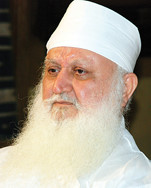
Dastur (Dr) Kaikhusroo M. JamaspAsa (left) and Dastur (Dr) Firoze M. Kotwal
We understand that the ultimate aim is to have vultures as free-flying birds. This implies that the aviary so constructed is a temporary structure, which will be dismantled once the vulture population increases, and so in the future there will be no need to house any vultures in captivity, more so, at our Doongerwadi complex.
We see no religious impediment to the construction of an aviary over the dakhma, which in fact has been our stated position, if you refer to our letter dated March 12, 2000, written to the previous board of trustees. We have always maintained that Khurshed Nigarashni (beholden to the sun) together with the birds of prey will further strengthen our mode of disposal of the dead on a permanent basis. We have no objections to housing the birds or the appropriate netting being used over the dakhma as long as no structural modifications are done within the working dakhma itself, and that the aviary will be built over and around it. We are aware that non-Zoroastrian staff will service the aviary but that only Parsi/Irani Zoroastrians will be permitted to enter the dakhma, as they have been doing, for generations.
Additionally, the bringing back of the vultures will further strengthen and once and for all silence the anti-dakhma groups who under the guise of change, have continually attacked our ancient and proper mode of disposal of the dead. Fortunately, by the grace of Ahura Mazda, the community by a very large majority continues to follow this mode of disposal as mandated in our scriptures and which has been fulfilling an important spiritual and religious function in Bombay for over 300 years.
We pray to Ahura Mazda for the success of this noble project and may wise counsel prevail in all your deliberations.
Yours in His service
Dastur (Dr) Kaikhusroo M. JamaspAsa
Dastur (Dr) Firoze M. Kotwal
The experimental aviary project has two aspects, religious and practical. Taking first the practical aspect, at the conference held on July 19, 2012 a paper titled "Project Proposal for a Satellite Breeding Centre at Doongerwadi” dated July 15 was given to the participants. The paper has a heading: "Benefits of the Project and Chances of Success.” The very first sentence in the Section reads:
"As with any scientific experiment there can never be any absolute guarantee of success, but provided the use of diclofenac by Parsis consigned to the Towers of Silence is eliminated completely, there is a good chance that the project would succeed.”
The above sentence has two expressions: "but provided” and "eliminate completely.” The word "but” before the word "provided” indicates that the provision namely "complete elimination” of diclo-fenac, from dead body of a Parsi brought to the dakhma, should be assured 100 percent.
Now is this possible and practical? The aforesaid paper tries to answer the question and makes the following suggestions:
Each and every Parsi should inform his/her doctors and chemists not to prescribe and sell diclofenac and ketoprofan.
The relatives of every deceased Parsi brought to the dakhma should make a declaration stating that no diclofenac or any other drug which is fatal to vultures was used 72 hours prior to death.
"In case of doubt,” says the said July 15 paper, "segregation of such bodies and placing them into the third non aviary Tower of Silence where solar concentrators will continue to be employed, is recommended.”
The paper says, "Testing employed so far has been intrusive and (in ungulates) a liver sampling is generally done to ensure that there is no deposition of the drug in that organ. That will be logistically impossible to do for Parsis as they, like most Middle Eastern faiths, abhor autopsies on corpses.”
The July 15 paper requires BPP to assume responsibility of ensuring "that no diclofenac is used by those in the community who opt for this system of disposal of death, so that no human cadaver brought in the Tower of Silence has diclofenac residues.”
The paper also throws a responsibility on BPP for the observance of the suggestions made therein.
Is it possible for the BPP and every trustee to take the aforesaid heavy responsibilities?
How would you ensure that every living Parsi believing in dakhma system has instructed his or her doctors and chemists not to prescribe and sell diclofenac and all the 1,051 other drugs containing diclofenac, as listed by Dr Homi Dhalla in his reports and statements addressed to the BPP trustees?
A patient’s life and suffering is in the hands of his or her doctor. Can you compel the doctor not to prescribe a medicine, even if he thinks it medically necessary? Can the doctor let the patient suffer, in order to save the life of a vulture?
Is it possible to have the 72 hours affidavit for every death? The time, place and cause of death are so uncertain that it may be impossible for the relatives to give such a declaration. In all such cases is the body to be taken to solar concentrators and not to the vultures? The paper requires that "in case of doubt,” take the body to the solars. Can that be done against the wishes of the relatives?
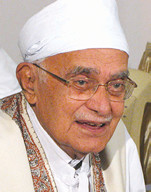
Dastur K. N Dastoor Meherjirana: "No guarantee of success"
In one of the earlier meetings of Doongerwadi Advisory Committee, Dasturji Firoze Kotwal had said that he was against the solar concentrators right from the beginning of their advent. (I was present in the meeting.) Has he been informed that the present project recommends to use the solars?
And look at the words "segregation.” Is it suggested that bodies in all "doubtful” cases are to be segregated and taken to solars?
BPP trustees are to assume responsibility to ensure that no deceased body brought to the dakhma should have the slightest trace of diclofenac. How would you discharge this responsibility? Is it proposed that every dead body should be first subjected to a post mortem before sachkar? This will generate an uproar in the community. The paper says that such postmortem will be logistically impossible and that most Middle Eastern faiths abhor this; so do the Parsis. There will be serious objections for religious as also sentimental reasons. The paper says that the slightest trace of diclofenac oriented drugs would result in suspension of the whole experimental system. The trustees will be responsible for the resulting chaos.
A question arises whether BPP trustees have a right to violate the age long traditions, procedures and practices in the name of an experimental venture, the success of which is extremely doubtful as pointed out by the experts themselves.
Further, can BPP utilize huge amount of the funds in their administrative charge for an object which is beyond the specified objects permitted by the provisions of the trust?
Let us now look to the religious aspect of the matter. There are two authentic books wherein the ceremonies of consecrating and establishing a dakhma are described. One is The Religious Ceremonies and Customs of the Parsees by Jivanji J. Mody. The other is in Gujarati, Dakhmani Buland Zarthosti Taleysam by Faramroz Chiniwalla. The first book tersely describes the religious procedure of building the Tower of Silence which we call dakhma. The second book is much more elaborate; it describes the religious procedures in greater details and presents the mystical aspect hidden in each step.
The basic requirement of the dakhma is this: the actual Tower of Silence should be a place for a dead body; a body is a naso meaning a decaying thing; the land on which the Tower of Silence is built and the Tower itself must remain sanctified for a long period in spite of the fact that it is the house of decay.
The kodari (the axe), the tana ceremony and the consecration rituals of yazashney and vendidad performed in the bhandar (central well) are meant to make the inside of the Tower remain sanctified for a long time.
That is why nobody except the duly ordained khandhias and nassessalars are allowed to enter. That is why the final benediction is made outside the entrance gate of the Tower. That is why the final visitors who are present for the last salutation are required to recite Sarosh Baj, take taro and do kusti, because while bowing down to the dead body for the last time, they were so near it that their own aipi (the surrounding of their body) must have absorbed naso.
The present project will violate each of the aforesaid religious requirements and many more (resulting in the infrastructure being run) like an administrative complex (with) hospitals for the birds and their transportation, the entry of all and sundry visitors, the likely falling of the dead birds in the dakhma, feeding the vultures the flesh of other animals. All these and several other actions and events will destroy the taleysum, the fields of Yazatic energies, which are generated by the consecration ceremonies.
It is in the interest of the Parsi community and the safety of the dakhma land that BPP trustees do not take up this experimental project and invite heavy personal responsibilities on their own good selves.
Dastur K. N. Dastoor Meherjirana
◆ ◆ ◆
From the archive