
Politics and Policy
“Surprised and perturbed”
The aviary project is fraught with practical dangers and doctrinal objections
The proposal to set up an aviary at Doongerwadi has become an issue for discussion and debate within the community. All the dasturs (high priests) have made known their views through the print and electronic media, interviews, etc. Many have asked me why I have remained silent so far, the reason being I wanted to have candid discussions with Dasturs (Dr) Kaikhusroo JamaspAsa, (Dr) Firoze Kotwal, (Dr) Peshotan Mirza, K. N. Dastoor Meherjirana, Cyrus Dastur to discuss threadbare, various issues concerning this project. I had requested for a meeting of the Council of Vada Dasturs but was informed that there was no need for the same as they had already made up their minds in the matter…
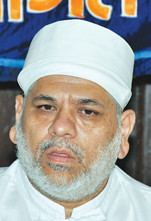
Dastur Khurshed Dastoor: grave reservations
I am indeed very surprised and perturbed at the haste with which the aviary project is being sought to be pushed through, without considering various drawbacks of the project.
The proposal to establish an aviary is nothing new. It was considered earlier too in 1999-2000 by the Bombay Parsi Punchayet (BPP) but did not fructify as some of the aspects of the aviary were found to be doctrinally unacceptable, and about which some of the dasturs had written to the BPP.
I am rather surprised that the views found to be doctrinally unacceptable in 1999-2000 have now been given a go by in 2012. In the year 2000 JamaspAsa and Kotwal had expressed views that contradict what they have now written.
There are three important issues that should be considered and resolved before the aviary proposal is introduced: Some contradictions on the issue of feeding alternate diet of different meats to the birds in the aviary; the issue of vultures being mortally affected by diclofenac-administered cadavers; the issue of netting covering the proposed aviary with an active dakhma.
There is no doubt in my mind that the birds will have to be fed alternate forms of meat from time to time. I rely on the statements of Jemima Parry-Jones made in 2000 when the aviary project was also being considered and recent statements of Dr Vibhu Prakash, principal scientist, and Homi Khusrokhan, president of the Bombay Natural History Society (BHNS), as recorded in the synopsis of the vulture project workshop held on July 19, 2012.
No assurance to WAPIZ
The WAPIZ Page of September 28, 2012 states, "Some of the ultra orthodox feel strongly about alternative feed being fed to the vultures at Doongerwadi. The vultures will feed ONLY on human corpses at Doongerwadi. No alternative feed will be given to the vultures at Doongerwadi. This is an assurance given by Dr Vibhu Prakash, the vulture expert who is setting up the aviary. In fact he has said that no meat will be given to the vultures even at the facilities set up at Ambawadi, which is the place where the BPP’s non-Parsi staff are housed.”
The WAPIZ statement reproduced above is nothing but misinformation to mislead the community. On enquiring with other BPP trustees I was informed that no assurance has been given by BNHS or any of their personnel in line with what has been published on the WAPIZ Page.
Doctor-patient bond
In the minutes of the Doongerwadi committee meeting held on July 31, 2012, which barring Dastur (Dr) Peshotan H. Mirza and I, no other dasturs attended, it has been recorded that Dr Homi Dhalla once again emphasized… that even 0.008 percent of diclofenac in a human cadaver can kill a vulture and hence one diclofenac-administered cadaver has the potential to exterminate 200 vultures at a time.
No action has been taken as on a date (to be fixed) by the BPP to obtain written opinions of well-known doctors on whether they would be agreeable to forgo use of diclofenac for Parsi patients. The correct course of action should first be to ascertain whether it would be legal for medical practitioners to consider non-medical issues such as welfare of vultures when treating patients to relieve their pain and discomfort due to various ailments.
Are we seriously so naive as to believe that except for a minuscule minority, community members would opt to endure pain just for the welfare of vultures?
It is also very important that before embarking on the project the BPP should first present a scientific paper on the methodology they would use to differentiate which human cadaver contains traces of diclofenac.
The so-called ‘dip stick’ method is still reported to be in R&D (research and development) mode overseas. No acceptable or approved method is available at present. What then is the hurry to rush into the project, endanger the lives of an endangered species of birds, which will surely invite the ire of the authorities?
Dr Asad Rahmani, director of BNHS, in a letter dated August 17, 2009 addressed to BPP trustee Khojeste Mistree, has written: "I hope you will remember that we had detailed discussions on this issue with you and your colleagues and we had specifically said that unless members of your community stop using diclofenac, it will not be advisable to use vultures for disposing of the bodies because they will die of kidney failure, as happens when they feed on livestock carcasses injected with veterinary diclofenac.”
In the same letter it has been mentioned in the penultimate paragraph: "Looking to the situation of widespread use of human diclofenac as a painkiller by your community, we are not interested to start any vulture conservation breeding center in Bombay.”
After these categorical views have been made known, in my opinion, it would amount to a breach of ethics on the part of the BPP trustees to rush into this project before taking necessary steps to eradicate the use of diclofenac in the community.
With regard to netting covering the proposed aviary, JamaspAsa wrote in a letter dated June 6, 2001 addressed to Dhalla expressing reservations about solar panels. "In my opinion, from a strict doctrinal point of view, the rays of the sun must fall naturally upon the body to ensure khurshed nigarishni as understood in the texts.”
Further, I have grave reservations if it will be possible to construct an aviary and connect it with an active dakhma through netting by using an exclusive Zoroastrian volunteer force. Even with the best of intentions, skilled labor will be required for such a project. I doubt if it will be possible to set up a voluntary or even paid labor force of only Zoroastrians to carry out this type of work.
I have come to the conclusion that to introduce the aviary project without addressing the various concerns will not be in the interest of the community but will ultimately result in the total collapse of the system of dakhmenashini.
(Edited excerpts from a Press note dated October 1, 2012 issued by Dastur Khurshed Dastoor of Udvada)
◆ ◆ ◆
From the archive