
In Memoriam
The atomic ace
Died: Dr Homi Nusserwanji Sethna, 87, eminent nuclear scientist who was appointed principal secretary to the Government of India and former chairman of the Atomic Energy Commission (AEC) on September 5, 2010 in Bombay following pulmonary fibrosis.
"Dr Sethna was a brilliant nuclear scientist and an exceptional human being. His contribution to the development and production of nuclear materials and thereby to the country’s efforts to build energy security is immense. He was a pillar of India’s nuclear energy program in the early years,” noted a condolence letter from the Prime Minister of India, Dr Man-mohan Singh, adding, "He was widely respected and admired and had the ability to inspire young scientists to give their best in the national cause. His life’s work is a saga of dedication, brilliance and patriotic public service. I personally had a long and fruitful association with Dr Sethna and benefited greatly from his deep knowledge, insight and vision.”
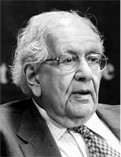
"Dr Sethna was one of India’s pioneering nuclear scientists who played a crucial role in the successful conduct of India’s first peaceful nuclear tests way back in the year 1974. Even after his retirement Dr Sethna held many important positions and continued to contribute to the task of nation building,” the governor of Maharashtra K. Sankarana-rayanan was quoted in the Afternoon Despatch and Courier of September 7, 2010. .
At a time when the country was under tremendous pressure to sign the Nuclear Non-Proliferation Treaty or face the threat of the superpowers withdrawing their cooperation, Sethna managed to convince then Prime Minister Indira Gandhi to execute the first peaceful nuclear explosion project ‘Smiling Buddha’ at Pokhran in 1974. On the successful completion of the test he sent a coded message to Gandhi stating ‘Buddha is smiling.’ His stellar role earned him the Padma Vibhushan, the country’s second highest civilian award the next year. During his fulfilling life he received nearly a score of honors and was even appointed the sheriff of Bombay in 1991.
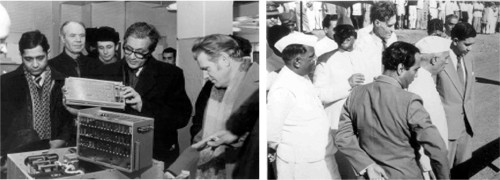
(Top) Dr Homi Sethna, (Above left) with a visiting delegation and (right) with Dr Homi Bhabha and Jawaharlal Nehru (in front row), Y. B. Chavan and Jagjivan Ram (behind)
"In the years following the unilateral abrogation of the Tarapur agreement and the global isolation we faced in the wake of our first nuclear test in 1974 I witnessed his inspirational leadership… which motivated our scientific community to rise to the challenges and successfully pursue our atomic energy program,” remarked Ronen Sen who was the former Indian ambassador to the US.
Respected for his in-depth knowledge and rare insights, at the age of 75 he was appointed member of the Research Advisory Committee of the Planning Commission, Government of India. Several AEC chairmen acknowledged the commitment of their predecessor who had served as chairman for a record 11 years: M. R. Srinivasan recalled, "Homi was never the kind of person to shy away from challenges. He rose to the occasion at a time when the industrial capability of the country was limited, cooperation from other countries was minimal and the task before him was to set up nuclear power generation as an Indian activity.” To P. K. Iyengar he was a "very daring engineer,” while R. Chidambaram commended his "excellent leadership.” Dr Anil Kakodkar viewed him as "a rare leader, one who thought far ahead. Name any important thing in Indian nuclear science and he has had a role to play.” Current chairman Srikumar Banerjee gave him credit for setting up the first reprocessing plant in Asia and for successfully completing "the indigenisation of the pressurized heavy water reactors.”
"While Dr Homi Bhabha, the founding father of the Indian nuclear program, was a great visionary, Sethna was the chief architect. As a close confidante of Bhabha he dedicated himself to translating his vision into a reality,” wrote Dr A. N. Prasad, former director of BARC (Bhabha Atomic Research Centre). It was at the Willingdon Club swimming pool that Bhabha had spotted Sethna and invited him to participate in his nuclear vision for the country. With Bhabha’s untimely demise in an air crash it was Sethna who carried forward his dream. For the production of nuclear grade uranium, thorium extraction and spent fuel reprocessing to separate plutonium, Sethna conceived and started programs from scratch. In fact, the launch of the spent fuel reprocessing program in 1959 brought India in league with USA, Russia, UK and France, the only four nuclear weapon states who were familiar with this technology.
A force to reckon with in international circles, for 15 years he served as member of the Scientific Advisory Committee of the International Atomic Energy Agency and in 1958 was made deputy secretary general to the United Nations International Conference on Peaceful Uses of Atomic Energy held in Geneva. Before India hosted a similar conference in 1980 in Delhi, Sethna with his team visited Vienna to understand the logistics, recalled Jamsheed Kanga who as an Indian Administrative Service (IAS) officer deputed to the AEC gained "vast experience” under Sethna that "helped me in my future assignments as municipal commissioner and secretary to the government.”
After retiring as chairman of AEC Sethna was on the board of directors of several public and private limited companies like The Bombay Dyeing and Manufacturing Company Limited, Trent Limited, B. R. T. Limited, and was chairman of Cabot India Limited, WIMCO Limited and DUA Consulting Private Limited. Chairman of Tata Electric Companies for 11 years, Sethna impressed Adi Engineer who was then executive director of Tata Power as "an intellectual giant… It wasn’t easy to report to a man of such brilliance. But at the same time, working with him was an enriching experience.”
One of Sethna’s mentors in Michigan, 95-year-old John McKetta, who served as the chairman of the US National Energy Policy Commission, recalled his prediction several decades earlier that Sethna was among his prized students who would "zoom in their fields… I watched their meteoric professional successes as the years passed.”
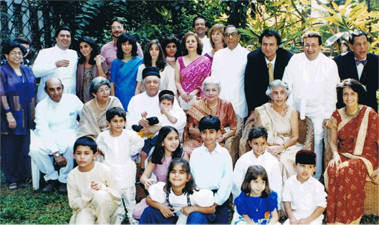
Homi and Gool Sethna (in the center) with three generations of the Sethna family assembled at Hormuz Dadabhoy’s navjote
Before he went to the University of Michigan Ann Arbor, Sethna had studied at Bombay’s St Xavier’s School, St Xavier’s College and the University Department of Chemical Technology where having stood first he qualified for a scholarship. But his dad, a well known solicitor, insisted he turn down the offer on the rationale that while he could afford to study abroad at his father’s cost, someone more deserving could avail of the scholarship. It was on a troop ship, working on the deck, that Sethna sailed at the end of World War II in the company of (Dr) Minu Dastur, the noted engineering consultant. (The two became family when Sethna married Gooloo Cooper and Dastur wed her sister Mehroo.) When their ship was torpedoed it was the Red Cross who helped them reach their destination. On the completion of his studies Homi chose to return to India, the father-son duo sharing a strong bond. The patriotic Indian was convinced that India would emerge as an economic and technological power and sought to convince his children and grandchildren not to migrate to foreign lands.
After gaining experience at Imperial Chemical Industries (ICI), Manchester as trainee under the Tata-ICI scheme, on his return to India in 1949 he joined Indian Rare Earths Limited, a public sector undertaking of the Government of India entrusted with the responsibility of setting up the Rare Earths plant at Alwaye, to be followed by the thorium and uranium plants, as noted his curriculum vitae. In the late 50s he was project manager of a 40 MW research reactor (CIRUS). His tryst with the Atomic Energy Establishment at Trombay (now known as BARC) commenced in 1959 as its chief scientific officer and he later became director of the engineering group with the responsibility of designing and constructing the plutonium plant at Trombay and the uranium mill at Jaduguda in Bihar.
A member of several prestigious science and engineering institutes, as also chairman of the board of governors of the Indian Institute of Technology in Bombay and Delhi, he was associated with different academic bodies in an advisory capacity. Being associated with the Jamnalal Bajaj Trust and Mahindra Scholarship he would spend hours interviewing candidates so that the most worthy student was selected.
A trustee of institutions like Sir Ratan Tata Trust, Sarvajanik Seva Trust, Ness Wadia Foundation, his children are happy he chose not to become a trustee of the Bombay Parsi Punchayet. In an interview with Parsiana (see "The Reluctant Sheriff,” September 1991) Sethna had conveyed, "I don’t believe in what the Parsis say (about not accepting converts). All religions started with conversion; Zoroastrianism too. You can’t suddenly decide that the religion will accept no more converts… To me religion is an intensely personal thing. It has nothing to do with anybody else.” Whilst proud to be a Parsi, Sethna was "not into rituals” although the family did visit the agiary on birthdays and New Year and special occasions.
Making time for Gooloo and their three children, the late Noshirwan, and Rustam and Meher was always a priority with Sethna despite his busy schedule that required him to interrupt his night sleep to make a trip to the plant to ensure that no substandard materials were used in construction. A writing pad and pen were his constant bedside companions so that he could jot down his ideas in the middle of the night and then resume his sleep. "His thinking was very sharp. He would sit down and teach me which was very beneficial to me,” acknowledges Rustam.
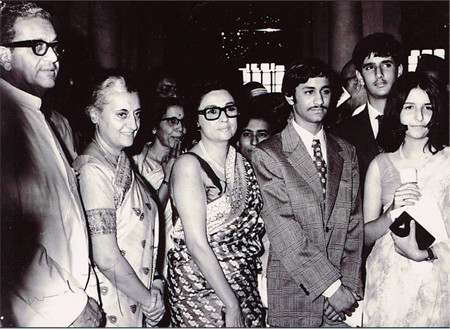
On receiving the Padma Vibhushan (from left) Dr Homi Sethna, Indira Gandhi, Gooloo, Noshirwan, Rustam and Meher Sethna
Regarding him as a "human calculator,” Meher mentioned how he invariably did his multiplication in Gujarati with the foundation he had received from his Mehtaji (tutor) who had made sure that he knew the multiplication tables of even ½ and ¼. While their mother who was a medical practitioner was keen that one of the children pursue her field, their father would offer a "good perspective” and encourage the children to take their independent decisions. Being very well read, his knowledge was extensive, noted Meher. She also referred to his ingenuity at cleaning stains with his strong foundation in chemistry citing the instance of her husband Kavas who when staining his white dagli that went for a wash with the red topi inadvertently left behind in his pocket proffered it as a challenge to his father-in-law who succeeded in making it spotless once again! Yet another amazing art was his ability to accurately deduce the calorie value of any glass of wine.
Being "very modest himself, he did not like boastful people.” Known to dot his ‘i’s and cross his ‘t’s he believed in saying what he wanted to say. "Very straightforward yet compassionate he would tell you things you may not want to hear,” observed Rustam. A no-nonsense demeanor notwithstanding, he was very approachable and one of their neighbors recently cited an instance when as a young boy having mistakenly broken a window pane of their residential building with his ball was taken to task by the watchman. To salvage the situation, he desperately sought Sethna’s intervention and rushed into the same elevator as Sethna who granted him 12 seconds — the time taken by the elevator to reach his floor — to apprise him of the problem! On learning of the lad’s predicament he instructed the watchman to excuse the errant child.
When lung complications restricted his mobility because he needed to be administered oxygen round the clock, he still kept himself abreast of current developments by watching the news on BBC and CNN. At one time a regular at western music concerts, in later years he enjoyed listening to opera music at home, his favorite being La Boheme. Barely five weeks prior to his demise, when Gooloo succumbed to colon-rectal cancer, the family considered it ironic that she was treated at the Tata Memorial Hospital that came within the purview of the Tata Memorial Centre where Sethna had served as chairman for several years.
"Being loved and influenced by a man of his achievements/stature for 18 years of my life has given me a unique and personal perspective of history of not only our country but also of world issues and has given me a fundamentally different perspective of viewing things,” conveyed his grandson Hor-muz Dadabhoy who gave his "Grandpi” credit for teaching him the "values of absolute honesty and integrity and giving me the confidence to stand up for my beliefs, irrespective of the opposition.”
The sterling scientist is survived by his son Dr Rustam, daughter Meher Kavas Dadabhoy, brother Rusi and sister Dhun Adenwalla.
◆ ◆ ◆
From the archive