
In Memoriam
Endearing economist
Died: Dr Fredoon (Fredie) Ardeshir Mehta, 76, chairman and managing director of several Tata companies as also multinational firms like Siemens (India), on June 19, 2005 in Bombay following an illness.
Died: Dr Fredoon (Fredie) Ardeshir Mehta, 76, chairman and managing director of several Tata companies as also multinational firms like Siemens (India), on June 19, 2005 in Bombay following an illness.
"He left his mark in every company that he was associated with and every sphere of activity that he indulged in,” commented N. J. Sheth, chief executive officer and director of Tata Economic Consultancy Services, describing Mehta as "a colossus who straddled several spheres of intellectual and action world during his long working life of over 50 years.” "We at Tata Investment Corporation… shall greatly miss him and his vast knowledge and experience which helped us enormously in managing the affairs of our company for so many years,” remarked N. A. Soonawala, vice chairman, Tata Sons Limited, in his condolence message. Tata Group chairman Ratan Tata observed, "I will always remember Fredie as one of my close colleagues with whom I have interacted for so many years.”
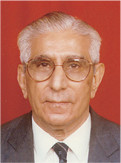
Mehta: per-ceptive mind
The first recruit to be selected to the newly formed Tata Administrative Service in 1956, within eight years he was appointed economic advisor to the Tata Group. In the next eight years he was the youngest, at the age of 42, to be made director in the parent firm of Tata Sons. In the coming years the different Tata firms where he served as chairman or managing director were Rallis, Ahmedabad Advance Mills, Tata Investment Corporation, Ewart Investments, Forbes Group (which included Goodlass Nerolac and Eureka Forbes), Tata Finance and Tata McGraw-Hill Publishing Company Limited.
"He was a most impressive person with a deep knowledge of economics and his memory for facts and figures was truly phenomenal,” stated Dr Jamshed J. Irani, director, Tata Sons Limited, in his condolence note, adding, "I had enjoyed many happy moments with him in intellectual discussions and he was a source of inspiration to all of us in Bombay House.”
Not only had Mehta left a lasting impression on his co-directors but on his subordinates too, as acknowledged by C. A. Karnik, director, human resources of Forbes Gokak: "The employees fondly remembered the gentle ways of Dr Mehta, his affection and consideration for everyone and his concern for the well-being of the employees…as an elder member of the family.” Sunil Bhandare who had worked as Mehta’s executive assistant at Forbes Gokak and later rose to become economic advisor acknowledged, "What I have always admired most in him was his capacity to withstand adversity with calm and composure…disciplining of the intellect, the mind, the emotions, the will… it means a poise of the soul which enables one to look at life in all its aspects evenly.”
Successive finance and commerce ministers as also senior officials in the Government consulted Mehta and he was appointed on different committees by the Government of India from time to time but that did not deter him from criticizing India’s economic policies until 1991, notes Marzban Giara in his life profile of the veteran economist. He had served as director on the central board of the Industrial Development Bank of India, was the only non-official member of the committee on import substitution, the secretary general of the special committee on industrial licensing, on the committee appointed by the Reserve Bank of India to review monetary policy, on the panel of Indian industry appointed by the finance ministry for framing budgetary policies and barely five years ago was appointed member of the National Statistics Commission. The International Labour Organisation invited him to be a member of the expert committee to draft a code of conduct for multinationals.
Mehta had the "courage of his conviction to declare his views openly, the mark of a true liberal. While economics was his forte he had definite views on societal, political and cultural issues. He was actively associated with the Indian Committee for Cultural Freedom of which he was a patron,” noted a tribute by S. V. Raju in Freedom First (July-September 2005). "An economist who believed in balance,” Mehta was convinced that "India needed a strong manufacturing sector and could not ignore its agriculture ever. He was a hawk on foreign policy…On current affairs his insights were uncanny,” summed up Mphasis chairman and chief executive officer Jaithirth Rao in The Indian Express of September 7, 2005.
Among the foreign companies/organizations with which Mehta was associated were the Indo German Chamber of Commerce where he was president, Siemens (India) where he served as chairman from 1988 to 2004, SKF Bearings (India) and Banque National de Paris where too he was chairman, Bayers India, Burroughs Wellcome, Citibank where he was appointed director. In 1992 he was made the consul general for Sweden in western India and subsequently awarded the Royal Order of the Polar Star by the Swedish Government in appreciation of his contribution to the cause of Indo-Swedish relations.
As noted Dr Klaus Kleinfeld, president and chief executive, and his colleagues on Siemens Aktiengesellschaft, "In our company Dr Mehta will always be remembered with great appreciation as a successful business leader and an inspiring partner in any exchange of ideas. His many thoughtful recommendations assisted the management of Siemens Limited India to get a clearer picture of the courses of action to be taken and thus contributed to mastering the challenges during the last 25 years.”
"Sitting as the chairman of the board of directors of a multinational corporation he was always humble and gave respect to other members of the board, never trying to throw his weight or exercise his authority as the chairman,” remarked Mansingh Bhakta, partner of the legal firm Kanga and Company, adding, "He had great ability to carry others with him and while in the chair at the annual general meetings of large companies he always managed to handle the shareholders – even hostile professional shareholders – with such tact that everyone used to go by what he said. I had told him that he must have created a record of being the only non-owner person who was chairman of the largest number of public companies in the country. However his usual humility never permitted him to admit the record.”
"He gave us such a wonderful opportunity of learning through interactive process for which many of us from the department of economics and statistics are immensely grateful to him,” declared Prof Jiban Mukhopadhyay of the S. P. Jain Institute of Management and Research, adding, "Spending even 10 minutes with him gave me some insights on certain economic issues which I subsequently probed and inevitably widened my horizon and deepened my areas of specialization…Had he been in the academics we would have celebrated his going to Stockholm for bringing yet a Nobel in economics for the country.”
At the London School of Economics (LSE) Mehta had co-authored The World Economy with the famous economist Dr Gunnar Myrdal. He had also contributed to Myrdal’s highly acclaimed The Asian Drama. Besides freelancing for innumerable journals and newspapers Mehta had supervised the writings and publications of 15 economists and technocrats at the behest of the Ford Foundation and ultimately his own book India 2000 AD was published by the Ford Foundation.
Simple and easily approachable, Mehta believed in the Gandhian principles of life, practiced yoga as a pupil of B. K. S. Iyengar, and was a great admirer of Jamshed Mehta, the Father of modern Karachi. He was very fond of Indian music and took keen interest in cricket having played as wicket keeper during his early days at St Patricks School. His brilliant academic career included years of study at St Xavier’s College, standing first class first at Bombay University’s Inter Arts examination and again securing the same rank at the BA examination. After his MA in politics and economics he proceeded as a J. N. Tata Scholar to LSE from where he earned his MSc in economics and doctorate in international economics. While at the LSE he did odd jobs to support himself, notes Giara. As a 16-year-old in Karachi he had heard Mohammed Ali Jinnah address a large gathering and as noted lawyer Navroz Seervai remarked, Mehta advocated for "greater economic ties between India and Pakistan which alone would ensure closer political ties and people-to-people relationships.”
On behalf of the Leslie Sawhny Endowment Programme for Training in Citizenship, Leadership and Public Service, Arvind Deshpande remembered Mehta addressing several of their training camps and seminars. In addition to serving as trustee of the J. N. Tata Endowment he was a trustee of Sir Dorab Tata Trust, one of the biggest philanthropic trusts in India.
"Keenly involved in a wide array of intellectual pursuits to which he contributed in abundant measure (Mehta) had a very perceptive mind and gave the benefit of his immense knowledge and intellect to all those who approached him,” remarked Minoo Shroff, chairman of the Bombay Parsi Punchayet.
An optimist who took keen interest in the welfare of the community Mehta was instrumental in giving employment to many Parsis. He believed that Parsis have forgotten to struggle for life because they got things easily. He silently worked for educating young children in Zoroastrianism. In a speech delivered at a two-day seminar on "The contribution of the Parsi community to western India between 1818-1920” Mehta had remarked nearly eight years ago: "The forces of modernization, globalization and secularism are all conspiring to wipe out our community, but our reactions to these phenomena must not be hysterical at one end nor defeatist at the other. It is necessary to get the right perspective… We have either a total indifference to religion or an outward ‘Zoroastrianism-on-wheels’ approach to religion. Almost all the great leaders of the Parsi community in the past were fiercely patriotic but even more fiercely dedicated to our religion… Are we prepared to resurrect our faith and fire? Else be prepared to die out in the coming decades, unwept, unhonored, unsung. The evolving tragedy is compounded by singing our praises for the past, but having no comprehension of the perils of the future, leave aside solutions for them. Future generations will not condemn us for perpetrating this holocaust because there will be no future generations in the first place. Even today it may not be too late for the Parsi community to give itself a wake-up call; too much of what we are doing today resembles the discussion of a lunch menu on a sinking Titanic.”
"Discussions on human capital got him excited,” noted Rao, adding, "Fredie started his career in the first year of industrial licensing and his active professional career ended around the time Narasimha Rao liberated our country. The fact that the enormous talent and energy of his generation were spent fighting shackles and arguing against controls and building business and industry despite every disincentive needs to be acknowledged. They kept the faith. They kept the candle lit…”
The respected economist is survived by his wife Keti, and sons Kayumars and Khushro.
◆ ◆ ◆
From the archive