
Zoroastrians Abroad
Religion with responsibility
After duly studying and understanding the religion, priests in North America are fortified to take decisions, independent of India, says Ervad (Dr) Jehan Bagli
"We have an ailing and aging priesthood and community,” declared community scholar Ervad (Dr) Jehan Bagli without mincing words. "Respect is not something you demand but earn. Priests have to present a knowledgeable front to the community. That is what I’m trying to do in North America,” stressed the former president of the North American Mobeds Council (NAMC), current chairperson of the Research and Preservation Committee of the Federation of Zoroastrian Associations of North America (FEZANA) as also of the Lecture Committee of the Zoroastrian Society of Ontario.
"Find commonalities and work together for progress rather than getting hung up on differences,” advocated the senior priest observing the friction between the orthodox and the reformists when visiting Bombay in early 2010. He cited his own example of co-authoring books with Ervad Adi Unwalla "although our thinking in certain areas may be way apart.” The duo have already published two works, Understanding and Practice of Jashan Ceremony in 2001 and Understanding and Practice of Obsequies in 2006. Their third collaboration "Understanding and Practice of Navjote and Wedding Ceremony” is at the manuscript stage.
He refers to the foreword to one of these books being penned by Dastur (Dr) Firoze Kotwal. Where feasible, the North American priests "consult the high priests in India. In other things we go ahead and do what is necessary because we are convinced that what we are doing is no infraction, no breaking of rules, regulations or commandments of any kind.”
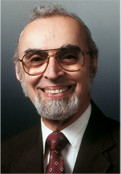
Ervad (Dr) Jehan Bagli: "find commonalities”
Their mobedyar program in North America where behdins, or athornans who have not been ordained as navars, supplement the efforts of regular priests serves to "fulfill the religious calling of the laity desirous of helping the community” through a specially devised curriculum, explains Bagli. Further, they have not restricted the training to only behdin males but extended it to "any Zarathushti” realizing that ancient texts allude to ladies performing religious ceremonies, Bagli refers to the proposal he had initiated during his last year as president of NAMC.
In the context of welcoming to the faith all people desirous of following the teachings of Asho Zarathushtra, Bagli remarked that one has to distinguish conversion as a missionary activity that is different from one’s own acceptance of the faith. "People don’t differentiate and deliberately keep the water muddy... Unfortunately people at the helm are sometimes so efficient at disseminating misinformation that they misguide the community. Oratorial skills can be used beneficially or they can be misused... If you call yourself a Zoroastrian, assume responsibility. That is what people have to remember when making decisions and taking actions.”
It was during his visit to India that senior counsel Iqbal Chagla’s statement regarding Zoroastrian high priests ("There is no such thing as a high priest and a low priest. They are all ordained priests.”) was splashed in the media making Bagli who was ordained as a navar-martab in Navsari comment, "The office of the high priest is open to question... These people are appointed by trusts or fire temples.”
Speaking in favor of the two Bombay priests Ervads Khushroo Madon and Framroze Mirza who are banned from performing ceremonies in institutions controlled by the Bombay Parsi Punchayet (BPP) for daring to perform the navjotes of children of outmarried Zoroastrian ladies or prayers for those opting for cremation, Bagli maintains, "I have no personal axe to grind... I appreciate the courage of their convictions. The community has to understand their efforts. I don’t think they are doing anything against the religion of Zarathushtra... Does an organization like the BPP have the right or jurisdiction to pass such a ban on the livelihood of a person who is attempting to propagate the religion of Zarathushtra?” He interacted with several priests when in Bombay and assumes they are not speaking up because their livelihood is involved.
Having devoted "much of his time and energy to understanding and disseminating the knowledge of Zoroastrianism,” Bagli is committed to the cause of "perpetuation of the Zarathushtrian faith as a universal way of life in North America and around the world,” notes an introduction. Currently a research consultant after his retirement as Distinguished Research Fellow from Wyeth Pharmaceutical Research, Bagli was awarded fellowships by the US Public Health Service, US National Institute of Health and the National Research Council of Canada besides being elected fellow of the Chemical Institute of Canada.
His study on topics such as priesthood, Zarathushti rituals and ceremonies, duality, the calendar, universality as applicable to the Zoroastrian religion have been widely published. Additionally, Bagli has lectured extensively at conferences and symposia when invited by Zoroastrian associations in Canada, USA, London, Karachi, Sydney, Bombay, Calcutta... Founder member and president of the Zoroastrian Association of Quebec, he was also the founder editor of FEZANA Journal. Four years ago he was in South Africa with another Zoroastrian priest to guide the Zoroastrian community in Durban and Johannesburg in matters of Zoroastrian rituals. His talk in Bombay on January 13, 2010 under the aegis of the Association of Inter-Married Zoroastrians was on "Zoroastrianism — Voyage of a Living Faith through Millennia.”
For the World Zoroastrian Organisation (WZO), Bagli has played a supportive role, his term as vice president having just ended. Now a director on the international board he maintains the WZO has rendered "tremendous amount of service to the community... looking after the needy, collecting funds in times of calamity...” An activity dear to his heart is the effort and funds expended in organizing "symposia and seminars, disseminating educational material around the world.” Unfortunately when "individuals get involved in their personal agenda it causes a breach of faith,” he declares, keen to see the organization continue to perform the good work that it has been doing for nearly 30 years.
"Zoroastrianism will flourish but the brand of Zoroastrianism that will evolve may not necessarily be traditional,” prophesies Bagli who has "seen the efforts of that type of orthodox thinkers dissipating over a period of time... With the turn of the generation, thinking will be less and less orthodox.” The youth are "very conscious of living a Zoroastrian way of life which is just as or perhaps more important than a ritual life. The future for the third and fourth generation Zoroastrians is bright,” says Bagli happy that the youth in North America meet as often as possible, attend seminars and maintain their identity despite being immersed in diverse cultural waters. Pleased that the active and progressive young Zoroastrians exhibit an "an extreme store of intelligence,” he hopes that "wisdom will follow intelligence.”
◆ ◆ ◆
From the archive