
Books
"A strong beacon"
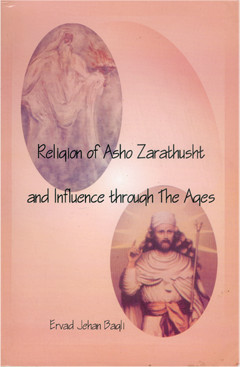
Religion of Asho Zarathusht and Influence through The Ages by Ervad Jehan Bagli. Published in 2003 by Informal Religious Meetings Trust Fund. Pp: VIII + 201. Price: US $ 10/Pak Rs 590. (The book can be ordered from Ruby R. Taraporewala, 10, Jamshed Bagh, Opp Holy Family Hospital, Soldier Bazar Road, Karachi 74400, Pakistan.)
Books are our most precious heritage, more than heritage buildings! More so when they pertain to ancient revealed religions. Posterity shall greatly benefit from such heritage!
The latest addition to the already existing books by Zoroastrian and western scholars on our religion is Ervad Jehan Bagli’s Religion of Asho Zarathusht and Influence through The Ages.
An erudite scholar, president of the North American Mobed Council and a distinguished research fellow at Wyeth Research Institute, Bagli’s book is a compilation of papers presented by him over a period of several years. They have been grouped under five heads: "History of Zarathushtrian religion,” "Zarathushtrian religious calendar,” "Prayers and spirituality,” "Theology and doctrine,” and "Socio-Religious topics.”
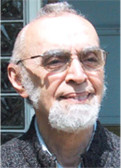
Bagli: core of the faith
In a superb Foreword, the internationally reputed scholar and leader, Dr Farhang Mehr, former foreign minister of Iran and professor emeritus of International Relations, Boston University, Massachusetts, USA discusses the place of rituals in Zoroastrianism.
"Rituals are different in function and nature. Rituals performed for the anniversary and death of the Prophet, the initiation into the Zarathushti fold (the Novjood ceremony), marriage and death are indispensable for preservation of religious status and solidarity of the community. These are time-tested rituals, endorsed by the religious community, although they may be modified in the course of time. They are meaningful and beautiful.
"Rituals related to the seasonal religious festivities, national-religious festivities... entail some expression of gratitude for blessings sometimes taken for granted.
"The Zoroastrian religion is not free of rituals dating from pre-Zarathushtra days when people believed in multitude of deities and power of miracles. For instance, in special ceremonies performed for the recovery of terminally ill, some rituals require communicating with the supernatural world and asking for a cure or miracle. As Zoroastrians and non-Zoroastrians learn more about their religious doctrines, they will come to realize the importance of relinquishing the practice of such rituals.”
In his Preface Bagli notes, "In my study of Zarathushtrian religion a strong beacon that has consistently enlightened itself is that the Gathic teachings of the first Prophet are truly a profound guide to a thought process that helps chart a way of life, for the entire humanity. Despite its antiquity, teachings of Asho Zarathushtra are as relevant today as they were in the era he propounded them. It is open to question, if the Prophet ever intended his discourses to become an organized religion as we recognize it today.”
Discussing the Gathas the author writes, "The understanding and the interpretations of this scriptural text must vary, based on the intellectual ability of the culture to comprehend the reflective message.”
Bagli traces the worship of Ahura Mazda, the Lord of Wisdom that inspired Emperors Cyrus and Darius. With the growth of empire came also other influences, primarily that of the heretical belief in Zurvan, the God of Time, with Ahura Mazda and Ahriman as his two sons. Writes Bagli, "It seems clear that the fundamental Gathic principle of Freedom of Choice (Ys 31.11), with an unequivocal emphasis on the truth and the righteous way of lifestyle and progressive thinking (Spenta Mainyu) was entirely misinterpreted through the Zurvanic thoughts. In contrast the notion that Zurvan created Ahura Mazda and Anghra Mainyu (Av. Anra Mainyu — a term that does not appear but once, as such in the Gathas) and ascribed the task of all Good creation to Ahura Mazda was deeply rooted in the faith of that period. Zurvanites thus peacefully coexisted within the Zarathushtrian community and were often considered by some, in that era, as those who best understood the religion of Zarathushtra. This heresy caused the irreparable damage to the religion of Zarathosht by diminishing the majesty of the uncreated Lord of Wisdom — Ahura Mazda, and in times to come; in the face of evolving Christianity and Islam, the religion was portrayed as the one that promoted the idea of two Gods, one of good and the other of evil. The heresy had thus contaminated the core of the Gathic faith.”
Also, during the 45-year reign of Artxerxes II "the face of Gathic religion changed markedly. The monarch replaced the veneration of a sole Gathic Creator — Ahura Mazda, by a divine triad of Ahura Mazda, Anahita and Mithra, and he brought in the image worship in the form of the temples of Anahita; and Nabu-Tiri was incorporated into the faith as Tishtarya yazata. The evolution of Anahita temples in turn led to the genesis of the cult of fire in the form of places of worship, bringing into prominence veneration of another pre-Zarathushtrian divinity Verethraghna and markedly altering the Gathic interpretation of fire.”
The Greek influence on the Parthians demoted "the Gathic concept of fire, its relation to the purity and righteousness and the concept of Asha by this time are all but overshadowed by pomp and power of the observances of the royal fires. Prevalence of a strong influence of the Greek culture on the Iranian faith is evidenced by the names of Greek gods and goddesses in the inscriptions of the Parthian era...
"The Gathic religion proclaimed by Zarathushtra that taught good thinking through reflection of Vohu Mana; that charged every individual to contemplate and choose the true and righteous path; that preached a progressive and full life through Spenta Mainyu; that propagated to humanity to define their own salvation through good expression and actions; that only had teachers of religion — Ratu, in place of an organized priesthood; and, that was highly self-reflective, introspective and universal was markedly transformed at the end of the Sassanian dynasty.
"In that epoch, and what followed, the first revealed faith of mankind was highly cluttered with priesthood, and belabored with rituals that were imposed upon the laity for a price, to generate substantial revenue for the clergy. The Zarathushtrian church of the time highly influenced the interpretations and viability of communal life, fabricating the religion into a prescriptive rather than a reflective one, and through rigid imposition of the ritual code converted the universal message of the Prophet into an ethnic one...”
The section on ‘Consecrated Fire and Cremation’ is very topical. The author refers to a letter to the editor from Dr M. D. Disawalla ("Sanctity of dakhmas,” Readers’ Forum, Parsiana, February 2000) wherein he suggested "the only logical conclusion is to erect a modern electric crematorium at Doongerwadi.” Bagli emphasizes that "the idea is entirely rational and worthy of discussion from the vantage point of Zarathushtrian theology.” Our revered akabars, the trustees of the Parsi Punchayet, may do well to reconsider Bagli’s strong endorsement of Disawalla’s views. May an early and pragmatic decision be taken on this important issue, much to the satisfaction of the community.
"Books are those faithful mirrors that reflect to our mind the minds of sages and heroes,” said the great Gibbon. Bagli has faithfully mirrored to us the mind of our sage, poet, philosopher, Prophet Zarathushtra. Thomas Carlyle had emphasized, "If a book comes from the heart, it will continue to reach other hearts.” Bagli has written from the heart and hence this book touches us to the core. Mc Gosh had observed, "The book to read is not the one which thinks for you, but the one which makes you think.” Truly, Bagli sets our minds to think.
Capt (Retd) Hormazdiar J. M. Desai
◆ ◆ ◆
From the archive