
Zoroastrians Abroad
On a platter for priests
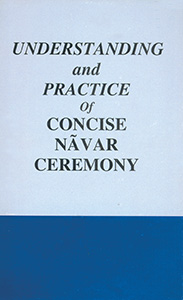
"At this time there is no book available in English that explains the navar ceremony in detail, describes the concise Yasna prayers specifically for a partial navar ceremony, and provides detailed ritual enactments embodied in the prayers. We therefore deemed it essential to fill that vacuum,” wrote Ervads Jehan Bagli and Adi Unwalla in their preface to Understanding and Practice of Concise Navar Ceremony, the 298-page book that was distributed to all the mobeds at the last annual general meeting of the North American Mobeds Council (NAMC) in May 2015.
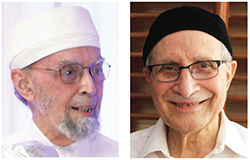
Ervads Jehan Bagli (left) and Jal Unwalla: filling a vacuum
This is the fourth offering that comes from their "Understanding and Practice” series: the first one published in 1999 was on the jashan ceremony; the second one in 2004 on obsequies; and the third one in 2010 on navjote and wedding ceremonies. Financial returns have never been of concern to the authors who only "recommend a donation of $ 10 be made to NAMC.”
Their last work was in memory of Unwalla’s wife Nergis and Bagli’s sister-in-law Arnavaz Mama, erstwhile managing editor of Parsiana, "who dedicated their lives to their families, friends and community.” This primer for the priests "is specially geared to give a background to our North American children. It could help navars in India too,” realized the authors.
As commented Ervad (Dr) Ramiyar Karanjia, principal of the Dadar Athornan Institute, in his foreword to the book, "Navar is an onerous responsibility as well as a right vested in the hands of a few — the athornan tolo, i.e. the priestly class. The priests and priestly families have to ensure that this sacred right is neither violated nor misused…A kachha navar (one who does not study religion extensively at a madressa but only undergoes four weeks of training at a fire temple), properly done, is acceptable in the Zoroastrian priestly tradition. However nowadays candidates for kachha navar do not even know a fraction of the prayers they are expected to learn, and the navar ritual often becomes a formality… The regimen given in this book is a must to make the child a kachha navar.”
 Whilst some years see two to four youngsters from North America being ordained as navars, there are other years when there may be only one, mentioned New Jersey based Unwalla who made time on his last visit to Bombay in October 2015 to present a copy of their works to Parsiana. Five years earlier Parsiana had interviewed Bagli (see "Religion with responsibility,” July 21, 2010) when their third collaboration was at the manuscript stage.
 Unwalla mentioned that the training imparted to priests today is quite cursory compared to the intensive training he had received when he spent six years at the Athornan Boarding Madressa (since renamed Dadar Athornan Institute) after which he joined the M. F. Cama Athornan Institute for another five years. Since his father Jehangir Cawasji Unwalla who prayed at the Boyce Agiary insisted that Adi become a full-fledged samel priest, qualified to offer boi at the Iranshah, the son had to undergo the arduous oral examination. Under this system, at an assembly of the two high priests and members of the Udvada athornan anjuman who wish to attend, the neophyte can be asked to recite any part of the sacred scriptures. By virtue of the veto rights enjoyed by every priest, a candidate can be declared unsuccessful and asked to reappear for the examination after a fortnight. "Three of us were asked to go back after 15 days,” recalls Adi who emerged stronger after the ordeal.
He was keen to study engineering but his father would not hear of it until a friend convinced him to permit Adi to pursue secular education. After two years at St Xavier’s College, Adi qualified as a civil engineer from the Bangalore Engineering College and took up employment with Shapoorji Pallonji. Shortly after joining them he remembers mustering courage and approaching Shapoorji for 18 days’ leave to pray at the muktad, a privilege immediately granted by the religiously inclined businessman. Adi subsequently worked for Pheroze Kudianavala and Associates before migrating to the West. For 18 years he was with United Engineers and Constructions in the nuclear industry before he joined the engineering division of Burlington County.
From the time he landed in the US on Christmas in 1969, Adi has been a regular at religious ceremonies. Currently in New Jersey there are five priests and two mobedyars, we are informed. Continuing to practise as a priest, 83-year-old Unwalla says that sometimes they have to perform ceremonies back to back.
◆ ◆ ◆
From the archive