
Scholarship
“Knowledge is wealth”
Prof Maneck Kanga’s generosity, kindness and modesty made as great an impact on his students as his scholarship
"E-10, Cusrow Baug was the hub for Zoroastrian scholars!” Ervad (Dr) Rooyintan Peer recalled how every scholar of Avesta-Pahlavi gravitated to the home of Prof Maneck Kanga, the "noble, meticulous teacher who never tired of explaining the difficult Pahlavi passages again and again.” Over numerous cups of light tea which he often made himself, over breakfast and lunch, the professor shared his board and his virtuosity in a language that has bedeviled many a student, noted Ervad Parvez Bajan.
Peer and Bajan, were the key speakers at the birth centenary celebration of the late Kanga organized by The K. R. Cama Oriental Institute (KRCOI) on December 4, 2008. These noted scholars of Zoroastrian studies in the present generation were introduced by KRCOI joint honorary secretary Dr Nawaz Mody. Messages from a number of scholars, foreign and Indian, attesting to the popularity of Prof Kanga among his students and their grateful remembrance, were read out by KRCOI trustee secretary Homai Modi.
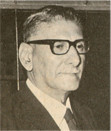
Maneck Kanga’s ‘extreme patience’
A first class graduate and post graduate from Bombay University, Maneck Kanga (b. January 21, 1908 — d. October 17, 1988) was an ordained navar, a fellow in English at St Xavier’s College and fellow in Avesta-Pahlavi at the J. J. Madressa. Though he sought employment in the customs department of the Government of India, retiring as the principal appraiser at the end of his 30-year career, the diligent philologist and scholar continued with his studies at the end of each working day, clocking four books and over 50 scholarly papers on themes connected with Zoroastrian studies. He was a familiar figure at all-India conferences on Avesta-Pahlavi and participated in international conferences in Paris and New Delhi, said Bajan. He was deputed as the Indian delegate to the Shiraz Congress on Iranology when Iran celebrated the 2,500th anniversary of Cyrus the Great.
Despite holding a responsible job and immersed as he was in his academic work, Kanga functioned as a member of the KRCOI’s governing body and officiated as its secretary for over 15 years during which time he edited the Institute’s Journal and contributed articles to it, noted KRCOI president Muncherji Cama. Cama also made a point of welcoming Kanga’s daughter Silloo Peer, seated among the audience. Kanga was a member of the board of ancient studies at Allahabad University, transliterated the Avesta in the Devnagiri script and at the behest of the Bombay Parsi Punchayet rendered Kavasji Kanga’s Gujarati translation of the Khordeh Avesta into English. Kanga was also conferred the membership of the Royal Asiatic Society, London, the Societe de Iranologie, Tehran and the American Oriental Society. Due to his proficiency in Iranian studies, the Corpus Inscriptionum Iranicarum, London, had elected him a member of the body.
Bajan, to whom the professor was a "fatherly figure (who) enthused in me a love for Iranian studies,” described Kanga’s room: there were no cupboards, only shelves lined with books covered in brown paper. Kanga’s devotion to his studies, and to imparting his knowledge to others similarly engaged, resulted in a rare distinction: He was the first in India to receive any new publication on Iranian studies, noted Bajan.
"Zoroastrianism teaches an optimistic view of life. Maneckshaw had this optimistic view.” He lived by the adage "life lived for others is life at its best,” noted Bajan making a plea for the consolidated publication of his mentor’s life and work.
Peer, whose family had a long-standing friendship with the Kangas, had worked on his PhD dissertation on Dadestan-i-Denig under the guidance of Kanga. Casting a brief spotlight on the intricacies of Avesta-Pahlavi literature, Peer noted that the concept of the Daena was evident in the Gathas and the Din Yasht. Avesta or old Persian is only to be found in inscriptions. The language in time veered into what is known as Middle Persian and a great part of the literature was lost with the fall of the Achemenian Empire. When the founder of the Sasanian dynasty Ardeshir Papakhan attempted to restore the Avestan literature, the spoken language of his time was Pahlavi, so we have a transliterated version of the Avesta in Pahlavi as also the commentaries, known as the Zend. "Pahlavi had a very simple grammar. Its alphabet had only 14 letters but some letters had many permutations and combinations.” Moreover, it was the Semites of the time who were very good scribes and they wrote everything in the Semitic language. "Hence to read Pahlavi one needed to know Semitic and Pahlavi,” said Peer.
The scholar’s role is to collate the text and then translate it and thereafter provide the explanatory notes, Peer described the long, painful process of deciphering ancient literature. "A scholar may spend days and months in trying to understand and interpret a passage. Maneckshaw belonged to this class of scholars,” Peer distinguished Kanga from "others who are more involved with community matters or the pulpit preachers who know the texts somewhat.”
Kanga’s first book on the precepts of the old sages of Iran — known as Handarz literature — was published in 1941, followed by the Pahlavi version of the Yashts. "In Maneckshaw’s time the BPP would announce prize essays and the responses came with noms de plume,” so that the name of the scholar would not affect the evaluation of his presentation. In the 1940s and 50s Kanga was so well known in the West and all over India, he was always invited to conferences and to contribute to publications, Peer informed the audience.
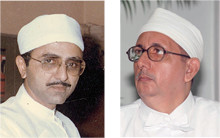
(Left to right) Ervads Parvez Bajan and Dr Rooyintan Peer
A visiting professor at Poona’s Vaidik Sanshodhan Mandal (VSM), Kanga’s contribution has been recounted in a message to the KRCOI by the famous Sanskrit scholar Dr M. A. Mehendale: "The late Dr I. J. S. Taraporewala founded a center for Avesta Studies at the VSM. I do not remember the exact date, but that was probably in the 50s of the last century. After the sad and unexpected demise of Dr Taraporewala Prof Kanga took charge of this center. He used to visit the VSM once a month and teach Avesta to interested persons. It was in that context that I came in contact with Prof Kanga. I found his teaching very useful. He used to give a lot of information from Pahlavi texts, which he knew very well… (He) was almost the sole architect of the Devanagari edition of the Avesta published by the VSM. I eagerly followed its progress for the scholarly introductions written by Prof Kanga in the three volumes.” These three volumes included the Khordeh Avesta, Yashts and Gathas and other texts over the years 1962-68, Peer informed the gathering. Kanga also prepared an Avesta Reader for the Mandal which was released by Vice President of India Shankar Dayal Sharma but Kanga had passed away before he received his own copy.
"Prof Kanga had in mind to publish an Avesta Dictionary giving the meanings in English. (Kavasji) Kanga’s old Dictionary of Avesta was out of date and Ch Bartholomae’s Dictionary gave the meanings in German and hence could not be used by Indian students. If Prof Kanga could have fulfilled his dream, that would have been a great help to Avesta students. Unfortunately that was no to be,” noted Mehendale recalling the sporadic efforts by Peer and himself. However, personal difficulties prevented them from getting the work done. "If we could have completed the Avesta Dictionary, that would have been a fitting tribute to Prof Kanga’s memory,” regrets Mehendale.
Referring to Kanga as "the renowned Zoroastrian scholar,” Stanley Insler, Salisbury Professor of Sanskrit and comparative Philology at Yale University, writes, "Prof Kanga possessed a comprehensive knowledge of Zoroastrian texts of all ages, and this unique ability allowed him to explain many obscure passages in an illuminating and convincing manner. Despite his great gift, he was always modest, friendly and helpful to everyone, a man of great character and great wisdom. It was a privilege for me to have known Prof Kanga.”
Prof Carlo G. Cereti recalls how he had the privilege of meeting Kanga at the KRCOI library where he was studying for his MA dissertation. "He kindly invited me to his house… and we sat some hours discussing Zoroastrian texts and the many niceties of the Pahlavi language. Unfortunately I met him towards the end of my stay in Bombay and one may easily imagine how dismayed I felt by realizing that I could not profit from his invitation to read some Pahlavi texts under his guidance. Unfortunately I had no further occasion to meet him in the flesh, but I spend many hours reading his many masterly translations of Pahlavi texts, main among which the Chidag Andarz I Poryotkeshan and the chapters taken from the Dadestan I Denig and the Epistles of Manushchihr…Let me add my voice to that of the many who will praise the excellent scholar and the gentleman!”
"I had the privilege to know him and learn from him much about Pahlavi literature, a field in which he was one of the most accomplished scholars. I was in close contact with him for 30 years during my visits to Bombay and by correspondence. He was my closest friend in India and I will always remember the many favors he granted me. I hope it will be possible to publish a collection of his most important articles. This would be the best tribute to his memory,” suggests Hanns-Peter Schmidt, emeritus Professor of Indo Iranian Studies at the University of California in Los Angeles.
Peshotan Mehta, one of Kanga’s students in the 1970s writes, "Prof Maneck Kanga. The very name infuses me with awe, respect and gratitude. Privileged to sit at the table of this brilliant teacher at his flat in Cusrow Baug, it was an honor and a unique circumstance to be nurtured and mentored by this great soul. An excellent listener, Prof Kanga would explain with extreme patience any matter that was difficult to grasp, no matter how long it took, without the slightest sign of irritation…Prof Kanga is immortalized in his writings and publications and lives in those that were fortunate enough to be his students.”
Kanga lived by the Avestan adage: "There is only one path — that of righteousness,” as recalled R. Peer. Kanga’s daughter Silloo Peer recalled how her father had come to Bombay from Navsari with Rs 10 in his pocket. His dictum was "Knowledge is wealth. Money may come and money may go. But nobody can take your knowledge away from you.”
◆ ◆ ◆
From the archive