
Comment
Data on Dadachanjis
Updating an old family tree was a painstaking but fulfilling undertaking
Many Parsi families have a copy of Vanshavali (a book containing genealogical trees and a short write-up on eminent personalities of the family) with respect to their kin published 80-100 years ago which traces their family roots for 200 years and beyond. They sometimes go through the pages remembering the glorious past and sometimes looking at the pictures of their grandfather. But most do not realize that this beautifully compiled book will lose its relevance if it is not updated with current data.
I found Dadachanji Vanshavali published in 1920 in my Navsari house at the time the house was sold. It was 30 years later, after I retired that I had my first look at it. The book was meticulously compiled with 47 family trees, write-ups on all eminent Dadachanjis of the time and also a detailed write-up about their eventful journeys. The book traces Dadachanji families for more than 250 years in the form of family trees beginning with Ervad Darab (Dada) Ervad Chanji.
There were 275 Dadachanji members in 1920 of whom six were doctors, four judges and a large number were mobeds. That was a time when the Parsi community flourished. Out of about 166 families, 82 families had five or more children each, and one family had as many as 18 children. Today, there are only 182 members, a reduction of 93 members in 87 years. We now have only one doctor, no judge and just one family of mobeds. Significant numbers remained unmarried and some families were totally wiped out as a result of the unmarried status of the children.
House to house visits, Namgharan book and agiary records of donations at the time of births, deaths and marriages formed the basis on which the old book was compiled. Compiled without the aid of computers, e-mail, couriers and good telephone services the book would have lost its value had it not been updated. Hence I decided to update the Vanshavali spanning the next 87 years.
How it was done
I ruled out house to house visits. The Namgharan book nowadays is becoming shorter and shorter and is therefore of not much use. The practice of donating to agiary funds on the occasions of birth, marriage and death has stopped.
Therefore, I used the MTNL telephone directory to begin my search. Imagine a total stranger asking personal family details over the phone in the name of Vanshavali. But our great Dadachanji families were extremely receptive to the idea. Yes, initially there was a somewhat cold response. Then I would say I am from Navsari and if the family was also from Navsari, a very warm response would immediately come from the other side asking eagerly to which part of Navsari I belonged. And if they happened to know my family a floodgate of warmth would gush out. Sometimes when I introduced myself I would say that I belong to Khetwadi, Bombay and my father Sohrabji Pirojshaw was a panthaky in Ashburner Agiary. And suddenly a lot of interest would be generated on the other side if the person belonged to Khetwadi.
I also took the help of the Online Zoroastrian Parsi Directory and FEZANA (Federation of Zoroastrian Associations of North America) Directory for tracing Dadachanjis who lived abroad. I wrote to some friends in Dubai, Australia and New Zealand and requested them to look into Parsi directories in their countries to locate Dadachanjis. I used e-mail to contact those residing abroad and most of them responded enthusiastically.
To ensure that I did not miss out on any families, I decided to go through paidust (death announcement) columns of the last 87 years. This proved to be the most difficult job. Jam-e-Jamshed, I believe, has lost the old newspapers in the recent floods. The Bombay Samachar gives access to newspapers only for the last 20-25 years. The Bombay Parsi Punchayet (BPP) has the death certificates, but being a critical document this record could not be accessed. I wish our Parsi newspapers which contain Parsi history would preserve the old publications in a format (digital, microfilm or any other) which can be accessed by future generations. The Parsi punchayets should computerize the death data and allow access at a reasonable fee. Parsiana Digital Archives (1965-2005) were extremely helpful. It has a wonderful search facility with the help of which one can trace all articles with any specific search word (say Dadachanji). But this help was limited in my work, as the Milestones column giving details of deaths does not give relatives’ names (necessary for obtaining information on daughters married outside the Dadachanji family). Fortunately, the Petit Library had Jam-e-Jamshed bound in volumes since 1935. Alas, I could not get the newspapers for the period 1920-1934. Perusing the paidust columns of 70 years, going through almost 20,000 newspapers and looking at the paidust notices of all those near and dear ones, teachers and friends was a chastening experience.
Then I realized that before migrating to Bombay the Dadachanji clan had been concentrated mainly in Navsari. I therefore traced the details of deaths from the Navsari Anjuman records for the period 1920-2000 which was meticulously kept in the form of a register.
Next steps
Once you have gathered all data such as name, date of birth and death, address, telephone/mobile number, educational qualifications, employment details, ervad/osta and name of the spouse for all families, you are ready to put the data on the computer in Excel or whatever software you are comfortable with. Be particular about the name, as Faredun can be spelt as Faridun, Fardoon, Fredun, Fardunji and like. Give each member a continuous reference number for referring to it in the index along with page number. Prepare one page for data base and one for family tree. In the family tree, the head of the family tree should contain a name (and page number) which appears in the old Vanshavali, which then becomes a link between the old Vanshavali and the new. This will help existing members of the family to go back to the old Vanshavali and trace their family roots.
Print the family tree and the data and send the sheets to respective families for their confirmation to avoid any serious error in spelling, dates, etc.
Find out about eminent personalities from friends and relatives. Go through the Petit Library catalog and find out if there are any English or Gujarati writers in your clan or books on Parsis.
Prepare a family telephone directory giving name, address, telephone/mobile number and e-mail as an attachment so people can contact each other.
Lastly prepare an index in alphabetical order giving page numbers on which a member’s name appears along with the reference number.
Keep a back-up of your data with friends so that your efforts do not go to waste in case of exigency.
Print or photocopy the old book as well as the new data and you are ready to distribute your Vanshavali. The old Vanshavali is generally in Gujarati. You may, if you like, translate the Gujarati version, including family trees, into English for the benefit of those who are not conversant with Gujarati.
So, if you are retired and have time to spare, pick up the old Vanshavali and start phoning your family members. It will create new bonds and friendship, strengthen your feelings about your family name and at the same time will bring in a tinge of sadness about the community which is fading away. Happy journey into the glorious past and uncertain future!
Those Dadachanji families who have not received their copies may call 27823262 or e-mail viraf_dadachanji @yahoo.co.in
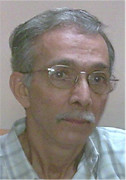
Viraf Dadachanji is a chartered and cost accountant. He has worked as an internal auditor in multinational pharmaceutical and chemical companies, and retired as general manager-internal audit from Aventis Pharma Limited.
◆ ◆ ◆
From the archive