
In Memoriam
The venerated vocalist
Died: Pandit Firoz (born Ferdoon) Bejonji Dastur, 89, eminent vocalist who propagated Indian classical music for over seven decades, in Bombay on May 9, 2008.
As a tribute to their mentor, a concert in Poona was organized on May 16, within a week of Dastur’s passing, under the auspices of Arya Sangeet Prasarak Mandal when his senior disciples Shrikant Deshpande, Girish Sanzgiri and Srinivas Joshi performed before paying a eulogy to their guru. A report posted online by Roshan Kumar Mogali quotes his pupils: "The disciples of Panditji, rather than sharing a guru-shishya (teacher-student) relationship, were great friends of his. And he was the only guru that I know of who wouldn’t even hesitate from apologizing to his own disciple on the occurrence of a mistake,” recalled Deshpande. Singer Neena Faterpekar described him as "a softspoken human being. His music resonated the same characteristics…Though he gave me tips, he always enthused me to pursue and continue with my style of music.” Joshi referred to Dastur’s "devotion to his guru and to his parampara (tradition) which is something everyone should work to imbibe.”
"The music-worshipping Maharashtrian society is totally enraptured with Pandit Dastur’s virtuoso,” Dr Aban Mistry had written in her book The Parsis and Indian classical music: an unsung contribution, commenting on the "ínternationally acclaimed… intellectual vocalist… educating many students in the art of music and outstandingly guiding novice and budding artistes. Panditji also has to his credit several gramophone records and more recently music cassettes and CDs as well.”
He was on the faculty of the Bombay University’s music department since its inception in 1969. Pandit Jal Balaporia, a few years his junior, remembered approaching Dastur, among the few Parsis in the field of Indian classical music, when he first came from Billimora to Bombay. With both of them working at the Bombay University’s music department, although they specialized in different gharanas (schools of music) they would keep each other informed of the upcoming programs and artistes, and their own performance schedule.
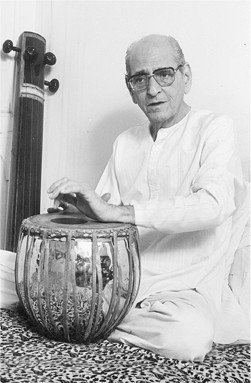
Pandit Firoz Dastur: doing riyaz
Photo: Homyar Mistry, Homz Prints
For the last 55 years Dastur would religiously participate in every Sawai Gandharva festival organized in Poona in memory of the legendary exponent of the Kirana gharana [characterized by shanta (serenity) and bhakti (religious devotion)] who happened to be Dastur’s own guru. Having compered at this festival for nearly 20 years Anand Deshmukh observed, "The stalwart, in spite of being such a tall artist, was down-to-earth and sans any grandiosity… He always said that his genteel performances are not his, but instead it is his guru who is playing through him.” His rendition of Gopala, sung in his dulcet, gentle voice, never failed to earn audience appreciation. Despite his frail health he insisted on performing at the last festival too, just a few months before his demise.
"Dastur’s style is in fact most reminiscent of Abdul Karim Khan’s (the founder of the Kirana gharana) — a thin, pleading, reedy voice that conveys emotion through subtle resonance rather than a booming attack. Despite this, in the heat of a performance he could boom with the best and like all Kirana exponents he took his breath control very seriously,” remarked physicist Sunil Mukhi on his blog commending Dastur for replicating "Abdul Karim’s famous light pieces most movingly: the Kirwani Thumri Soch samajha naadaan (Think and understand, innocent) and the bhajan Gopala mori karunaa kyon nahin aave (Lord, why do emotions not flow?).” Mukhi’s blog includes an audio-video recording of Dastur rendering this bhajan. In fact Dastur’s family has created a website in his memory www.firozdastur.com with plans to continue expanding and updating it with more information, music clips, etc, mentions his grand-niece Shana Kendall Dastur.
Enthralling audiences both in India and abroad, he was invited to perform at prestigious meets like the All India Music Conference, Sadarang, Sarva Bharatiya Surdas Sangeet Sammelan, Sur Singar Sansad and Tansen Music Festival. Before he dedicated himself exclusively to classical music, Dastur had acted in several Indian films which required heroes to sing classical-based songs (there being no playback singers in those days). Actually J. B. H. Wadia was on the lookout for a young hero who could sing one classical song for his film Lal-e-Yaman. But after hearing the teenager, Wadia was so impressed that he amended the role whereby the young Ferdoon could sing six more songs. The movie was a success and for the next 13 years, Dastur acted in 17 films, the last being Gul-e-Bakauli, directed by Rustomji Mody, elder brother of Sohrab Mody. Post World War II, well-built Punjabi heroes entered the film industry, edging out frail stars like Dastur.
But his screen name Firoz continued in his musical career too. As he had acknowledged in his interview with Parsiana (see "Recognition for his ragas,” September 1987), "Though in my film days I was the highest paid artiste, after I was out of the film line I did have hard days also. But at that time my father was a billiard champion and used to run a billiard saloon and my other brothers were earning…”
Once he started acting, he stopped going to Tutorial School and had teachers come home to educate the youngest of five brothers. His dislike for math was no secret to the family. Besides Sawai Gandharva, Dastur had received his training in music from K. D. Jaokar and Pandit Balkrishnabuwa Kapilashwari. His interest in music had been aroused by his father Bejonji who sang natya sangeet (music for dramas). As a child Ferdoon would reportedly refuse to go to sleep until his father sang to him. It was Bejonji who encouraged Ferdoon to sing, recalls his nephew Russi Dastur. His first major concert was at the All India Music Conference in Karachi in 1939 where he sang with established artistes like Sawai Gandharva, Gangubai Hangal and Faiyaz Khan.
A regular artiste for the All India Radio (AIR) for 28 years, Dastur had given his first broadcast in 1939. "To me, his radio concert was an event to look forward to with anticipation; and I used to browse through AIR’s fortnightly journal to satisfy my curiosity,” Gurudev Sharan had commented in The Economic Times of September 26, 1982, adding, "Alongside of the program schedule… there often appeared a photograph that showed Dastur immaculately clad in western dress and donning a felt hat… The idea of an artiste dressed in western style and sitting cross-legged on the platform to perform, somehow, seemed rather ludicrous to my mind. It was only after I settled down in Bombay in 1948 that I had the pleasure to hear him on the concert platform, simply dressed in the conventional style of a Hindustani musician…Whenever I met him, I found him a man of few words with a shy, retiring sort of disposition…”
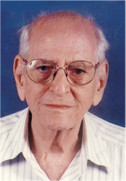
Pandit Firoz Dastur: vocal mastery
The vocalist’s contribution to classical Hindustani music had earned him the Sangeet Natak Akademi Award which had been conferred on him by then Vice President of India R. Venkataraman in 1987. While the South Gujarat University had honored him with a doctorate, the Madhya Pradesh government had bestowed on him the Tansen Award and the Maharashtra State, the Gaurav Puraskar. The Federation of Parsi Zoroastrian Anjumans of India too had recognized his talent in the performing arts.
Although the bachelor was very fond of his nephew, Russi Dastur and niece Roshan Bharucha residing in Pennsylvania whom he would visit annually, in the absence of any close relatives in Bombay his devoted students became his extended family and as per his wishes arranged for his cremation. Not one to appreciate "the dogma of organized religion,” in his house at Grant Road he had pictures of Zarathushtra, Jesus and various Hindu deities, mentions Russi. In addition to the Zoroastrian prayers that he recited every Friday, on Thursdays he would say prayers for Sai Baba. A vegetarian by choice, Dastur’s outlook on life had been considerably influenced by the works of philosopher J. Krishnamurti. Chess and repair of mechanical objects, especially watches, were his other areas of interest. When Parsiana had asked him nearly two decades ago how he took care of his all-important voice, looking at the cigarette in his hand, he had grinned, "I smoke,” before elaborating on the importance of riyaz (regular practice).
The voice of the dedicated singer continues to linger for besides enthralling audiences with his vocal mastery, he had inspired generations of students with his humble and gentle ways.
◆ ◆ ◆
From the archive