
In Memoriam
In Memoriam
The congenial Cawasji
Died: Kali Dinshaw Cawasji, 70, president of the Bangalore Parsee Zoroastrian Anjuman (BPZA) and managing trustee of Khandala’s Dhunmai Cawasji High School and Junior College, on May 19, 2003 in Bangalore following cancer of the pancreas.
"The Parsi community of Bangalore was fortunate to be blessed with such a towering and sagacious personality...who always believed in encouraging the Parsi youth, particularly those who came from a humble background as his benevolence and grace knew no boundaries,” noted the secretary of the BPZA Adil Govadia in his tribute to Cawasji carried in the Jam-e-Jamshed of June 29, 2003. "While he was disciplined and honest he was also a true traditionalist who always nurtured the very best (in the interests of) the community in general and the Zarathushtrian religion in particular... Kali was...held in high esteem by all those who came in close contact with him. He was a leader par excellence, humble and loving but demanding, a cut far above all the double-speak and politicking leaders of today,” added Govadia.
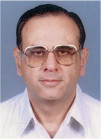
Cawasji: humble and honest
"He was a gentle soul, always calm, composed and affectionate,” remembered Noshir Dadrawala who had enjoyed Cawasji’s hospitality in Bangalore on umpteen occasions. Deeply involved in the affairs of the Anjuman, Cawasji had called a meeting at his house in April to discuss the implications of the resolution passed by the High Priests. "He participated so enthusiastically in the discussions that for nearly two hours all of us forgot that Kali was ailing and that so much excitement could be harmful to him...” noted Dadrawala.
Steering the affairs of the orthodox Bangalore Anjuman since 1989 when he was elected president on the demise of Behram Sidhwa, it fell to Cawasji’s lot to defend the unprecedented moves taken by the Anjuman: the refusal to join the Federation of Parsi Zoroastrian Anjumans of India; the elevation of its panthaky Nadirshah Unvalla as a High Priest of the community; the controversial decision terminating a life membership of the BPZA on the grounds that the member did not subscribe to dakhmenashini.
Among the milestones celebrated during his tenure as president was the platinum jubilee of Bangalore’s Bai Dhunbai and Cawasji Dadabhai Daremeher which was built from a munificent contribution from his father Dinshaw who passed away in 1943 when Kali was just 11 years old.
Having studied at the Cathedral School and Sydenham College in Bombay, Cawasji shifted base from Bombay to Bangalore in 1964. Although a teetotaler he took charge of his father’s liquor business by running excise contracts in Karnataka. After 25 years of running the business he opted to dedicate himself full-time to community service.
The Bai Dhunmai Cawasji Sanatorium Trust and the Bai Dhunmai Cawasji (D. C.) High School in Khandala, both founded by his father, were the other institutions which he nurtured. At a condolence meeting convened at the D. C. School on June 10, 2003 senior trustee C. F. Colombowala commended Cawasji’s keen interest in the smooth functioning of the School and his efforts to upgrade its standards. Co-trustee H. F. Colombowala lauded Cawasji’s ability to face difficulties and sort out differences. Different teachers and parents acknowledged his constant encouragement and concern for student welfare. Principal H. H. Wadia referred to the time he spent with the students on his visits to the School and how on one occasion he taught maths to Class X so well that the children were motivated to better their performance in the subject.
Having played cricket for his college in his younger days he always strove to inculcate the same love for games and sports in his students and would make time to see D. C. students play inter-school cricket matches. "He loved western classical music and spent hours listening to it,” mentions his wife Jasmine. As founder of the Deaf Aid Society of Bangalore he took a keen interest in the welfare of hearing impaired children.
At the condolence meeting convened by the Bangalore Anjuman on May 28, the Lady Jehangir Kothari Memorial Hall was filled to capacity with his associates, admirers and acquaintances from different communities who had come to pay respect to the popular yet publicity shy Cawasji. As attested, his spontaneous, subtle humor had brought mirth and joy to many who were fortunate to know him.
The philanthropist is survived by his wife Jasmine, son Dinshaw, daughter Kamal and step-daughter Scherazade.
Parinaz M. Gandhi
Chatterjee’s chants
Died: Behroze Sapan Kumar Chatterjee, 57, musician and famous playback singer, on July 14, 2003 in Pittsburg, USA, following brain hemorrhage a month after she underwent a liver transplant operation.
Known to sing in 16 regional languages of India Chatterjee was a popular television and radio artiste. She had lent her voice for films like Tumhare Bina, Sun Meri Laila, Bezuban, Anadi Khiladi, Tohfa Mohhabbat Ka and Andaz Apna Apna, noted a write-up by her brother-in-law Keki Bala in the Nagpur daily Hitavada of July 17, 2003. The Indian film music industry being dominated by the Mangeshkar sisters she found it easier to make a name for herself abroad and gave innumerable concerts in the USA and Canada. At different times she sang with stalwarts like Anup Jalota, Ghulam Ali, Nitin Mukesh. Since the mid-’80s her annual trips to the States were looked forward to by her fans, recalls Darius Captain of California.
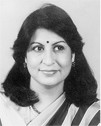
Chatterjee: impressing listeners
The songstress had to her credit a number of ghazal and bhajan albums including Barg-e-Gul, Shauq-e-Manzil, Bhakti Prakash, Live in Atlanta, Bhajan Mala, Disco Zamana and others. A decade earlier she had been given the National Shiromani Award in Delhi for her contribution to national integration through music.
Born in Nagpur to Dina and Ratan-shaw Balsara, Behroze was a child prodigy who started singing and playing the harmonium blind-folded at the age of three. She inherited her mother’s talent for music. From the age of five to 16 she studied classical music under Pandit Bhaiyaji Wazalwar. Her next guru was Sapan Kumar Chatterjee whom she married when she was but 19. He taught her ghazals and gave her the taste for Urdu poetry. More intensive training in music she got from Ustad Faiz Ahmed Khan and the ghazal shahenshah, Pakistan’s Ustad Mehdi Hassan. Subsequently she earned her Sangeet Prabhakar or degree in Indian classical music and taught at the Scindia School at Gwalior for 15 years. Her schooling was at Nagpur’s Tata Parsi Girls High School after which she graduated in arts from Hislop College.
Since her first public performance at the age of six Behroze had given innumerable programs. With her kind and generous disposition she donated a large part of her earnings to charity, mention family sources. While she could play both the harmonium and tabla, son Anupam is adept at the keyboard, recording for albums and films. Although she continued to profess the Zoroastrian religion, the children were taught to value all faiths and grow up as good human beings, recalls the son.
The singer is survived by her husband Sapan Kumar, daughter Babeena Venky Sharma, son Anupam and sisters Dolly Bala and Dr Binaifer Balsara.
P. M. G.
The dedicated doctor
Died: Dr Behram Minocher Meher-Homji, 80, medical officer of the US and the UK consulates, and attached to the Breach Candy Hospital since its inception 51 years ago, in Bombay on May 27, 2003 following cardiac arrest.
"The members of the White House Communications Agency wish to express our sincere appreciation for the outstanding manner in which you provided support to the President of the United States during his visit to (Bombay), India — March 24-25, 2000,” noted a certificate of appreciation presented to Meher-Homji. "Your unique abilities, coupled with your superb attitude and professionalism, enabled our Agency to provide critical communications for the President and the White House staff,” commended the certificate. The kind and gregarious doctor had been privileged to treat several dignitaries during his association with the US, UK and Australian consulates.
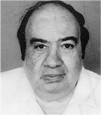
Meher-Homji: accessible to all
His most enduring commitment though was to the Breach Candy Hospital whose management and medical fraternity had recognized his "dedication, humility, affectionate care and loyalty” with a scroll and a silver plaque. "The Breach Candy Hospital has lost an icon who was the heart and soul of the Hospital...He was an institution, accessible and helpful to everyone who turned to him for assistance...Doctors at Breach Candy feel that with his passing away an era has ended...” were some of the tributes paid to Meher-Homji by his colleagues from the medical fraternity.
Although attached to several leading Indian companies Meher-Homji made time to render honorary service at the NAB (National Association for the Blind) Workshop at Worli and at Gur Mandir, a welfare organization, notes a write-up by Capt (Retd) Hormazdiar Desai. The staff members of Breach Candy and their families received the same caring treatment as did his overseas patients, all of whom he put at ease with his narration of humorous anecdotes.
"His medical acumen, wonderful diagnostic powers, knowledge of the latest trends in medical prognosis/treatment, punctuality of service, sense of sacrifice and willingness to help, reassuring and comforting words, and above all the healing touch made him the ‘complete doc,’” summed up a family friend Histasp Engineer.
Five generations of the Meher-Homji family have been practising medicine, according to Desai’s write-up: Behram’s grandfather Dr Jehangirji had a practise in Valsad and his grand uncle Dr Sorab ran a prestigious maternity hospital in Tardeo. His father Dr Minocher served in Udvada and his uncle Dr Nosh was at the maternity hospital. Another uncle Dr Dadi was the director of the Tata Memorial Cancer Hospital. As the third generation medico Behram joined the Northcote Nursing Home in Bombay after his studies at the Grant Medical College. Whilst at Northcote he attracted the attention of the internationally reputed surgeon Dr Kenneth Bond who advised him to join the Breach Candy Hospital which he did in 1952. His brother Dr Vispy served as research director of Institut Francais in Pondicherry and as honorary dean of the School of Ecology, Pondicherry University. For 54 years Behram was happily married to Perin who supported him in all his endeavors. Behram’s daughter Zarin is a dentist and son Jimmy is a psychiatrist practising in New Zealand. From the fifth generation, granddaughter Diana is specializing in psychiatry in the United States.
Blessed with a melodious voice Behram enjoyed music, his favorite singers being K. L. Saigal and Pankaj Mullick. His other passion was cricket.
Since his school days at Boys’ Town, Nasik, Behram had enjoyed playing the game. When barely 14, he scored a century for his school and was presented a memento in the shape of a silver plated cricket bat. Whilst at St Xavier’s he was the wicket-keeper/batsman for his college team and had later represented Parsis in the Surat Quadrangular. His uncle Kharshed Meher-Homji was the wicket-keeper/batsman for the Indian team that toured England in 1936. Behram’s brother Kersi, based in Sydney, is the reputed author of about a dozen books on cricket. As conveyed Prof Kersi who is attached to the department of virology, University of Sydney, "Behram was an angel with a stethoscope; apart from his medical expertise, his smile and mere presence cured many patients.”
The caring doctor is survived by his wife Perin, daughter Zarin, son Jimmy, brothers Vispy and Kersi, and sisters Thrity Nargolwala and Villy Meher-Homji.
P. M. G.
◆ ◆ ◆
From the archive