
Books
Messiahs of music
The Parsis and Indian classical music — an unsung contribution by Dr Aban E. Mistry. Published in 2004 by Swar Sadhna Samiti, C/o Wadia Sangeet Class, Jer Annex, first floor, Jambulwadi, Dhobi Talao, Bombay 400002; e-mail: abanmistry@hotmail.com. Promoted by Zaveri Jiten Ramniklal, Oberoi Towers, Shopping Arcade, 2nd floor, Nariman Point, Bombay 400021. Tel: 22023435. Pp: 140. Price: Rs 300.
Ever heard of the sacred Zoroastrian prayers woven into sweet melody of bandish (musical composition) and bound in notation and rhythm? For daring to write Sarod-e-Avesta in 1894 Firoze Batliwala was "ostracized by the orthodox bigots of his time who brandished him as being sacrilegious and left no stone unturned to criticize his work,” writes Dr Aban E. Mistry in her book The Parsis and Indian classical music — an unsung contribution. Three quarters of a century later Vistasp Balsara of Calcutta, the successful music director of Bangla, Assamese, Oriya and Hindi films, rekindled Batliwala’s memory by redefining some of the compositions and getting his (Balsara’s) disciple Dhunawaz Indorewala to sing them for the Indian Record Company (INRECO).
In fact the two foremost record companies of Bombay in the early 20th century — The Odeon Record Company and Ruby Record Company were founded by Rustomji Dhunjibhoy Sethna. Besides being the proprietor he also served as the sound recordist, the recordings being done in his studio at the Dadi Seth House in Fort.
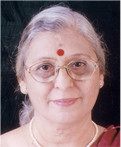
Mistry: pivotal contribution to culture
On tuning into All India Radio — Akashwani — various stations commence their morning broadcast with a signature tune on the violin followed by the strumming of the tanpuras. This composition was by the legendary western music conductor Mehli Mehta.
Many such little known nuggets surface in Mistry’s work, a culmination of 10 years’ efforts encapsulating the cultural contribution of the community in the last 250 years. As notes the author, a tabla maestro and author of books on Indian classical music, in her preface, "Other communities as well as fellow Parsis are only too well aware of our contributions in every aspect of Indian life, be it social, political, economic, philanthropic, judicial, sports, education... Unfortunately, virtually unknown are the feats of the many Parsi ladies and gentlemen who played pivotal roles and earned accolades in the rich, cultural world of Indian music and dance. I have done my utmost to bring to light the achievements of these unsung Parsi heroes so that the reader may be stirred with pride and respect.”
Referring to those "dark days when men and women could not sit together in public, when husband and wife could not speak to each other in the open, when women could not step out of their homes and ladies dare not have the courage to sing before their own family’s male members,” Mistry writes about Kaikhushru Navroji Kabraji’s initiative to establish the Gayan Uttejak Mandali as a forum for promoting Indian classical music and providing an opportunity for the members to enjoy performances of celebrated artistes. Kabraji, who was critical of the Parsis pandering to the West wrote as editor of the Rast Goftar, "Instead of going to the house of flaunting dancers and by inviting them over to your house, thus polluting your mind, residence and life, the need to teach our own women the chaste and divine art of Indian classical music and including our women in the congregation of male members is deemed very essential. Music classes must be made compulsory in schools. Also the time has arrived when the acute need to establish an institution of desi (national) music in our literate society is viewed as necessary.” Thus was born the Gayan Uttejak Mandali in a small bungalow on New Foras Road on October 1, 1870. The evolution of the Mandali over the next 100 years, its productive and disappointing phases, and finally its swan song have all been enumerated in the two chapters on the Mandali. We are further told that Kabraji’s Gujarati translation of the anthem God Save the King when first presented in the hall of the Framjee Cawasjee Institute, not only received accolades from all over India but from far away England too. "This book is my respectful offering to one of the Parsi community’s greatest sons, Kaikhushru Navroji Kabraji” in his death centenary year, writes Mistry commending his "untiring efforts and achievements in the varied fields of literature, drama, journalism and music.”
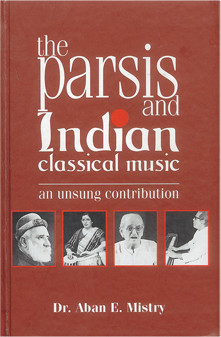
"Though not stated anywhere in this (140-page hardbound) book, it is obvious to me that the legacy of Gayan Uttejak Mandali is now being carried on by Swar Sadhna Samiti. Established by Mistry and Pandit Keki S. Jijina (her guru, a multifaceted musician and renowned sitarist of his time), the Samiti has been evolving to suit contemporary times, encouraging new and budding artistes in music and dance through annual all-India competitions, awarding scholarships, holding monthly concerts...and honoring great artistes,” states musicologist Prof R. C. Mehta of Baroda in his foreword.
In the course of the 14 chapters in this book starting with "Lok Sangeet” we learn of the existence of Dadar Ahura Mazda’s garbo. There were other garbas, garbis and monajats to enlighten and educate the laity on the importance of life’s daily routine, on the cosmic laws of cause and effect, and praises in honor of Zarathushtra and different yazatas. From the mid 18th to the end of the 19th century, Parsis excelled in kalgi tura (meaning a confluence of music and poetry). Presented in question and answer format, similar to the present day qawwali, subjects like philosophy, devotion to God and contemporary social problems would surface during these dangal (altercation between two groups) sessions witnessed by thousands. Based on Farsi betbaaji (poetry form) the poems were created in simple colloquial Gujarati. There were five or six groups of Parsis who excelled in this art, while some were kalgi artistes, the others were tura artistes. Occasionally the competition was between Parsis and Muslims. Apparently on one of the anniversaries of the H. B. Wadia Atas Bahram a big dangal was organized in the compound of the temple. This dangal reportedly resulted in a massive riot when many had to be admitted to hospital for urgent medical aid. Thereafter kalgi tura declined in popularity.
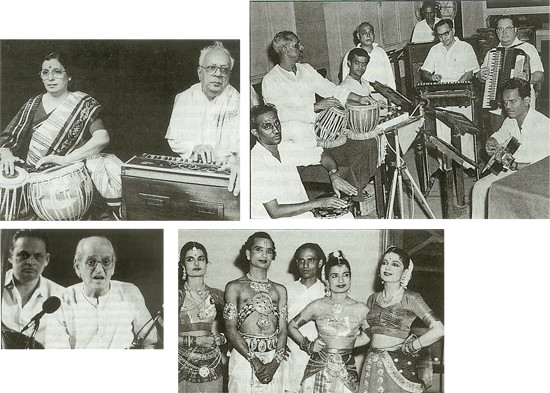
Top left: Mistry (on tabla) with guru Keki Jijina Right: Orchestra with Goody Seervai (on accordion) and Kersi Mistry (on keyboard): Bottom : Vocalist Dastur (far left) and (alongside) the Vazifdar sisters with guru Krishna Kutty
In the chapters on "Shastriya Gayan,” "Indian Classical Instrumental Music,” "Sugam Sangeet, Thumri, Tappa, Geet, Ghazal and Abhang” we read of the contribution of countless individuals who with their devotion to music have left an imprint that Mistry could record for posterity. Vocalists Pandit Firoz Dastur and Pandit Jal Balaporia continue to be revered names in the Indian classical music circles. Among the ladies committed to musicology were Banubai Bharucha who had started a Sangeet Vidyalaya in Mysore and authored two books on music. Her students included the Maharani of Mysore and Lady Thackersey of Poona. Vocalist Khorshed Mulla had published seven books on music of which Saraswati Sangit Sangrah is deemed the most important. Pandit Firoze Framjee who had created 32 big and small volumes on the science of music is viewed as a stalwart of Indian classical music.
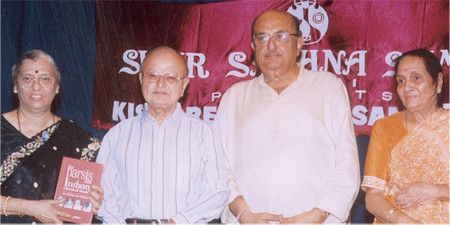
At the release function (L to R): Mistry, Yezdi Karanjia, J. R. Zaveri and S. Chougule
For the first talkie film Alamara produced by Ardeshir Irani in 1931, the music direction was by Pirojsha Meherwanji Mistry, states the chapter on "Music Direction and Background Music in Films.” His famous songs Sakhi suraj bhale ugiya, Panjare thi popat ji re vasia, Dhan dhan dahado, Gota gulab champa no haar continue to entertain conservative Parsis even today. The first lady music director of films Khorshed Minocherhomji, better known as Saraswati Devi in the music fraternity, was also a Parsi. Due to the absence of playback singers in those days (1940s-50s), she not only composed hit songs for films like Jawaani ki Hawaa and Achoot Kanyaa, she would also train the actors and actresses to sing in an appealing manner.
In the mid 19th century, Rustom Jabuli and Sohrab was the first Gujarati natak to be enacted on stage in a theater at Grant Road where an all-Parsi caste performed their roles, mentions the chapter "Natya Sangeet in Parsi Dramas and Operas.” Looking at their success, art enthusiasts of diverse Indian origins and languages formed their own theater groups. The inception of Gujarati nataks commenced with the Victoria Natak Company whose proprietor Dadabhai Thuthi being a connoisseur of music liberally used raag-raaginis and taals in his plays and thus propagated classical music among the masses. Although there were nearly 30 natak companies in existence, the famous ones in addition to Victoria were Alfred, Baliwala and Madon.
Mistry has thoughtfully included a chapter on "Shastriya Nritya, Lok Nritya and Modern Dance Form” where she brings to light the contribution of the Vazifdar sisters — Shirin, Khurshid and Roshan — who dared to learn classical dance and present public programs although they hailed from a conservative town, Valsad in Gujarat. Their success inspired many Parsi girls to learn Bharat Natyam and Kathak.
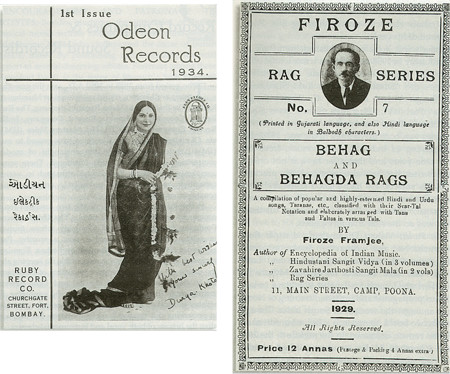
Old record and book covers
"It is essentially because of various Parsi schools’ guiding policy towards music and art that in the Parsi homes of that period Indian music and Indian culture were able to reach out and make some headway,” writes Mistry recalling how the best male and female teachers were employed by the schools to systematically impart knowledge of music and dance to all and nurture those who showed greater potential.
In this comprehensive anthology Mistry has taken care to name not only the all-time venerated names in the fields of music and dance but also the forays of lesser known mortals. The considerable repetition of material with the same names and accomplishments surfacing in different chapters could serve as revision of the information just assimilated. This archival text has some vintage photographs too.
When Surat’s well-known dramatist Yezdi Karanjia released the book on August 22, 2004 at the Mumbai Marathi Sahitya Sangh, Mistry was given a standing ovation. "Should this book evoke some amount of interest in every reader; should it generate a yearning in Parsi youth to understand the basics of Indian music or dance; should it inspire but one Parsi individual to become a celebrated artiste, then my work with its trials and tribulations will all have been worthwhile,” notes Mistry. "If not Tansen (the celebrated musician), let them at least be Kansen (with a knowledgeable ear for music).”
◆ ◆ ◆
From the archive