
Bawa Musings
From qawwalis to concertos
The range of the community’s taste in music is extensive
A few know whether to applaud or not after the first movement of a Tchaikovsky concerto; many swing to hot rock; a micro-minority is transformed by Amjad Ali Khan’s sarod; only a handful have heard of Bhimsen Joshi; lots are fans though of Kishore Kumar and Geeta Dutt. The community’s taste in music is eclectic. One can know the socioeconomic background of a Parsi from the music she enjoys or abhors.
The distinction, evolved by us between NCPA (National Centre for the Performing Arts) Parsis and masoor pav Parsis is relevant in this context. If you are standing in the foyer of the NCPA, at the end of a music concert (Western classical, of course), you will certainly agree with Khojeste Mistree that all talk of a steep demographic decline is hogwash. The NCPA Parsis are not necessarily rich or aristocratic; but mostly Anglophiles (those who read the London Times the next day, rather than today’s Times of India). One will also spot the NCPA Parsis searching for symphony albums at Rhythm House, across the road from the Jehangir Art Gallery. In the good old days, they would have requested Western music numbers on Radio Ceylon. Their children would be receiving piano and violin tuitions, from some old Catholic lady in Bandra.
The distinction, evolved by us between NCPA (National Centre for the Performing Arts) Parsis and masoor pav Parsis is relevant in this context. If you are standing in the foyer of the NCPA, at the end of a music concert (Western classical, of course), you will certainly agree with Khojeste Mistree that all talk of a steep demographic decline is hogwash. The NCPA Parsis are not necessarily rich or aristocratic; but mostly Anglophiles (those who read the London Times the next day, rather than today’s Times of India). One will also spot the NCPA Parsis searching for symphony albums at Rhythm House, across the road from the Jehangir Art Gallery. In the good old days, they would have requested Western music numbers on Radio Ceylon. Their children would be receiving piano and violin tuitions, from some old Catholic lady in Bandra.
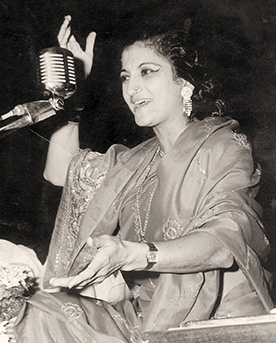
Qawwali exponent Mahajabeen, the stage name adopted by Dhun Baria
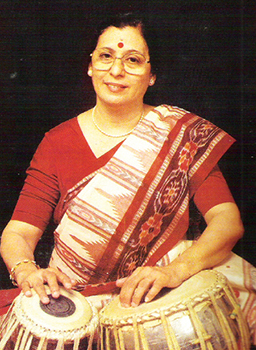
Aban Mistry, India’s first female solo tabla player
Zubin Mehta, perhaps the world’s best known Parsi, conducted the Los Angeles Philharmonic and the Israeli Philharmonic orchestras. The world’s second best known Parsi was Freddie Mercury, born Farrokh Bulsara, lead vocalist of the rock band, Queen. You may be surprised, however, to learn that a famous vocalist of the Kirana Gharana was Pandit Firoz Dastur. Dastur was a disciple of the legendary Sawai Gandharva whose pupils included Bhimsen Joshi and Gangubai Hangal. Perhaps, more know about Padma Shri Penaz Masani who has more than 20 ghazal albums to her credit.
The first few waves of migrants from Gujarat became rich and prosperous and constantly endeavored to endear themselves to their British masters. These were the opium and silk traders, shippers and builders and the first families of Bombay — Wadias, Jejeebhoys, Petits and Tatas. German governesses gave piano and violin lessons to their children who found the strains of Indian musical instruments jarring. Till today, several of their descendants cannot bring themselves to listen to Bismillah Khan’s magic on the shehnai. Those who have a piece of grilled chicken breast for dinner have naturally not heard of Geeta Dutt, the playback singer who enthralled India and died heartbroken of cirrhosis at age 42. Generations of Parsis, of course, who enjoy bhinda pur eedu were also brought up on a staple diet of Lata Mangeshkar and Mohammad Rafi, Asha Bhosle and Rahul Dev Burman, the versatile Kishore Kumar as also the haunting melodies of Hemant Kumar and Manna Dey. If you walk through Navroz Baug on a lazy Sunday afternoon you can still hear popular Bollywood numbers of yesteryears. In the days when there was no television, Parsis were glued to Radio Ceylon, and then Vividh Bharati, to hear the inimitable Amin Sayani compere Binaca Geetmala. When the fledgling Doordarshan appeared, Parsis enjoyed Chhaya Geet on Thursday evenings.
Bollywood got its second ever female music composer, Saraswati Devi, from the community. Born Khorshed Minocherhomji, she composed the score for Achhut Kanya which had several hit songs. Orthodox Parsis tried their best to have Bombay Talkies dismiss her and her sister, Manek, an actress, but did not succeed. The sisters adopted Hindu names. A young and comely qawwali artiste called Mahajabeen enthralled Bombay audiences with her rendering of authentic Urdu qawwalis, in the league of the then legendary Shakila Banu Bhopali, a famous qawwal. Mahajabeen was none other than the feisty crusader for "cremate ni bungli” at Doongerwadi, Dhun Baria.
In the sixties, the Vada Dastur of Navsari, Kekobad Meherjirana, was noticed at many Hindustani classical music concerts, humming a thumri. Needless to add, this was considered unbecoming of a high priest, by the fundamentalists of Navsari. He was a bon vivant, a happy soul, who loved to interact with sufi fakirs and ash covered sadhus who often dropped in at his Dastur Vad residence for a cup of tea. He truly loved his similarly inclined wife who, after his rather early death, made eyebrows rise in the mohallas of Navsari by her continuing acquaintance with her late husband’s juddin friends. He was succeeded by his nephew who was neither interested in thumris nor sadhus.
Aban Mistry, under the watchful eye of her guru, Keki Jijina, mastered the tabla and was the first solo female tabla player in India. Jijina, a priest, faced many hardships, social and financial, in his life long sadhana of Hindustani classical music. Few Parsis know of Jijina and Mistry, both deceased, but almost all knew the familiar portly figure of Goody Seervai playing the accordion at Parsi weddings and navjotes of the well heeled. Later, Seervai was a regular fixture at Adi Marzban’s Parsi New Year comedy revues, providing music to the talented crooner Uma Pocha, wife of the legendary comedian Jimmy Pocha who horsed around in Parsi Harishchandra as Taramati, the hapless queen. Competition to Seervai came in the form of the talented Nelly Battiwala and her band from Dadar Parsi Colony. The middle classes, of course, had to do with Dara and his Darling Orchestra belting old English hits as you gorged on saas ni machhi and kid gosh with the ubiquitous raspberry flavored aerated water from Rogers. Dara Mehta’s son, Marzban, who died recently, was a popular Parsi singer whose services were enlisted during the AFP (Adult Franchise for Progress) election campaign in 2008 to subtly suggest that AFP too were traditional Parsis. Unfortunately, the music was only heard by the community seven years later.
Berjis M. Desai, managing partner of J. Sagar Associates, advocates and solicitors, is a writer and community activist.
◆ ◆ ◆
From the archive