
In Memoriam
The sagacious scholar
Died: Farrokh Jal Vajifdar (pictured), 78, an authority on Indo-Iranian texts who was former vice president and fellow-in-council of the Royal Asiatic Society, on November 21, 2017 in London following cancer.
With his expertise on the history, literature, languages and religions of Ancient Iran, Vajifdar’s scholarship was respected by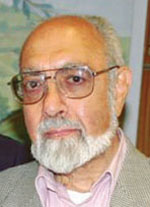 professors and students, the learned and the laymen. "He was a wonderful speaker on religious matters and was a master in lifting the veil on the Gathas in simple language to the delight of the listener,” stated a tribute by Shahpur Captain, chairman of the World Zoroastrian Organisation (WZO) which had been able to host the First Gatha Conference in London in 1993 with Vajifdar’s zeal. Besides organizing lectures and seminars for the WZO, Vajifdar contributed articles to their quarterly publication Hamazor, and even served as an advisor to the committee, "motivating them to take a bold step in embracing change in the WZO membership clause and acceptance of non-Zoroastrian spouses and their children.” As he was wont to informing his close associates, he converted from Parsiism to Zoroastrianism at age 19 and never ceased studying Indo-Iranian civilizations thereafter.
As recalled Dina McIntyre who was among the 10 scholars who had deliberated in the First Gatha Conference, "In his book on the life of Dadabhai Naoroji (The Twist in the Rope) Vajifdar wrote about a man of uncompromising integrity and courage. That was Farrokh to the life – a man of uncompromising integrity and courage – unswayed by politics or popularity – a rare human being. He joyfully waged battle with traditions and beliefs which he thought to be wrong and inaccurate, and he did so with facts, reason and a satirical, mischievous sense of humor which made him such a delight.
"He loved knowledge. His knowledge of ancient Zoroastrian texts was encyclopedic. And he shared his knowledge generously with many, many people (including me, many times – a debt I gratefully acknowledge). An SOS to Farrokh never went unanswered. And he always answered in depth, with references, giving his time unstintingly. In phone calls which stretched over many years, I loved discussing with him ideas from the Gathas and other ancient texts (although we sometimes disagreed) and listening to all his news (laced with humor) about what was going on in the community. His wife Jean was the love of his life — a deep love which he demonstrated in 1,001 understated, subtle ways (such as dedicating his London Gatha Colloquium paper to her), and when he spoke of his son Sam and his family, his love and pride shone through every word. Farrokh was a beautiful (if prickly) human being, a dear friend,” summed up McIntyre.
"He enriched our classes with his deeply informed comments and always widened the horizon for all of us. He vigorously promoted the study of the Gathas by being instrumental in organizing the Gatha Colloquium at Croydon, a landmark event, and publishing the conference proceedings. Reading his publications is always a gain and we are lucky enough to have them,” commented Prof Almut Hintze, Zartoshty Brothers Professor of Zoroastrianism, Department of Religions and Philosophies, at the School of Oriental and African Studies in London.
"With his boundless knowledge of our faith,” Vajifdar had "a unique mode of expressing his opinion and putting it across in his verbose commentaries,” stated Ervad (Dr) Jehan Bagli, president of WZO – Canada. "He was a great help in clarifying interfaith and Zoroastrian religious matters,” wrote Ervad Rustom Ghadiali, former president of the Singapore Parsi Association.
Others from the WZO fraternity in London who commented on Vajifdar were WZO president Sammy Bhiwandiwalla who wrote, "The community has lost a great scholar and visionary all too soon. His passing away creates a vacuum in our lives and his scholarly discourses on our faith will be greatly missed.” WZO honorary secretaries Darayus Motivala "relied on him many a time to help me understand different aspects of our religion” and Shahin Bekhradnia considered Vajifdar "a gem with a wicked sense of humor.” Ervad Jimmy Madon based in the UK declared that Vajifdar’s "approach on understanding the Gathas at a practical level and sharing this understanding so people can use Zarathushtra’s teachings in their life (rather than getting tangled in petty cultural debates)…have shaped my own understanding of the religion.”
"I will miss him terribly, both as a wonderful guide and also a friend who shared many interests, particularly music where he was equally knowledgeable,” noted community activist Homi Khusrokhan who had played a pivotal role in the priests ban case to challenge the diktats of the Bombay Parsi Punchayet trustees. On request, Vajifdar had even prepared a note that was submitted as an important document in the Goolrookh Gupta case presently before the Supreme Court.
His scholarship in western classical music was no less than that of the Gathas. His uncle Homi Dastoor introduced Vajifdar to this genre as a young boy some 70 years ago. This passion came full circle when Dastoor, aged 90, wrote his book Musical Journeys, with the ever obliging Vajifdar as a consultant. Vajifdar could narrate anecdotes, dates and critical facts concerning composers of any century. At his funeral his favorite compositions were played as a befitting send off.
To the Parsiana editorial team, he was a valued freelancer, letter writer, book reviewer, and above all, consultant. Knowing him to be a storehouse of insightful, objective scholarship, we frequently consulted him when we needed an expert opinion on religious and historical matters. He never charged the magazine for his prodigious contributions. A response was assured, whether it was comprehended by us was another matter! When we found his clarifications abstruse, we would trouble him once again to simplify his language and the genial scholar would unhesitatingly oblige. If there was a delay in response, it implied he was unwell or hospitalized.
Dismissive of trappings and formalities, he prevailed upon Parsiana to introduce him in the magazine simply as an "independent researcher” instead of the labored, "Born in Bombay into a Navsari high-priest clan, Vajifdar enjoyed his primary and secondary education there and acquired his tertiary nurture in London, where he remained to settle, out-marry and procreate. He developed a deep and abiding interest in Indo-Iranian civilizations, with strong bias towards Zoroastrianism, its languages, literature, history and philosophy, and is a fellow of the Royal Asiatic Society. Occasional radio and TV broadcaster, lecturer, and midwife to aspiring and published authors, he, as independent researcher, continues as full-time writer and, as international consultant, has translated books and articles from French, German and Italian. He taught physical sciences at the National Association for Gifted Children.”
Always cooperative and vigilant, with his sharp eye he would catch our lapses too. Only recently when we erroneously referred to a book on Dadabhai Naoroji as "autobiography” instead of biography, we promptly received a letter for publication.
Enquiries on his well-being in the last few months had earned a response: "Healthwise, I have to admit to a downward spiral. It has its up-side though — restricted mobility means more concentrated work on unfinished articles!”
The sincere scholar is survived by his wife Jean and son Sam.
With his expertise on the history, literature, languages and religions of Ancient Iran, Vajifdar’s scholarship was respected by
professors and students, the learned and the laymen. "He was a wonderful speaker on religious matters and was a master in lifting the veil on the Gathas in simple language to the delight of the listener,” stated a tribute by Shahpur Captain, chairman of the World Zoroastrian Organisation (WZO) which had been able to host the First Gatha Conference in London in 1993 with Vajifdar’s zeal. Besides organizing lectures and seminars for the WZO, Vajifdar contributed articles to their quarterly publication Hamazor, and even served as an advisor to the committee, "motivating them to take a bold step in embracing change in the WZO membership clause and acceptance of non-Zoroastrian spouses and their children.” As he was wont to informing his close associates, he converted from Parsiism to Zoroastrianism at age 19 and never ceased studying Indo-Iranian civilizations thereafter.As recalled Dina McIntyre who was among the 10 scholars who had deliberated in the First Gatha Conference, "In his book on the life of Dadabhai Naoroji (The Twist in the Rope) Vajifdar wrote about a man of uncompromising integrity and courage. That was Farrokh to the life – a man of uncompromising integrity and courage – unswayed by politics or popularity – a rare human being. He joyfully waged battle with traditions and beliefs which he thought to be wrong and inaccurate, and he did so with facts, reason and a satirical, mischievous sense of humor which made him such a delight.
"He loved knowledge. His knowledge of ancient Zoroastrian texts was encyclopedic. And he shared his knowledge generously with many, many people (including me, many times – a debt I gratefully acknowledge). An SOS to Farrokh never went unanswered. And he always answered in depth, with references, giving his time unstintingly. In phone calls which stretched over many years, I loved discussing with him ideas from the Gathas and other ancient texts (although we sometimes disagreed) and listening to all his news (laced with humor) about what was going on in the community. His wife Jean was the love of his life — a deep love which he demonstrated in 1,001 understated, subtle ways (such as dedicating his London Gatha Colloquium paper to her), and when he spoke of his son Sam and his family, his love and pride shone through every word. Farrokh was a beautiful (if prickly) human being, a dear friend,” summed up McIntyre.
"He enriched our classes with his deeply informed comments and always widened the horizon for all of us. He vigorously promoted the study of the Gathas by being instrumental in organizing the Gatha Colloquium at Croydon, a landmark event, and publishing the conference proceedings. Reading his publications is always a gain and we are lucky enough to have them,” commented Prof Almut Hintze, Zartoshty Brothers Professor of Zoroastrianism, Department of Religions and Philosophies, at the School of Oriental and African Studies in London.
"With his boundless knowledge of our faith,” Vajifdar had "a unique mode of expressing his opinion and putting it across in his verbose commentaries,” stated Ervad (Dr) Jehan Bagli, president of WZO – Canada. "He was a great help in clarifying interfaith and Zoroastrian religious matters,” wrote Ervad Rustom Ghadiali, former president of the Singapore Parsi Association.
Others from the WZO fraternity in London who commented on Vajifdar were WZO president Sammy Bhiwandiwalla who wrote, "The community has lost a great scholar and visionary all too soon. His passing away creates a vacuum in our lives and his scholarly discourses on our faith will be greatly missed.” WZO honorary secretaries Darayus Motivala "relied on him many a time to help me understand different aspects of our religion” and Shahin Bekhradnia considered Vajifdar "a gem with a wicked sense of humor.” Ervad Jimmy Madon based in the UK declared that Vajifdar’s "approach on understanding the Gathas at a practical level and sharing this understanding so people can use Zarathushtra’s teachings in their life (rather than getting tangled in petty cultural debates)…have shaped my own understanding of the religion.”
"I will miss him terribly, both as a wonderful guide and also a friend who shared many interests, particularly music where he was equally knowledgeable,” noted community activist Homi Khusrokhan who had played a pivotal role in the priests ban case to challenge the diktats of the Bombay Parsi Punchayet trustees. On request, Vajifdar had even prepared a note that was submitted as an important document in the Goolrookh Gupta case presently before the Supreme Court.
His scholarship in western classical music was no less than that of the Gathas. His uncle Homi Dastoor introduced Vajifdar to this genre as a young boy some 70 years ago. This passion came full circle when Dastoor, aged 90, wrote his book Musical Journeys, with the ever obliging Vajifdar as a consultant. Vajifdar could narrate anecdotes, dates and critical facts concerning composers of any century. At his funeral his favorite compositions were played as a befitting send off.
To the Parsiana editorial team, he was a valued freelancer, letter writer, book reviewer, and above all, consultant. Knowing him to be a storehouse of insightful, objective scholarship, we frequently consulted him when we needed an expert opinion on religious and historical matters. He never charged the magazine for his prodigious contributions. A response was assured, whether it was comprehended by us was another matter! When we found his clarifications abstruse, we would trouble him once again to simplify his language and the genial scholar would unhesitatingly oblige. If there was a delay in response, it implied he was unwell or hospitalized.
Dismissive of trappings and formalities, he prevailed upon Parsiana to introduce him in the magazine simply as an "independent researcher” instead of the labored, "Born in Bombay into a Navsari high-priest clan, Vajifdar enjoyed his primary and secondary education there and acquired his tertiary nurture in London, where he remained to settle, out-marry and procreate. He developed a deep and abiding interest in Indo-Iranian civilizations, with strong bias towards Zoroastrianism, its languages, literature, history and philosophy, and is a fellow of the Royal Asiatic Society. Occasional radio and TV broadcaster, lecturer, and midwife to aspiring and published authors, he, as independent researcher, continues as full-time writer and, as international consultant, has translated books and articles from French, German and Italian. He taught physical sciences at the National Association for Gifted Children.”
Always cooperative and vigilant, with his sharp eye he would catch our lapses too. Only recently when we erroneously referred to a book on Dadabhai Naoroji as "autobiography” instead of biography, we promptly received a letter for publication.
Enquiries on his well-being in the last few months had earned a response: "Healthwise, I have to admit to a downward spiral. It has its up-side though — restricted mobility means more concentrated work on unfinished articles!”
The sincere scholar is survived by his wife Jean and son Sam.
◆ ◆ ◆
From the archive