
Politics and Policy
“Two types of trustees”
Commitment to the community rather than oneself is the hallmark of an ideal trustee
For the first time in its more than 350-year history a whole new board of seven trustees will be elected to the Bombay Parsi Punchayet (BPP) by the democratic process of universal adult franchise. It will be an exciting and testing time for the community. It is said that people get the government they deserve. Likewise, the community will get the trustees they deserve. The community’s much talked about "enlightened” status will be put to the acid test. Be that as it may, the object of this article is not to judge the community’s intellectual prowess, but to analyze in simple terms what the high office of trusteeship is all about.
There are more than a thousand Parsi charitable trusts registered in Bombay with the office of the Charity Commissioner. Like the BPP, many of them are quite flush with funds and a few also manage vast immovable properties. Yet, one hardly finds, barring sporadic exceptions, any one of them being caught in the eye of the media or beneficiary created storms. Also, at most, if not all these other trusts, trusteeship is purely by invitation, with surviving trustees quietly exercising the right to appoint new ones as and when the need is felt.
So, what’s unique about the BPP? How different is it from other Parsi charitable trusts? In marketing parlance, what is its USP (Unique Selling Proposition)? Is it its antiquity? Is it its history? Is it its size and outreach? Is it its influence as the traditional seat of authority and community leadership? Is it because BPP is the biggest "landlord” in the city? Is it because it is an elected office with the usual political trappings?
As we all know, the trustees of the BPP are saddled with enormous legal, financial and moral responsibilities. Largely viewed as a thankless job, those in power have often called it a crown of thorns. And yet there are so many who are clamoring to either grab or retain the hot seat of trusteeship.
What could the motivating factor be? Is it the power? Is it the highly questionable social status that trusteeship brings? Is it the kick one gets out of the job? Or is it vested interest that some critics carp about? Of course, there is no denying the fact that there are two distinct types of trustees — those who are involved with a sense of commitment, purpose and direction and who consider their involvement a responsibility taken on as a labor of love and those who consider trusteeship as a ladder for upward social mobility, wielding power, gaining publicity and furthering their own interest.
Nancy Axelrod in A Guide for New Trustees states, "An ideal ‘trustee’ is a person with the versatility of Leonardo da Vinci, the financial acumen of Bernard Baruch and the scholarly bent of Erasmus.” That’s quite a tall order and one wonders if such an ideal trustee can ever be found.
By legal interpretation, trusteeship is "an obligation annexed to the ownership of property (movable or immovable) and arising out of a confidence reposed and accepted by him (i.e. the trustee) for the benefit of another.” In other words, every trustee is obliged to judiciously govern the trust funds, properties and assets as if they were his/her own, but, not for his/her own benefit (or that of his/her relatives), but for the beneficiaries named or intended by the settlors or founders of the trust. While dealing with matters concerning the trust, a trustee should try to remain as objective as possible and keep the demons of nepotism and favoritism at bay.
Trustees are expected to provide leadership, vision and collectively give the organization a sense of direction. They are expected to set the policy and take responsibility for their decisions, irrespective of success or failure. Generally, when there is success trustees take full responsibility (read credit). However, when things begin to fail or crumble, the blame game commences and colleagues on the board or the CEO (chief executive officer) or professional staff is blamed.
Holding the organization together, motivating staff and mobilizing adequate resources (both financial and human) are important duties. Trustees are expected to build and nurture an ethical, sensitive, motivated and responsible team. Exaggerated or misleading claims should be discouraged. It is important for the board of trustees to set high standards of ethics and excellence before expecting staff, other professionals and consultants to comply. It is important that every trustee always means what he/she says and always says what he/she means.
There is some confusion not just at the BPP but in most other trusts regarding governance and management. Most trustees seem to think that governance and management are the same thing. They are not.
It is not the job of a trustee to manage a trust. That is the job of the CEO and the staff. A trustee’s job is to govern — provide vision and leadership, strategize the trust’s mission, lay down policies, ensure that they are followed and implemented diligently and to exercise general supervision in areas of financial health, human resource and programs laid down under a five or seven-year strategic plan.
A trustee should be accessible to the trust and the beneficiaries at all reasonable hours of the day. However, a trustee need not necessarily park himself at the trust office every day and for several hours. That would not be desirable.
In my view, a good trustee is expected to take interest in the work of the organization and be commited to its aims and objects. The individual should also have capacity for growth, remain sensitive to change and new issues affecting the community. The ability to work in concert with others also needs to be underscored though one should never fight shy of standing up for one’s convictions.
A good trustee would respect the right of other board members and staff to differ/disagree and would dissent, if necessary, but accept with grace the majority decision or else step down.
Each aspiring trustee should make a self assessment of his/her special skills and qualifications and determine his/her job description on the board. Every trustee should also make a sincere effort to annually evaluate his/her own performance based on broad parameters of qualitative and quantitative input. It’s not enough just attending board meetings over tea and sandwiches. Performance should be evaluated on the basis of proactive decisions, new initiatives and effectiveness of various policies, projects and programs.
In addition to a statutory financial audit, there must be a social audit, preferably by an external evaluator, to measure performance against promises made by any team before the polls.
Everyone likes to talk about leadership, but, what is true leadership? In my opinion, leadership is a dynamic process of making people more effective, increasing their competence and through them, achieving goals. The effectiveness of a good leader lies in his/her ability to share and develop leadership in others through empowerment, thereby increasing their competence and accountability.
A good leader also has the ability to help diverse personalities merge into an effective social whole. He can stimulate them, rather than browbeat them, and can help the team use their abilities and experience at an optimum level and help the team discover abilities they never realized they possessed.
A good trustee treats his colleagues on the board as also staff members as partners in making his community, or for that matter the world, a better place to live in.
Sadly, most trust boards I have seen lack team spirit. A good team of trustees has the ability to work together towards a common vision enabling common people to attain uncommon results.
Unfortunately, at the BPP, since the past many years one observes "team spirit” of a divisive type. "Are you in my team or that other trustee’s team?” is a common refrain. Even at board meetings, the warring teams fracture important decisions. This invariably results in stunted growth of the organization, a poor public image and distinct disservice to the community.
Good board meetings are often the key to good decision making and it is usually at the meeting table that the quality of the organization and its leaders is truly revealed.
In The Role of The Board and Board Members, Brian O’Connell states, "For years I have been watching boards and making mental notes of the personal qualities of people who become the formal or informal leaders. If I was restricted to just one quality, I would single out the ability to start and end every analysis and evaluation with the standard, ‘What is right?’” O’Connell lists as other important qualities fairness, controlled ambition, flexibility and enthusiasm.
The most important principle involved in managing differences of opinion is in keeping disagreements impersonal and agreeing to disagree in an agreeable manner. Always attempt to fight the issue and not the individual.
An ideal trustee would respect the right of team members to disagree and encourage constructive criticism, usually urging the critic to suggest an alternative course, if there is one.
At BPP board meetings, the team’s energy should be harnessed in fighting for the cause and not against one another. Sadly, in the past, some of our trustees have wasted most of their time in fighting and browbeating each other at board meetings and often even wasted precious trust resources in fruitless litigation, conveniently forgetting that excellence is not about getting ahead of others but getting ahead of oneself.
Trustees should also be wary of conflict of interest and take every step possible to avoid even a hint of impropriety. Conflict of interest arises whenever the personal or professional interests of a board member are potentially at odds with the best interests of the trust. Because public confidence is important to most trusts, trustees should take steps to adopt a written "Conflict-of-interest Policy” that prohibits or limits business transactions with board members and requires board members to disclose conflict of interest whenever or wherever it arises and withdraw from decisions that present a potential conflict.
Trustees should establish procedures such as competitive bids that ensure that the organization receives fair value in all transactions. After all, good governance is the price we pay for the freedom to exercise power and authority in a free, enlightened and democratic society.
To conclude, excellence on a trust board is all about going beyond the call of duty and doing more than what others expect. It is about striving and maintaining the highest standards. It is the daily triumph of integrity over skepticism and the determination to make a difference in this world despite all odds.
May the best team of Parsi men and women lead the BPP and the community to a glorious new era of success on the principles of sound moral values, accountability, transparency and fairness.
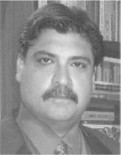
Noshir H. Dadrawala is chief executive officer of the Bombay based Centre for Advancement of Philanthropy and sits on the board of several international philanthropic organizations. He has participated in research studies and contributed papers for Harvard and Johns Hopkins Universities and authored a number of books on management and philanthropy. As a member of the Poona based Social and Voluntary Group (SVG), he conducts annual tours to Iran.
◆ ◆ ◆
From the archive