
Politics and Policy
“On a higher plane”
A trustee must fulfill the role of an akabar of the community
Of late there have been scathing attacks on the trustees of the Bombay Parsi Punchayet (BPP), some justified, most of them imaginary. The trustees are themselves to blame for some. The rest appear to be motivated by the Press which wants the trustees to do their bidding. Although the present trustees cannot compare favorably with many of their predecessors, they certainly are not a bad lot.
As to the quality of future trustees, one shudders to think whether they would be fit enough to adorn the chair if and when the scheme of election of trustees through adult franchise comes into effect. Here, the trustees have blundered, and blundered badly, by taking the lead in this direction. The scheme has the potential of jeopardizing the community’s properties in the long run. But that could be the subject matter of another article.
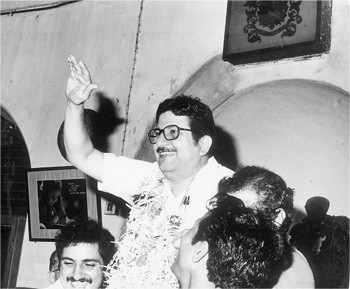
Eruch Desai: "act according to (your) conscience”
I was surprised some time back to read an article by an eminent luminary of our community representing a certain minority section which desires to bring about changes in the community’s long established traditions and customs. He alludes that the trustees, by not taking the palatable decision, had shown weakness of character in decision making. He suggests that the trustees take the advice of various scholars and priests, including those outside India, and act accordingly to implement the reforms. However at the same time, there are eminent scholars and priests who do not cater to his views. If the trustees, after gauging the views of the majority of the community and taking the advice of the high priests decide not to change the existing practices or traditions, whether in respect of the Doongerwadi lands or otherwise, does that not amount to taking a decision?
Not deciding on change is also a decision. It is not justifiable to criticize the trustees just because a decision not to give in to the change is not palatable to the protagonists of the move. Incidentally, the person who wrote the article was himself in the decision making position for a number of years, but made no move in that direction while occupying the office, even though there is no perceptible change in the scenario so far as the system of disposal of the dead is concerned.
What should the qualifications of a BPP trustee be? What should be his qualities? What should be the characteristics of his office? Is educational qualification a necessity? Is experience in public affairs a must? To assess these, one must understand the role of a trustee. Ordinarily, his job would be to manage the trust estate with the foresight and caution of a prudent man, to make the best use of the trust property, and to implement the objectives of the trust. This is purely a legal concept. However, a trustee of the BPP has a higher role to play. He is a torchbearer, the shining star and the guiding light, and must be good enough to fill in the role of an akabar of the community, as pronounced by a judgment of the Bombay High Court. His degree qualifications may not be an essential requirement, but a distinguished career coupled with occupation of a prestigious office and standing in profession, would certainly be a bonus.
A BPP trustee should be knowledgeable about the community and trust affairs. He should reflect the prestige of the community and enhance by his presence the dignity of the office he occupies. He should have decorum, dignity, grace, charm, integrity and honesty. He should have the intellect, foresight, vision, and ability to assess a situation, to discern what is right or wrong. He should express his views fearlessly and impartially to a colleague or to anyone who pulls the strings from behind. He should act according to his conscience, which should dictate only the good of the trust and welfare of the community.
In the discharge of his duties, he may have to represent the community before various authorities and outside bodies where he should be in a position to effectively put forward the case of the community. He may not be a Nani Palkhivala in oratory, but he should be a reasonably good speaker at public functions, expounding views on community matters with precision and clarity. Making a noise in public about his personal views against a majority decision does not a good trustee make. It is solid substantial work behind the scenes in line with the objectives of the trust which he has sworn to fulfill, that should project him better.
In the working of the trust the rule of majority prevails, and should prevail. Once the majority decision is reached, it is binding on those who dissent, as it was in my case, when I voted against the resolution of the preponderant majority of the BPP to opt out of the Federation of Parsi Zoroastrian Anjumans of India. At that time I was asked by the late Shiavax Nargolwala who was a true democrat and who was a force to reckon with in the Federation, to support them on the activities of the Federation, but I declined as I was duty bound to abide by the rule of the majority of the trustees on the issue. In fact clause 70 of the Scheme of Election of Trustees expressly provides that once a decision is reached by a majority of the trustees it is binding on all, and shall be adopted and acted upon. If he does not agree, he either falls in line, or he quits, whereupon he can continue his dissent outside the institution of the trust. But he cannot stay within, and sabotage the majority decision or even attempt to do so. Such a line of approach would not be in keeping with the dignity of the office and status attached thereto.
A BPP trustee should remember that there is little pleasure in a world that is true and sincere, other than the pleasure of doing one’s duty and doing it well. In short, a trustee’s guidelines should be that unity must be the architect, honesty the upholsterer, partiality the ventilator, independence his shield, spear, helmet and crown.
It is a pity that good candidates who have made a mark in life do not offer themselves as candidates. Naturally, why should they, when it has virtually become a habit with a section of the Press to spread canards against them. This is a deterrent for those who desire to serve. To hold the office of a BPP trustee is an exacting role, and handling its activities such as education, housing, giving monetary relief, running prestigious institutions, tackling and solving many problems facing the community, do not fall easily to the lot of community members. While leaving office at the end of his term, a trustee is a much more mature and enlightened man than when he entered the scene. To be a trustee is a rewarding experience for intellectual attainment, a fountain for imbibing knowledge and experience, which should enable him to give sane and mature advice on community affairs. If he is doing his job well, such criticism in the Press should not scare a person away from contesting the elections.
The existing method of election of trustees has stood the test of time, working effectively for nearly 100 years. There has not been a single case where a trustee is known to have been guilty of any act of impropriety. But I shudder to think of the quality of trustees after election through adult franchise is implemented. The present day level of many a politician in the country elected through adult franchise should stare us in the face. It is unthinkable that any Parsi or possibly even a Zoroastrian living in far off places like USA or Japan or Brazil or Europe, unfamiliar with local conditions and surroundings, would have the right to elect a BPP trustee. In the long run this will dilute the importance and high status which the BPP has enjoyed for years and with distinction. This will reduce it to a body amenable to foreign influence and foreign viewpoints which could be at variance with the views of a large majority of the Bombay Parsis. This ludicrous suggestion seems to have been accepted by the trustees without proper application of mind as to its future consequences. One shudders to imagine what lies in store for the community’s interests, principles, institutions and properties.
As observed in one of my earlier articles, the body of trustees should be a happy blend of experienced and the new members, younger in age and rationalists or protagonists for some essential changes, with a healthy respect for each others’ views, with a lady and a priest of high stature and respect, included in the team.
A trustee must remember these words of Carlyle: "This little life has its duties that are alone great and that go up to heaven and down to hell.”
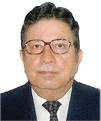
Former president of the Bombay Parsi Punchayet and a senior partner of Mulla and Mulla and Cragie Blunt and Caroe, Desai is a director of around 15 companies and trustee of the General Electoral Trust formed by the House of Birlas and some other trusts. He has also made representations before the authorities for the amendments to the Bombay Rent Act.
◆ ◆ ◆
From the archive