
Politics and Policy
“The collective good”
Religion cannot be tampered with to suit the needs of a particular segment
As a high priest of our revered Anjuman Atash Behram, my emphasis is on the religious position of the person standing for trusteeship. I do not have to enumerate the ethical values that a trustee must possess. These, I hope, are amply and clearly understood by an educated community which values qualities such as honesty, integrity and sincerity as the main underpinnings which should be integral to anyone standing for trusteeship anywhere in the world and for any religion or cause. Hence, I would like to direct my comments to the religious facet of the community and what it means to be a Zarthoshti trustee.
Today it is absolutely imperative that a trustee is one who understands what it means to be a practising Zarthoshti. A person should stand for trusteeship only if he or she is willing to protect and preserve our ancient faith and its traditions. Most religions today are under attack from the sweeping tide of modernity and there are demands to change the precepts and practices of the faith to suit individual needs. A small faith such as ours cannot afford to be buffeted with such ideas as we will end up tearing the fabric of the religion at its seams.
What do I mean by this? Every religion — be it Islam, Christianity or Hinduism — develops laws and practices that have shaped it over the centuries. These have been adhered to with timeless fidelity and their deliberate transmission is ensured by the practitioners who follow the religion. Our ancestors, the Parsi and Irani Zarthoshtis, have followed Zoroastrianism for nearly two-and-a-half millennia with a fidelity of transmission that has surprised scholars. If today, under the guise of ‘modernity’ or the common perception of ‘moving with the times’ or because of the erroneous use of ‘free choice,’ the religion is torn apart by the many controversies raised, one will not be able to carry the faith for the next generation to follow.
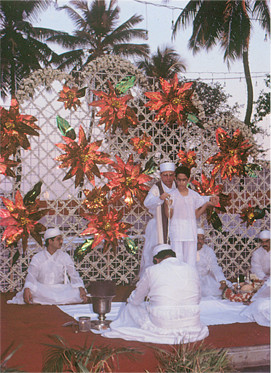
Dastur Kaikhusroo JamaspAsa performing a navjote ceremony: "a fidelity of transmission”
Other faiths and other religions too have radical elements who wish to alter their precepts and practices, but they have numbers on their side. For example, if a few hundred thousand Christians or Muslims choose not to follow the path of tradition, it will not matter to the form and practice of the religion because there will be millions of people who will fortify the traditional core of the faith and its practices and ensure its continuity for generations to come. We do not have this luxury and so it is my heartfelt plea and warning to all those who wish to defy our traditional practices and customs that they will only succeed in destroying a religion which is holy and sacred to us. And, over a period of time, they will find that the changes that they have sought will have transformed the religion beyond recognition into something it never was meant to be — a form of Zoroastrianism, only in name.
Religion cannot and must not be mutilated and molded to the needs of a few individuals or a particular group of people. Religion is for the collective good of the community. So a person wishing to be a trustee cannot and should not stand for trusteeship if his or her views or actions are not in consonance with the traditional practices of the faith, for such a trustee cannot be ‘trusted’ to protect the community at large. No doubt a large portion of the work a trustee has to do today concerns the management of trust properties and therefore transparency and accountability are the key traits which a trustee would require, along with basic managerial and financial skills.
When dealing with community and trust properties, the commercialization of sacred endowments and institutions to augment punchayet’s revenues is not the answer. The ability to distinguish between what is sacred and of religious value versus that which is of commercial interest and therefore can be profit making should be an important trait in a trustee. All that is held sacred by the community must be treated as being inviolable by a trustee, irrespective of his or her personal views.
To sell community assets without bringing absolute benefit to the community, without adding to the wealth of the community, without using it for the ultimate benefit of the poor, is not an act of trusteeship. To allow the poor to remain homeless for decades is not an act of trusteeship. To behave with rudeness and disdain with the poor or to ignore them and pander only to the rich and powerful is not an act of trusteeship. To ask for inclusion of non-Zoroastrians into the faith, whatever be the mode of entry, is not an act of trusteeship. To make irreligious demands on community institutions and to want to bring changes in our dakhmenashini system is not an act of trusteeship.
Furthermore, a person who does not wear the sudreh-kusti, who does not visit the agiary regularly, who does not practice the rituals of the faith, who does not believe in the ways of our ancient faith, a person who is bent on changing its rules and regulations, is not worthy to be a trustee of the apex body of our community, for such a person can only bring ruin to the religion and the community.
If a religion and a community are to survive as an integral, homogenous whole, retaining the original form, emphasis must be placed on religious education and encouraging accredited scholarship. More than half the problems in our community stem from an abysmal lack of religious education and a poor understanding of the theology of the faith. It is also incumbent upon a Bombay Parsi Punchayet trustee to be faithful to the practice of the religion, to uphold the time tested religious views and seek advice and directions from the learned high priests and scholars. There must be recognition of the fact that there is no substitute for good, rigorous scholarship.
Religion is not like music or technology, for there is a sanctity and sacredness of the unseen spiritual world attached to it which should not be altered or discarded at will. A religion has an internal integrity which, if disturbed, breaks down under the weight of indiscriminate changes brought about by its members. Therefore, it is the duty of the trustees to protect and preserve the inheritance given to us by our revered ancestors and not to leave for future generations an ‘inheritance of loss.’
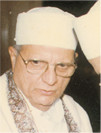
Dastur (Dr) Kaikhusroo Minocher JamaspAsa is High Priest of the Anjuman Atash Behram since 1956 and is a trustee of the K. R. Cama Oriental Institute.
◆ ◆ ◆
From the archive